Middle Ages · state
Northern Yuan dynasty
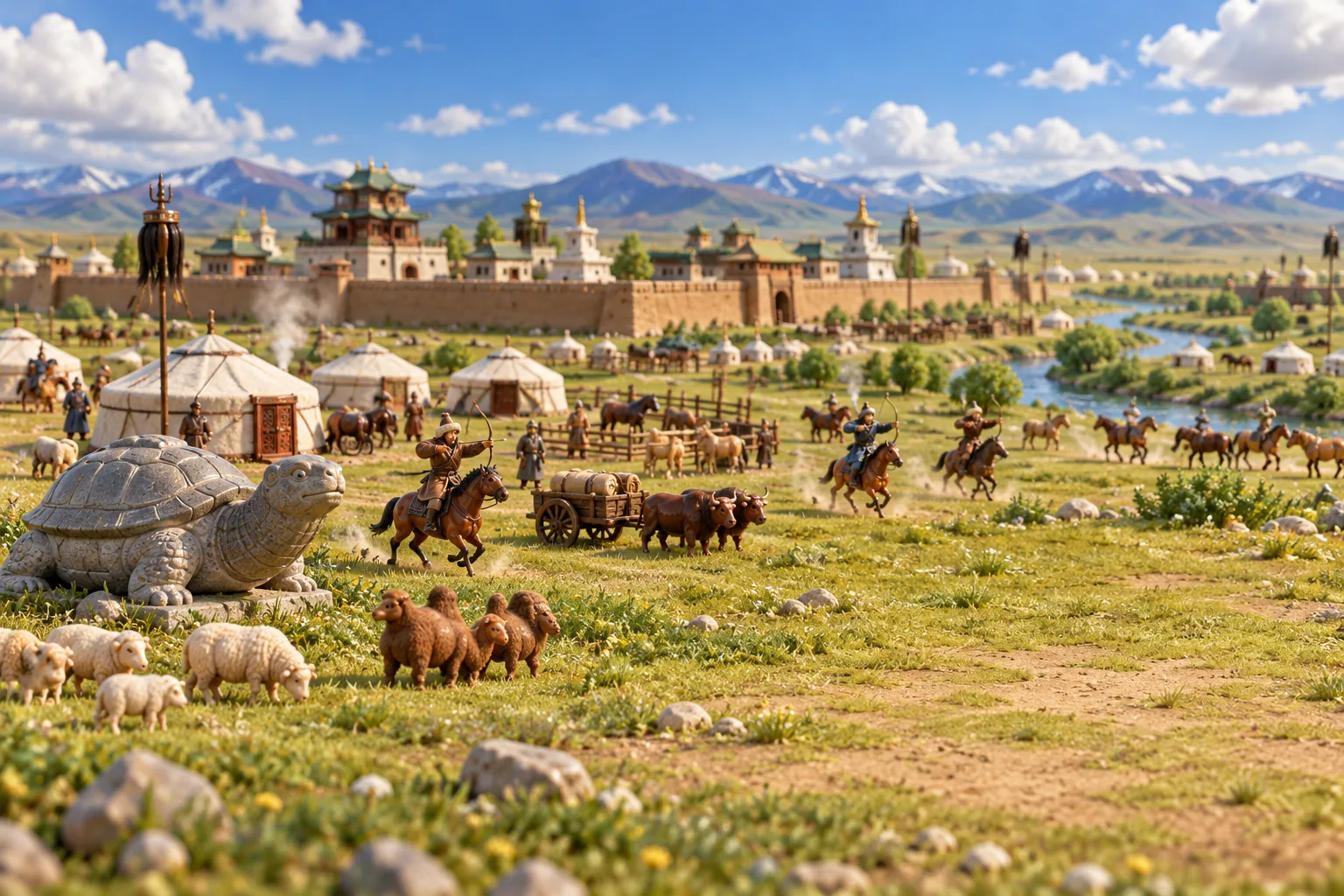
Driven out of China in 1368, the heirs of Kublai Khan kept ruling the steppe for more than 250 years and once even captured a Ming emperor.
In 1368 the last Yuan emperor, Toghon Temür, fled north from Dadu, today's Beijing, as the Ming armies approached. He died at Yingchang in 1370, and his court fell back to Karakorum, the old Mongol capital, still calling itself the Great Yuan. In 1372 Biligtü Khan and his general Köke Temür beat a Ming army sent into the steppe, but the Ming sacked Karakorum in 1380 and in 1388 crushed Uskhal Khan Tögüs Temür near Buir Lake.
After that defeat the Han-style title of emperor was dropped, and for almost a century the western Mongols, the Oirats, made and unmade khans. Their leader Esen Taishi defeated a huge Ming army in 1449 and captured the Zhengtong Emperor in the Tumu Crisis, but failed to take Beijing and let the emperor go home the next year. In the late 15th century the widow Mandukhai Khatun put a seven-year-old Genghisid boy on the throne as Dayan Khan, and together they reunited most of the Mongols.
Dayan divided his realm among his sons, and the tribes drifted apart again. From 1575 Tibetan Buddhism spread through Mongol society. The last great khan, Ligdan, lost to the rising Manchus, and after his death in 1634 Inner Mongolia passed to the Later Jin, the future Qing.
Read more on Wikipedia
Sources: en.wikipedia.org/wiki/Northern Yuan
