Middle Ages · state
Norse Greenland and Vinland
Tree rings show Norse settlers cut wood at L'Anse aux Meadows in 1021, nearly five centuries before Columbus.
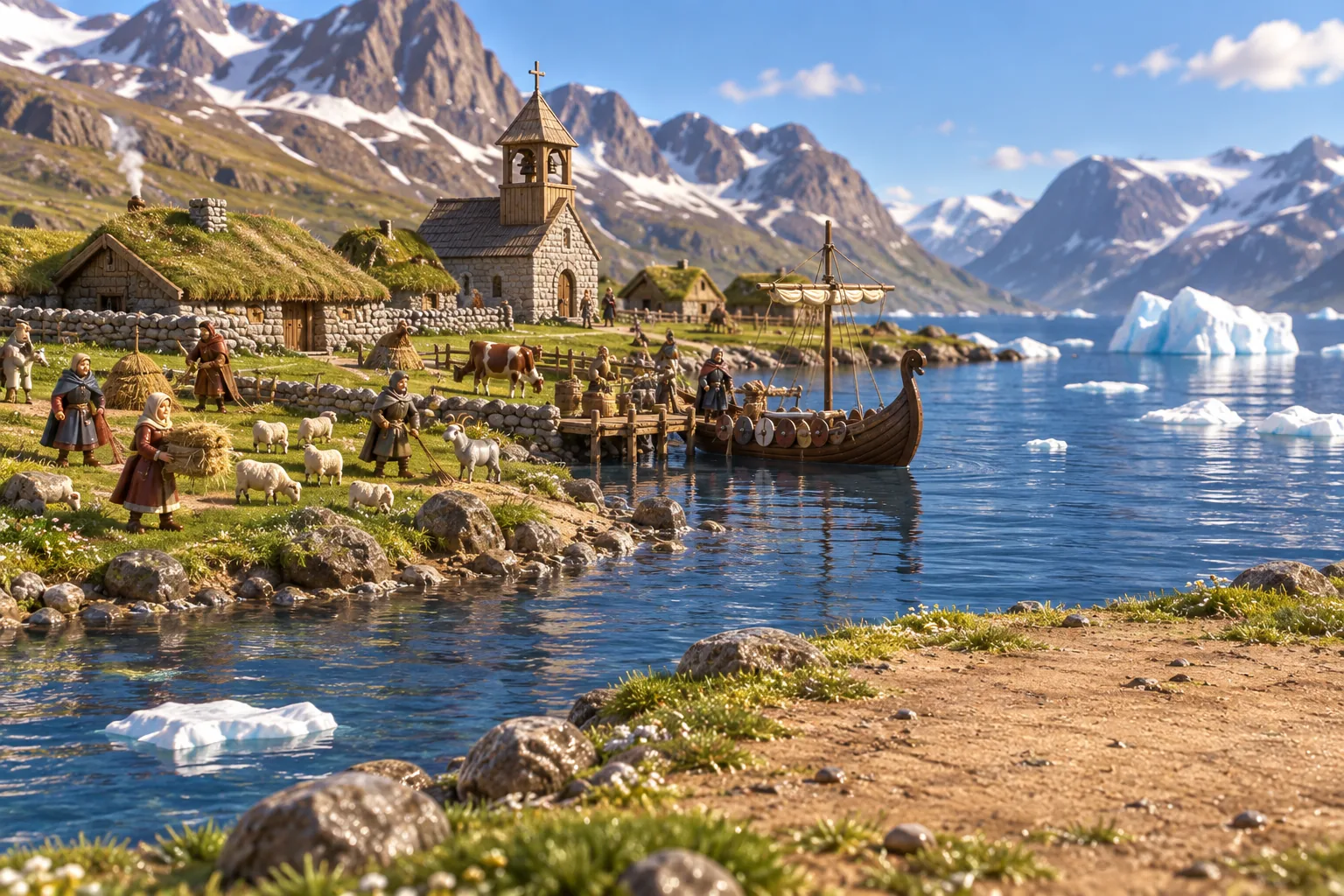
According to the sagas, Erik the Red was banished from Iceland for three years for killing several men, and in the late 10th century he sailed west to a land sighted earlier. He built his farm, Brattahlíð, deep in a fjord of south-west Greenland. Norse Greenland grew into two main settlements: the Eastern Settlement at the southern tip, with about 500 farms, and the Western Settlement some 500 kilometres up the coast near today's Nuuk. At its peak it had 2,000 to 3,000 people.
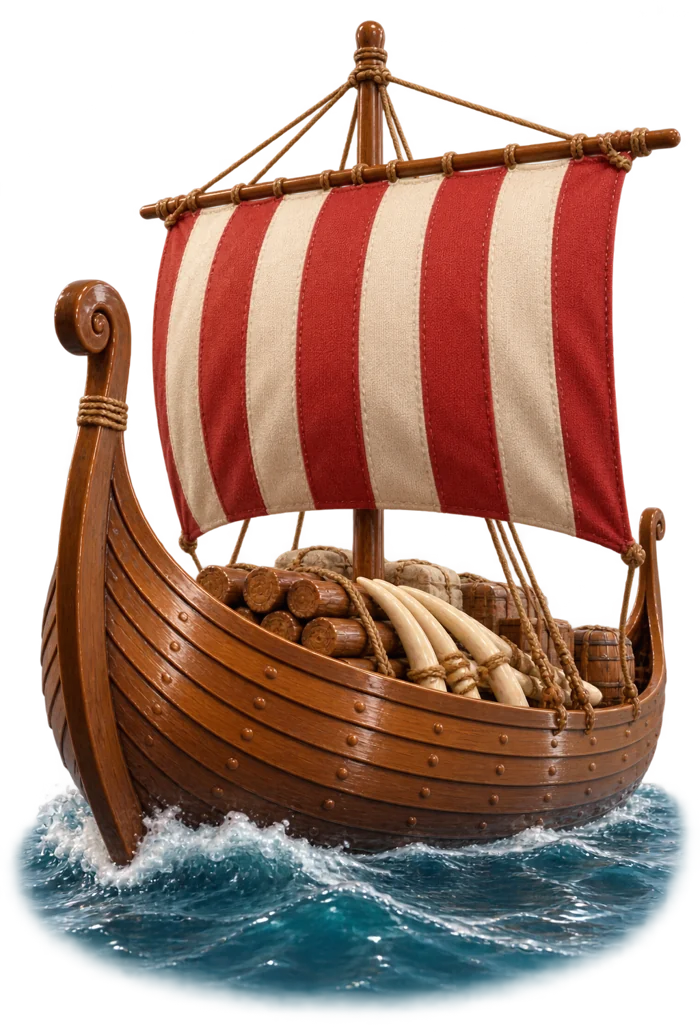
The settlers kept livestock, hunted seal and caribou, and paid for imports by sending walrus ivory and hide, polar bear skins and narwhal tusks to Europe. In 1126 they asked for a bishop, who sat at Garðar, and in 1261 they accepted the rule of the king of Norway. For timber and iron they sailed west. The sagas tell of Helluland, Markland and Vinland, and in the 1960s Helge and Anne Stine Ingstad found a Norse site at L'Anse aux Meadows in Newfoundland, a base for 30 to 160 people dated by tree rings to 1021.
The Western Settlement was abandoned around 1350. The last bishop at Garðar died in 1377, and after a wedding recorded in 1408 the written sources fall silent. Isolation, falling walrus prices, fewer seals and the colder Little Ice Age probably ended the colony during the 15th century.
Read more on Wikipedia
Sources: en.wikipedia.org/wiki/Norse settlement of North America, en.wikipedia.org/wiki/L'Anse aux Meadows