Industrial age · war
Normandy landings
The invasion depended so much on the moon and the tides that one more day of bad weather would have pushed it back by at least two weeks.
Planning for the Allied invasion of France began in 1943, and President Roosevelt put the American general Dwight D. Eisenhower in command. To fool the Germans about where and when the blow would fall, the Allies ran a vast deception, Operation Bodyguard, with fake radio traffic and a fictitious army group in England. On the German side, Field Marshal Erwin Rommel strengthened the Atlantic Wall along the coast. The landings had to be postponed by 24 hours because of bad weather; on the morning of 6 June, Rommel was in Germany for his wife's birthday.
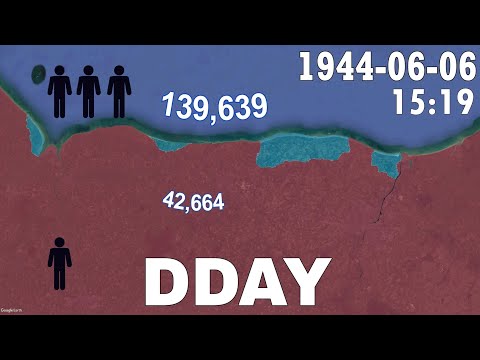
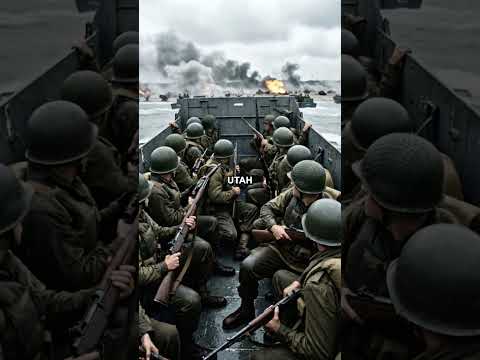
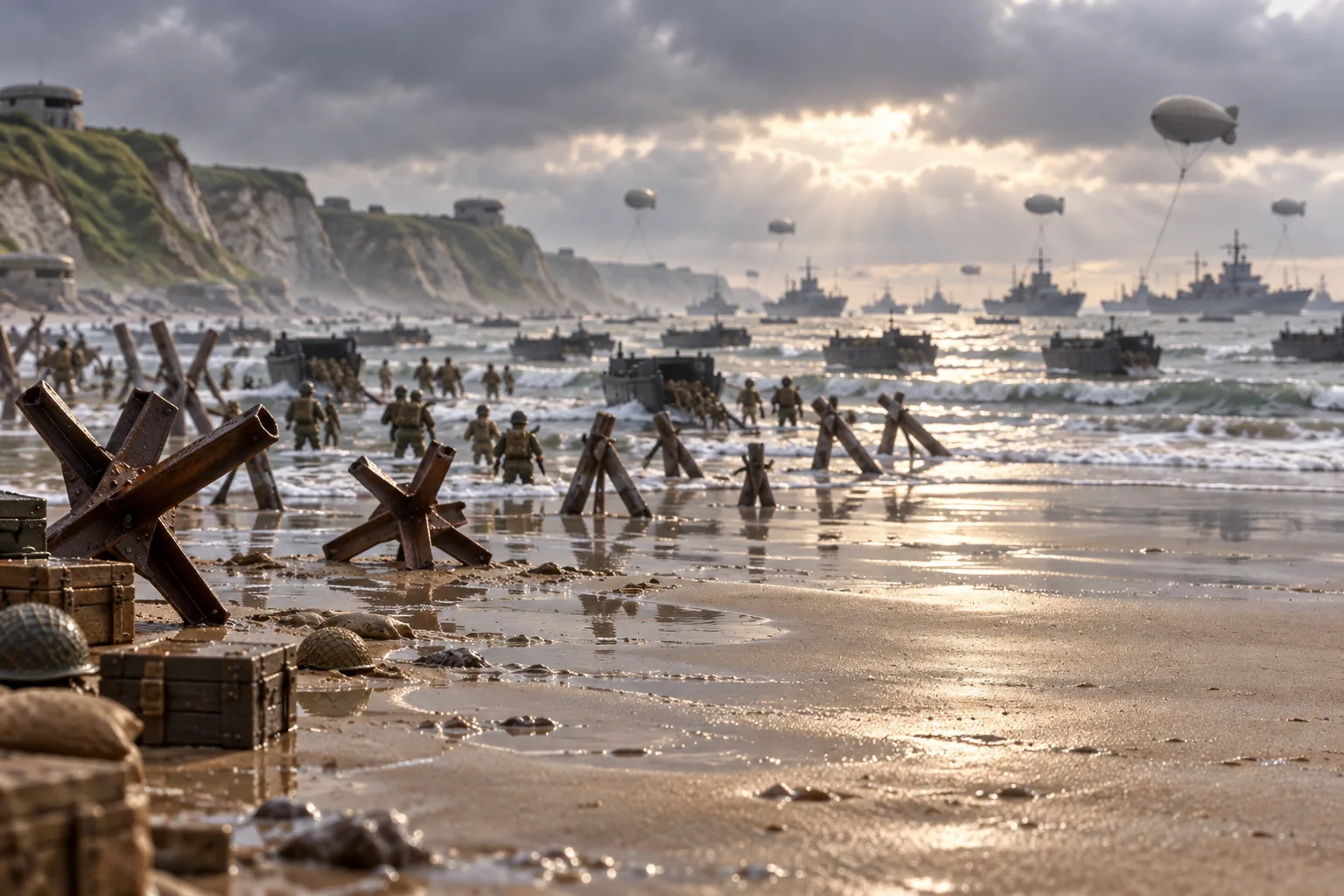
Shortly after midnight 24,000 American, British and Canadian airborne troops dropped behind the coast. A glider assault seized the bridges over the Caen canal and the Orne at 00:16, and American paratroopers took Sainte-Mère-Église, the first town liberated. At about 06:30 the seaborne landings began on an 80 km stretch of coast divided into five beaches: Utah, Omaha, Gold, Juno and Sword. The shore was mined and covered with stakes, metal tripods and barbed wire, and the heaviest losses came at Omaha, under its high bluffs.
By nightfall nearly 160,000 troops had crossed the Channel and the Allies held all five beachheads, though Caen was not taken until July. Allied casualties on D-Day were at least 10,000, with 4,414 confirmed dead. By the end of June 875,000 men had landed.
Read more on Wikipedia