
Early modern · war
Nine Years' War
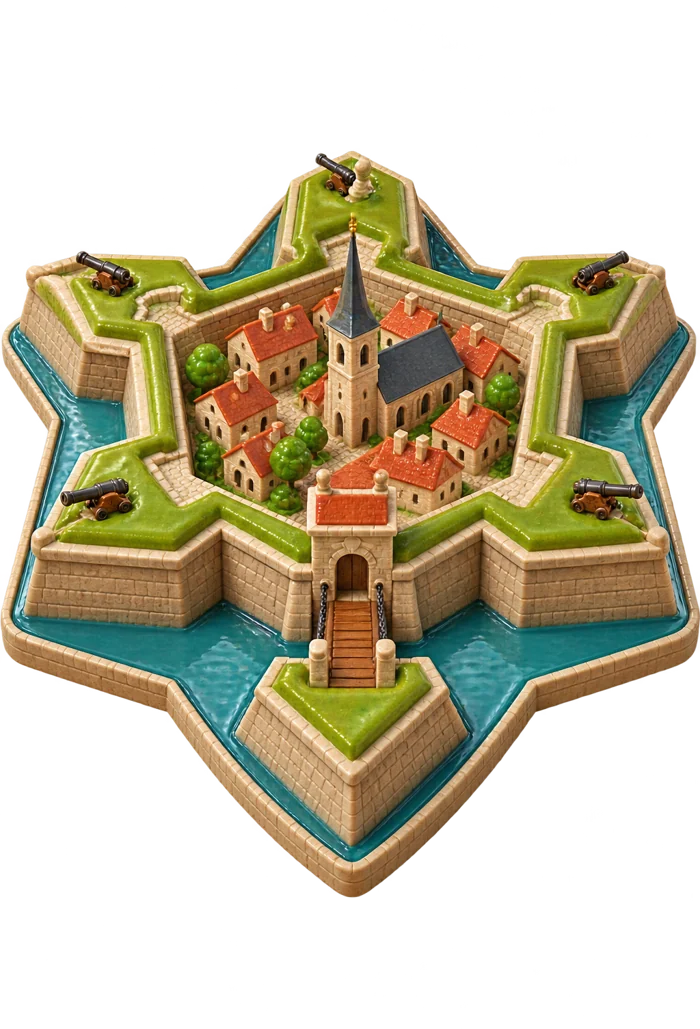
Two great armies could spend a whole summer marching around each other without fighting, while the real battles were for fortresses.
By the 1680s Louis XIV, the Sun King, wanted a frontier of strong fortresses, designed by his engineer Vauban, and kept grabbing border towns to build it. Protestant states feared his power and his persecution of Protestants. In September 1688 Louis sent an army across the Rhine. That November William of Orange landed in England in the Glorious Revolution and became King William III, bringing England into a Grand Alliance with the Dutch Republic, the Holy Roman Emperor Leopold I, Spain and Savoy against France.
To stop enemy armies living off the land, the French laid waste to the Palatinate; on 2 March 1689 they burned Heidelberg. The war spread to Ireland, where William beat the deposed James II at the Boyne in July 1690, and to North America as King William's War. Marshal Luxembourg won French victories at Fleurus in 1690 and Neerwinden in 1693, and Namur fell to France in 1692, but none of it was decisive. A French invasion of England failed when 15 French ships were burned at La Hogue in 1692.
Famine struck France and northern Italy and killed about two million people by the end of 1694. In 1695 the allies retook Namur, then thought the strongest fortress in Europe. Both sides were exhausted, and in 1697 the Peace of Ryswick let France keep Alsace and made Louis recognise William as King of England.
Read more on Wikipedia