Our time · war
Nigerian Civil War
The pictures of Biafra's starving people shocked the world, and the doctors who flew in to help went on to found Doctors Without Borders.
Nigeria became independent from Britain in 1960, a federation of peoples divided by politics, ethnicity and religion. In 1966 a military coup was followed by a counter-coup and by pogroms against the Igbo people in the Northern Region, and surviving Igbos fled to their homeland in the east. Talks at Aburi in Ghana broke down, and on 30 May 1967 Lieutenant Colonel Chukwuemeka Odumegwu Ojukwu, declared it the independent Republic of Biafra. Fighting began on 6 July 1967.
General Yakubu Gowon's federal army grew from 7,000 to 200,000 men. Within a year it had surrounded Biafra and taken Port Harcourt and the coastal oil fields, and a deliberate blockade cut off food. Between 500,000 and 2 million Biafran civilians died of starvation, while about 100,000 soldiers were killed or wounded. Britain and the Soviet Union backed Nigeria; France, Ivory Coast and Gabon supported Biafra.
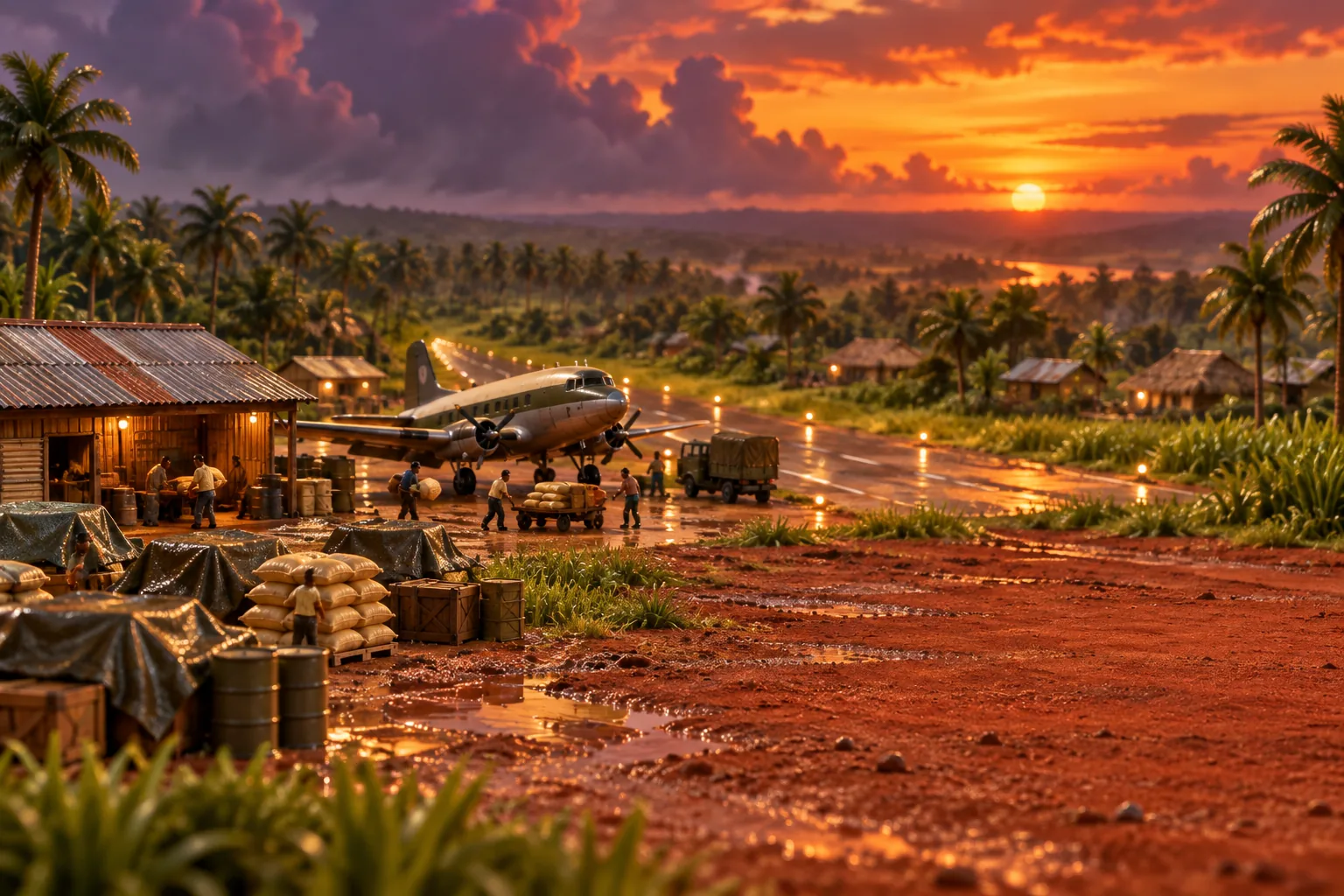
Churches and aid groups such as Joint Church Aid and Caritas flew food and medicine in through the Biafran airlift, and the plight of Biafra's children filled Western newspapers and television from mid-1968. In January 1970 the federal army took Owerri and Uli, Ojukwu fled into exile in Ivory Coast, and his deputy Philip Effiong surrendered to Gowon's government; the war ended on 15 January 1970.
Read more on Wikipedia