Early modern · state
New France
Stretching from Quebec to New Orleans, it held a vast territory with under 70,000 French settlers when Britain took it in 1763.
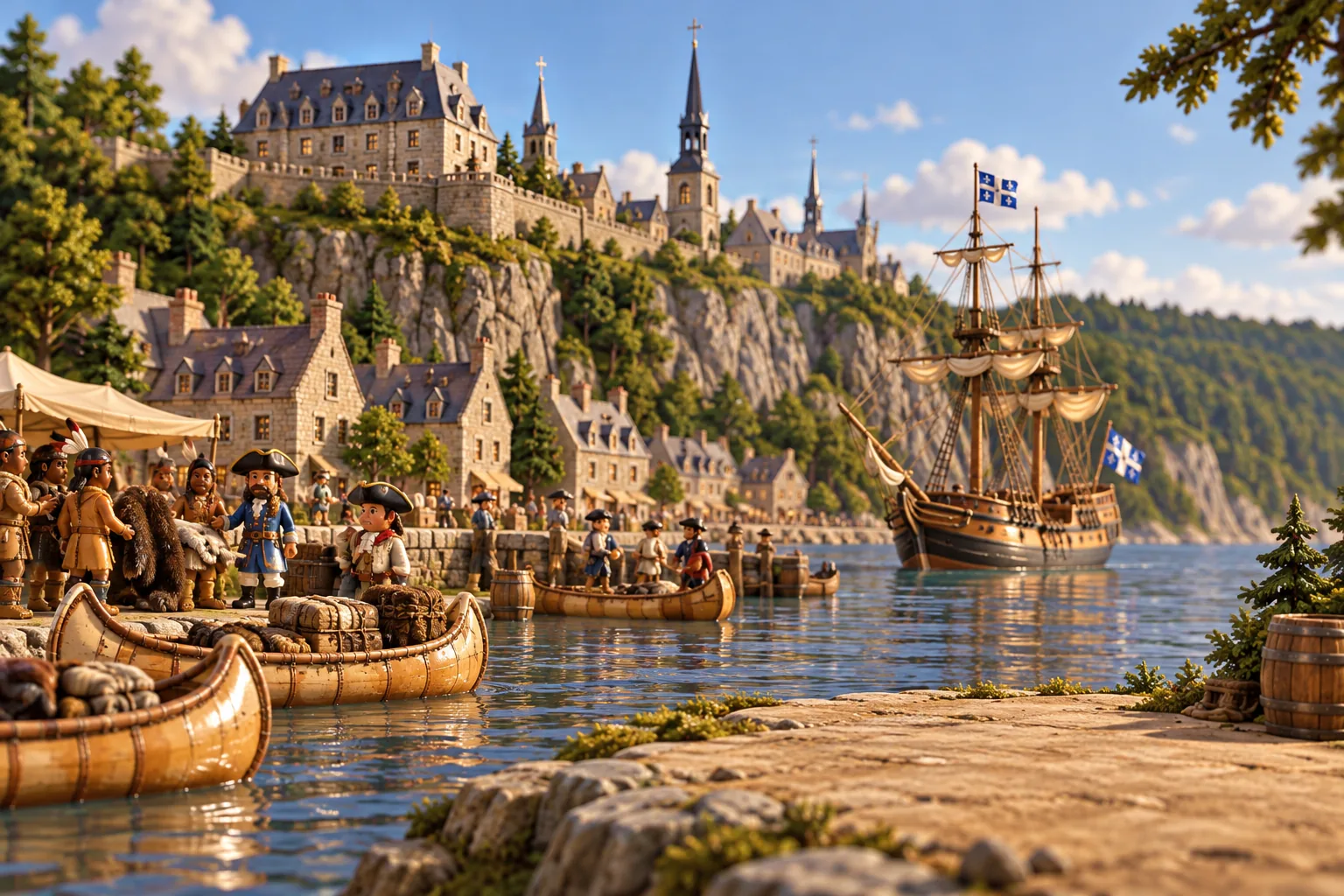
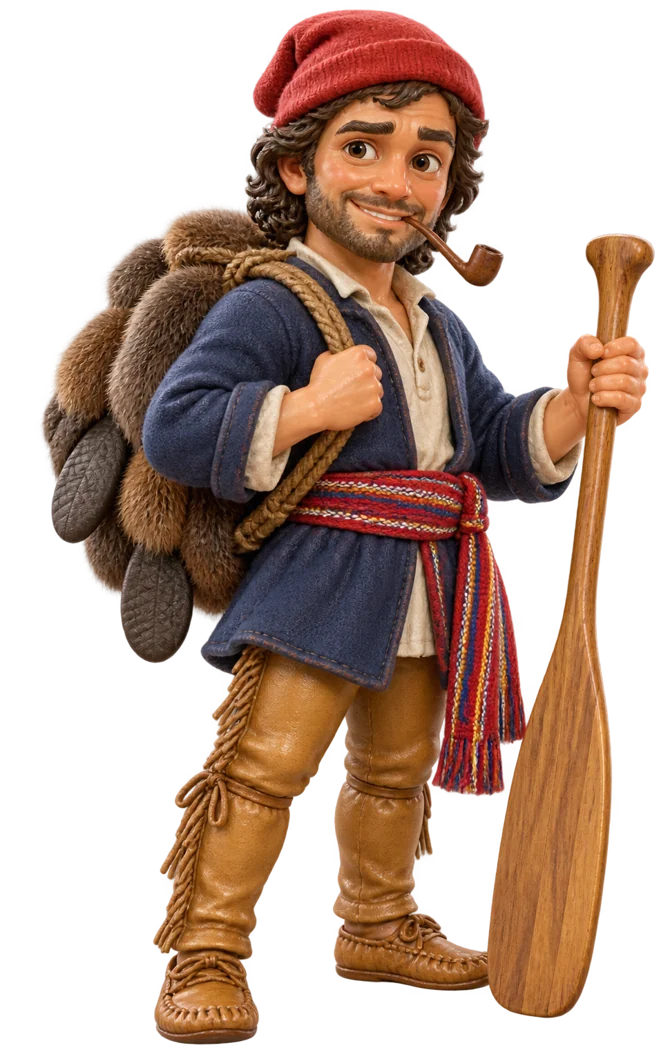
Jacques Cartier explored the Gulf of Saint Lawrence in 1534, but a first settlement near today's Quebec City lasted only two years. In 1608 Pierre Dugua de Mons and Samuel de Champlain founded Quebec with 28 men. The valley was full of beaver, which had become rare in Europe, and the fur trade, worked mostly by First Nations hunters, became New France's main source of money. Champlain allied with the Huron and Algonquin against the Iroquois.
In 1663 Louis XIV made New France a royal province. About 800 young women, the King's Daughters, were sent out between 1663 and 1673, and the population rose from 3,200 in 1663 to 6,700 by 1672. Governor Frontenac built forts deep in the interior. At its peak in 1712 New France held five colonies: Canada along the Saint Lawrence, Hudson Bay, Acadia, Newfoundland and Louisiana, reaching down the Mississippi.
Yet the colonists remained few. In 1754 there were about 55,000 Canadiens, 10,000 Acadians and 4,000 settlers in Louisiana. The British expelled the Acadians from 1755, took Quebec in September 1759 and Montreal the next year. In the Treaty of Paris of 1763 France gave Canada and eastern Louisiana to Britain, and western Louisiana went to Spain.
Read more on Wikipedia
Sources: en.wikipedia.org/wiki/New France, en.wikipedia.org/wiki/Filles du roi