Industrial age · politics
New Deal
When Roosevelt took the oath of office, a quarter of American workers had no job and many people could not get at their money in the bank.
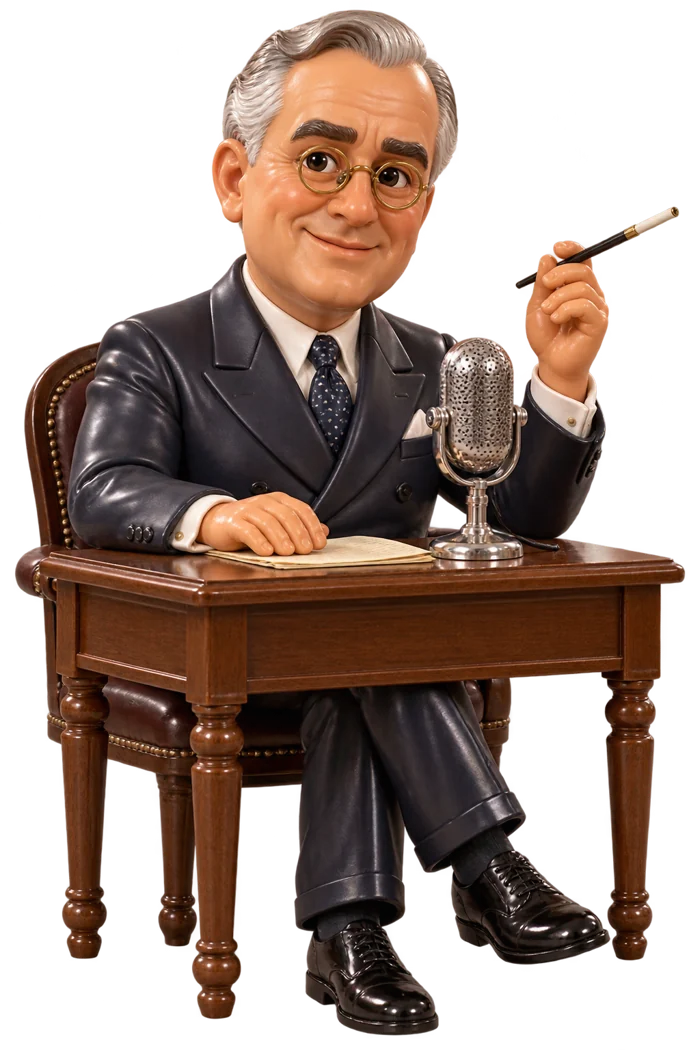
Franklin D. Roosevelt first used the phrase "New Deal" when he accepted the Democratic nomination in 1932, and he beat President Herbert Hoover in a landslide. When he was sworn in at noon on 4 March 1933, every state governor had either declared bank holidays or restricted withdrawals, and 25 percent of the workforce was unemployed. In his first hundred days he launched what historians call the First New Deal, built on three Rs: relief for the unemployed and the poor, recovery of the economy and reform of the financial system.
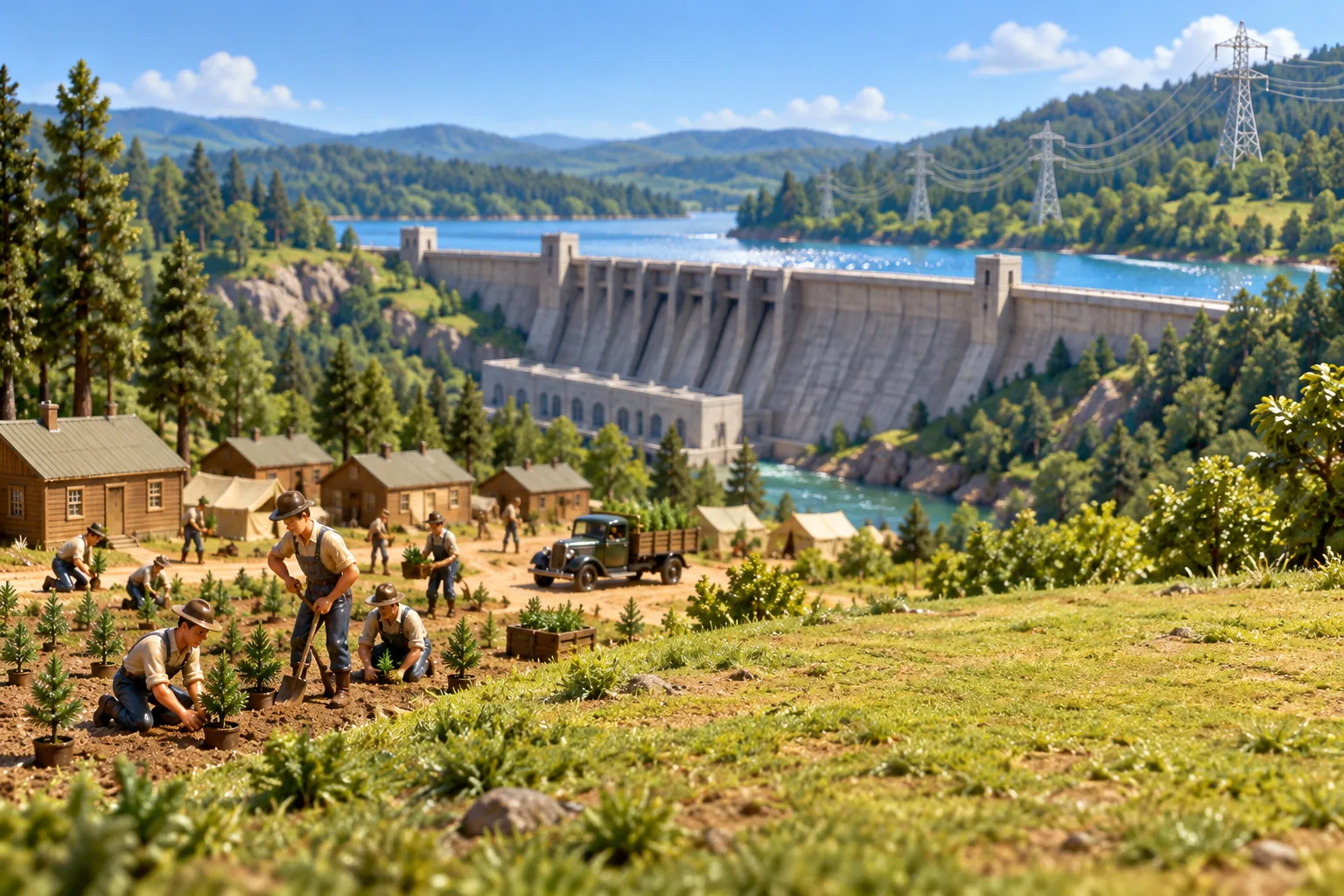
The Emergency Banking Act restored confidence in the banks, and the Federal Deposit Insurance Corporation made deposit insurance permanent. The Civilian Conservation Corps put young men to work on government land, and the Tennessee Valley Authority brought electricity and development to the basin of the Tennessee River. Americans soon knew the new agencies by their initials, the "alphabet agencies": NRA, AAA, SEC, TVA.
Unemployment was still above 20 percent in 1935, so a Second New Deal followed. The Works Progress Administration built bridges, libraries and parks and also paid artists, musicians and writers. The Social Security Act brought old-age pensions and unemployment benefits, the National Labor Relations Act protected trade unions, and in 1938 the Fair Labor Standards Act banned child labour and set a 40-hour week and a minimum wage. That year conservatives in Congress began to block new programmes.
Read more on Wikipedia
Sources: en.wikipedia.org/wiki/New Deal