Ancient world · person
Nefertiti
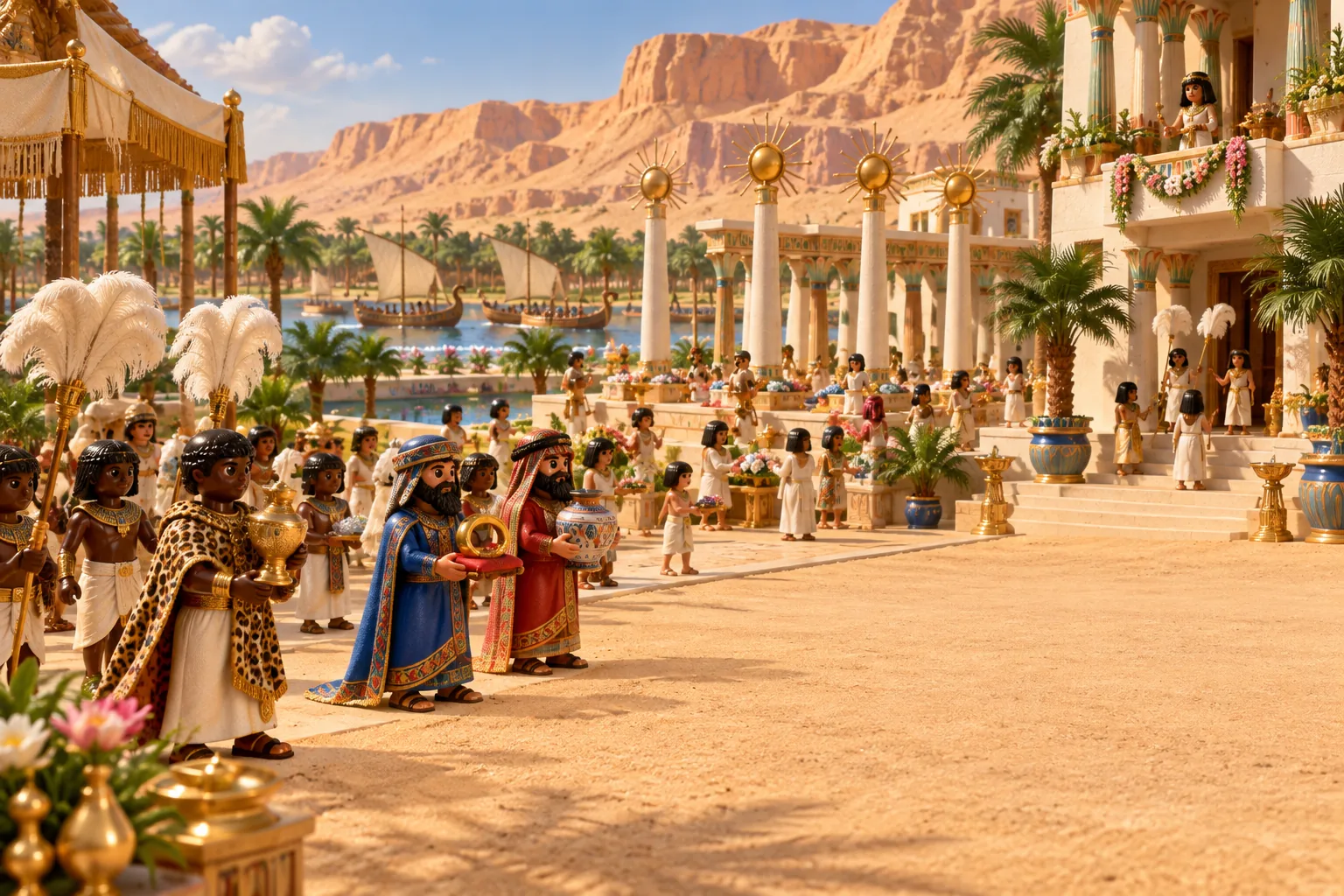
In the twelfth year of her husband's reign, the queen sat beside the pharaoh with their six daughters while envoys from north and south laid gold at their feet.
Almost nothing is known of Nefertiti's life before she married the future Akhenaten. She had a sister named Mutbenret, and the powerful courtier Ay, whose wife Tey was "Nurse of the Great Royal Wife", may have been her father, though no source says so outright. She first appears in tombs at Thebes beside the new king Amenhotep IV, worshipping the Aten. On temple blocks from his first five years she is shown almost twice as often as the king himself, sometimes in scenes normally reserved for pharaohs.
When the court moved to the new capital Akhetaten, now Amarna, and the king took the name Akhenaten, she became Neferneferuaten-Nefertiti. The family lived in the Great Royal Palace among open-air temples to the sun disc. In year 12 of the reign, tombs at Amarna show the couple seated in a kiosk with their six daughters while people of Kharu in the north and Kush in the south bring gold and precious gifts. Their daughter Ankhesenpaaten later married Tutankhamun.
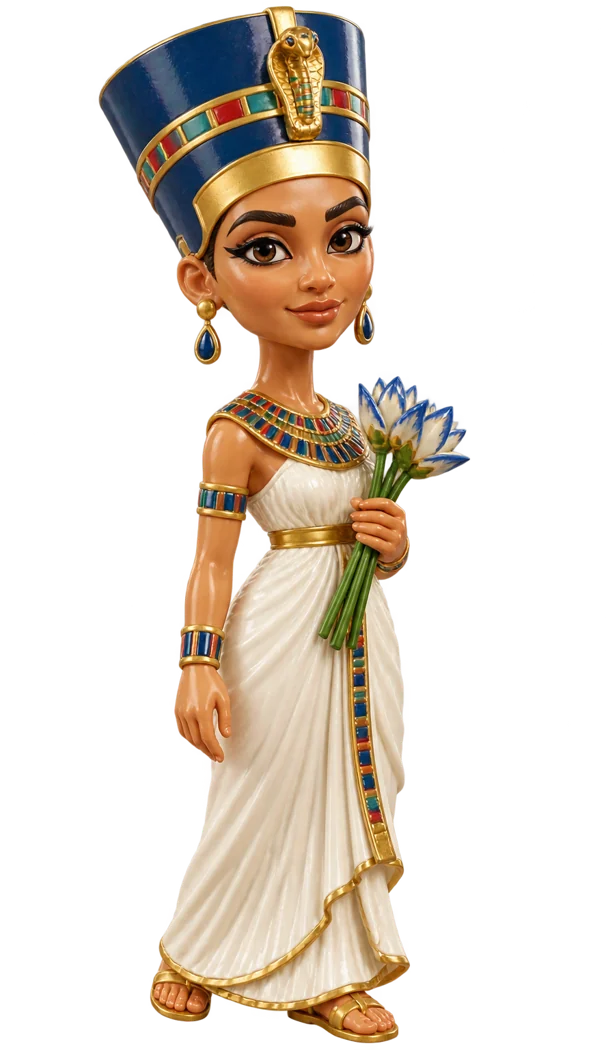
Scholars long thought she vanished around year 12, but an inscription at the Deir Abu Hinnis quarry, announced in 2012, names her as queen in year 16. Some believe she briefly ruled after her husband's death as the female pharaoh Neferneferuaten. Her painted limestone bust, attributed to the sculptor Thutmose and found in his buried studio, is now in Berlin's Neues Museum and is one of the most copied works of Egyptian art.
Read more on Wikipedia
Sources: en.wikipedia.org/wiki/Nefertiti


