Ancient world · person
Nebuchadnezzar II
News of his father's death reached the young victor of Carchemish in Syria; he raced home across the desert and was proclaimed king of Babylon within weeks.
Nebuchadnezzar, more faithfully Nebuchadrezzar, a name meaning "Nabu, watch over my heir", was the eldest son of Nabopolassar, who had led Babylonia's revolt against Assyria and founded the Neo-Babylonian Empire. The family probably came from the city of Uruk. As crown prince Nebuchadnezzar led armies in the conquest of the Assyrian Empire, and at Carchemish in 605 BC he crushed the Egyptian army of Pharaoh Necho II.
A few weeks later Nabopolassar died. Nebuchadnezzar heard the news in Syria in late July, hurried back to Babylon and was proclaimed king in mid-August 605 BC, then buried his father in a coffin adorned with gold plates. His early reign saw a failed invasion of Egypt and revolts, and in the 580s BC he campaigned against rebel vassals in the Levant. In 587 BC he besieged and destroyed Jerusalem, ending the Kingdom of Judah and deporting much of its population in what became known as the Babylonian captivity.
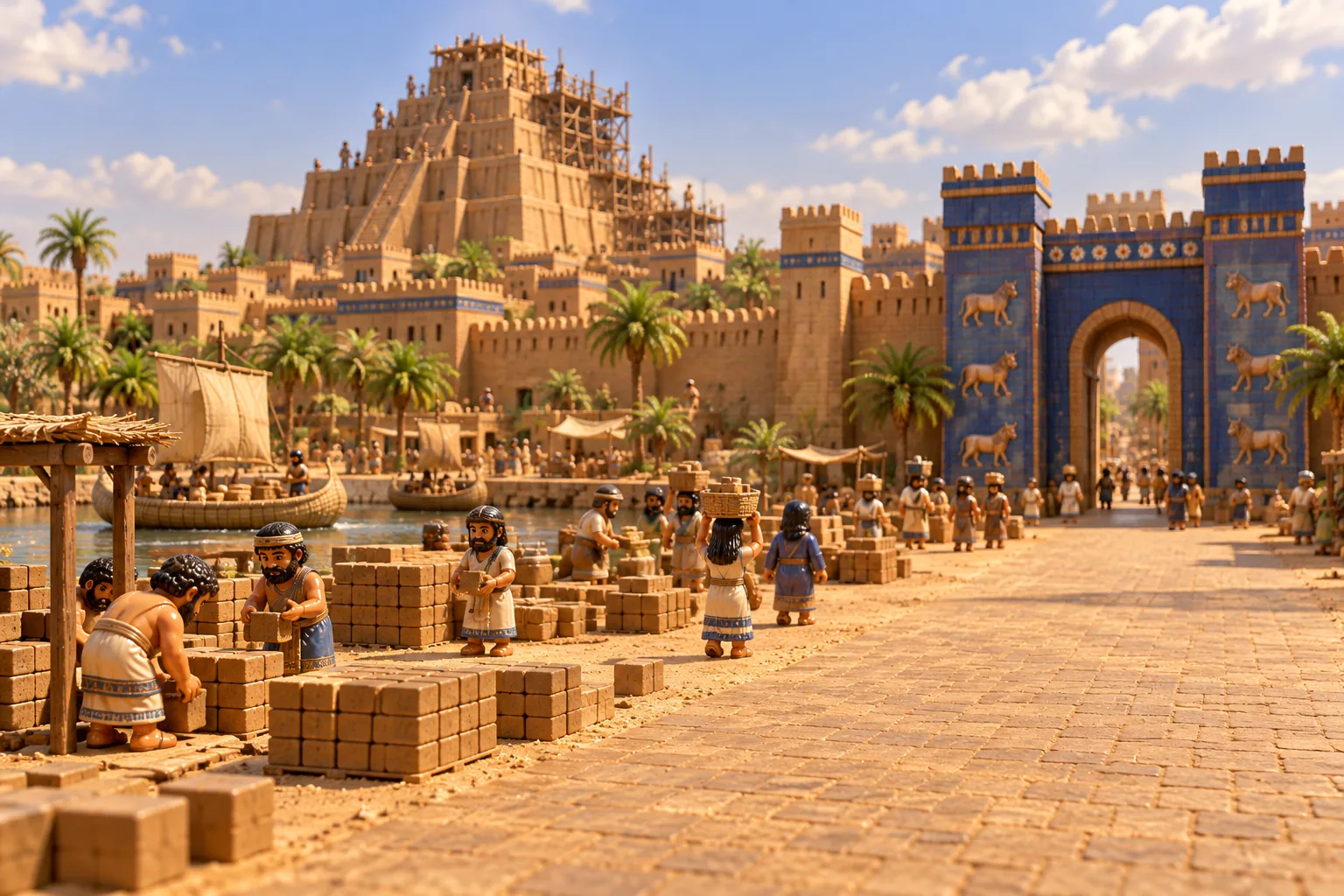
Most of his inscriptions record building rather than war. He restored Esagila, the temple of Marduk, completed the great ziggurat Etemenanki, built a new North Palace and rebuilt the Processional Street and the Ishtar Gate with blue and yellow glazed bricks showing bulls, dragons and lions. Tradition credits him with the Hanging Gardens, made for his Median wife Amytis. He died at Babylon in 562 BC after 43 years on the throne, the longest reign of his dynasty.
Read more on Wikipedia


