Prehistory · culture
Natufian culture
Hunters and gatherers settled down in stone houses and baked bread thousands of years before anyone planted a field.
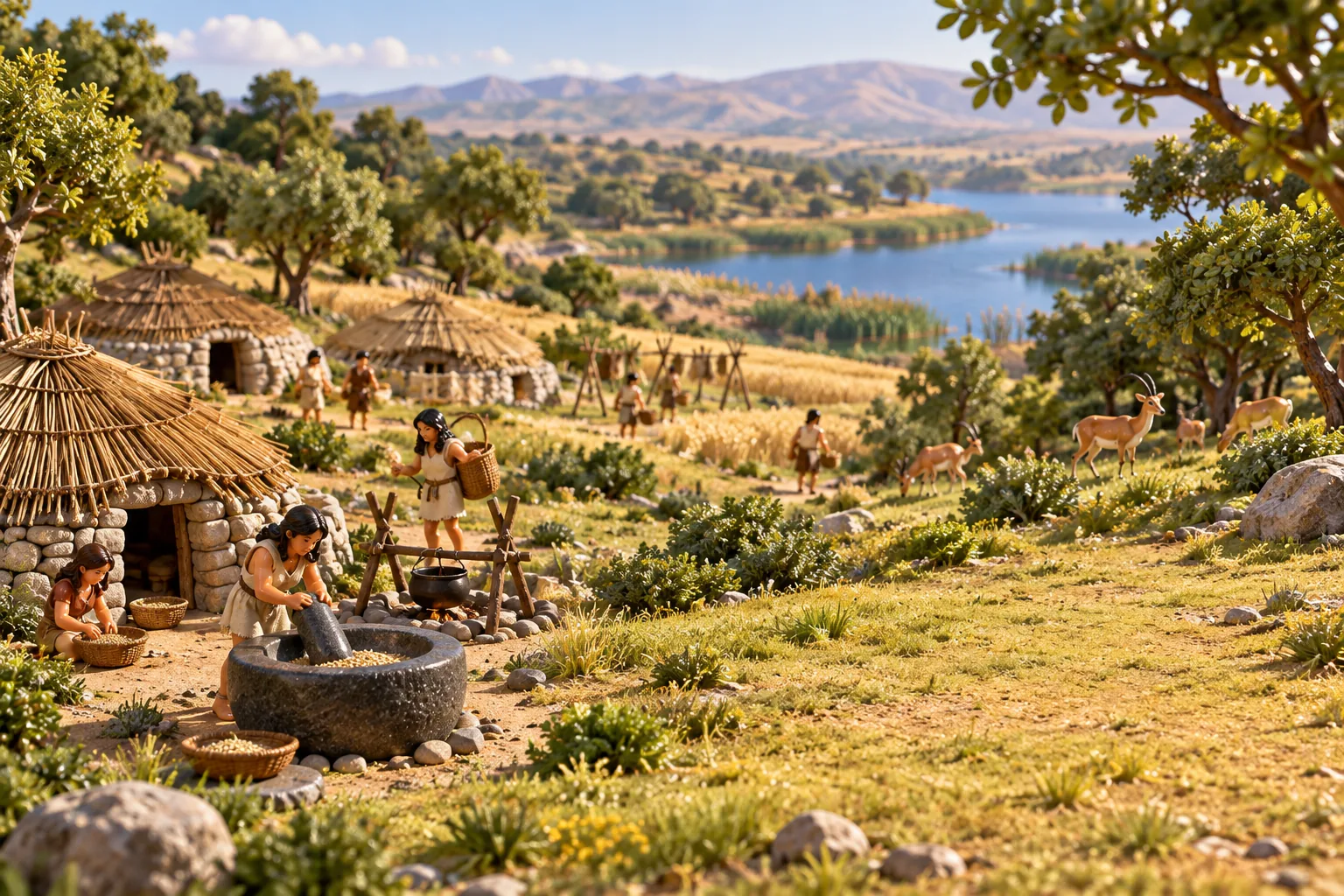
Between about 12,500 and 9500 BC, at the end of the last Ice Age, the Levant was not the dry, thorny land of today but woodland rich in wild cereals, fruits and nuts. The people archaeologists call the Natufians gathered these plants and hunted mountain gazelles, as foragers had always done. But unlike earlier hunter-gatherers, many of them stopped moving around. Their settlements were larger and more lasting, some with round stone houses, as at Ain Mallaha in the Jordan valley, and they show the earliest known signs of storing food.
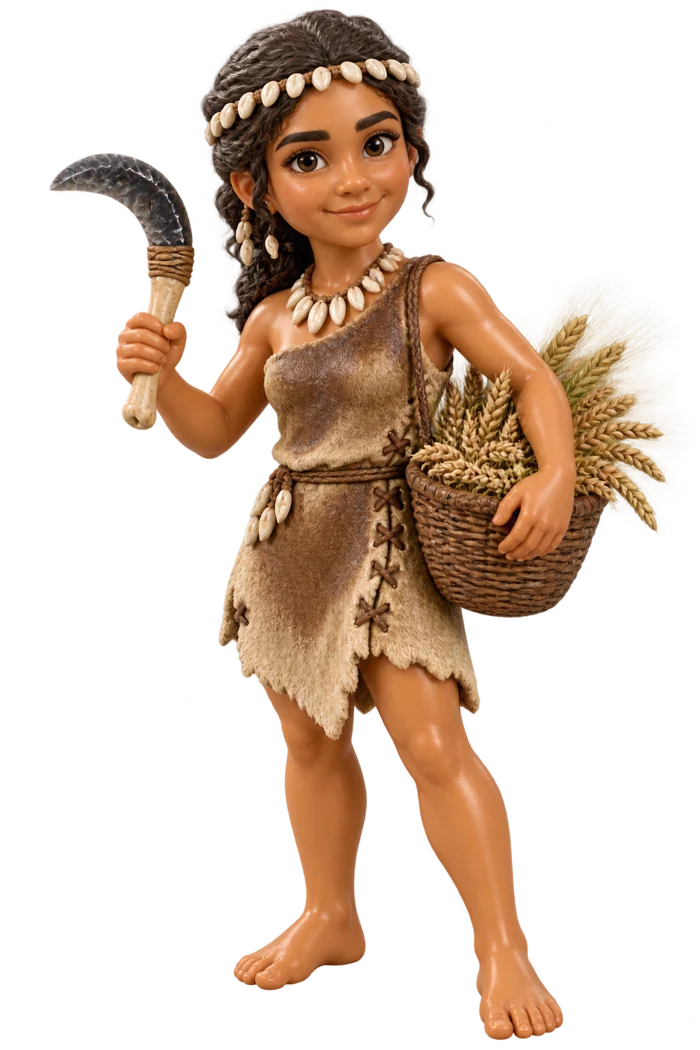
They cut wild cereal stalks with flint sickles, which still carry a telltale shine from the silica in the stems, and ground the grain in heavy stone mortars. At Shubayqa 1 in north-eastern Jordan, about 14,400 years ago, they made a flat bread of wild cereals and tubers, the oldest known, some 4,000 years before farming began. At Tell Abu Hureyra in Syria there are signs of deliberate cultivation of rye. Their descendants likely built the first Neolithic farming villages.
They traded Anatolian obsidian and Nile shells, carved small animals and figures, and buried their dead with necklaces and pendants of shell, deer teeth and bone. The culture was named by the English archaeologist Dorothy Garrod after the Wadi Natuf, near Shuqba Cave, where she dug in 1928.
Read more on Wikipedia