Industrial age · politics
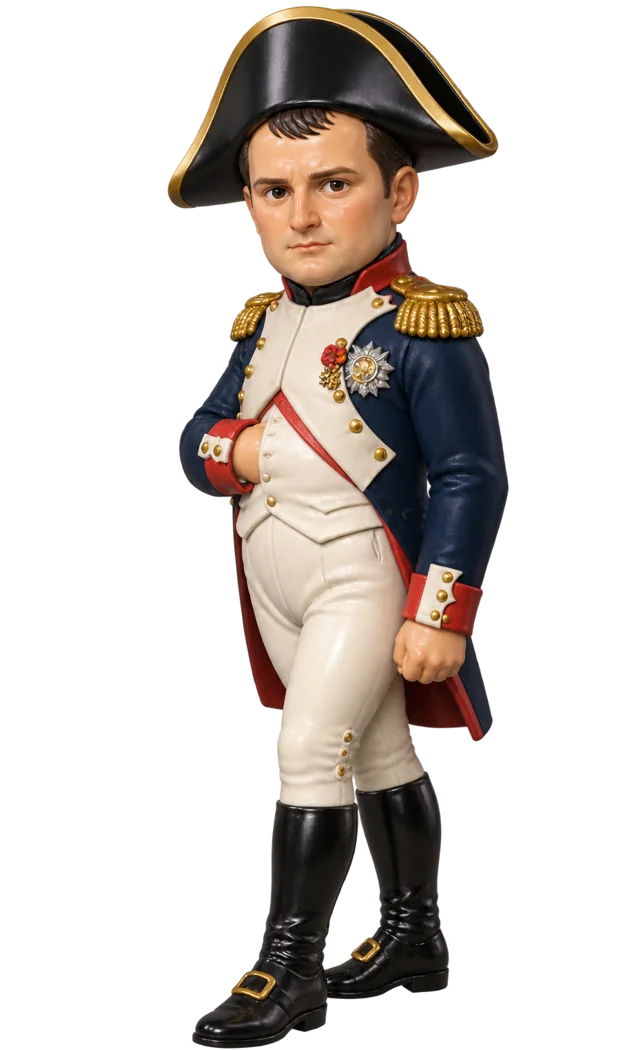
Napoleon
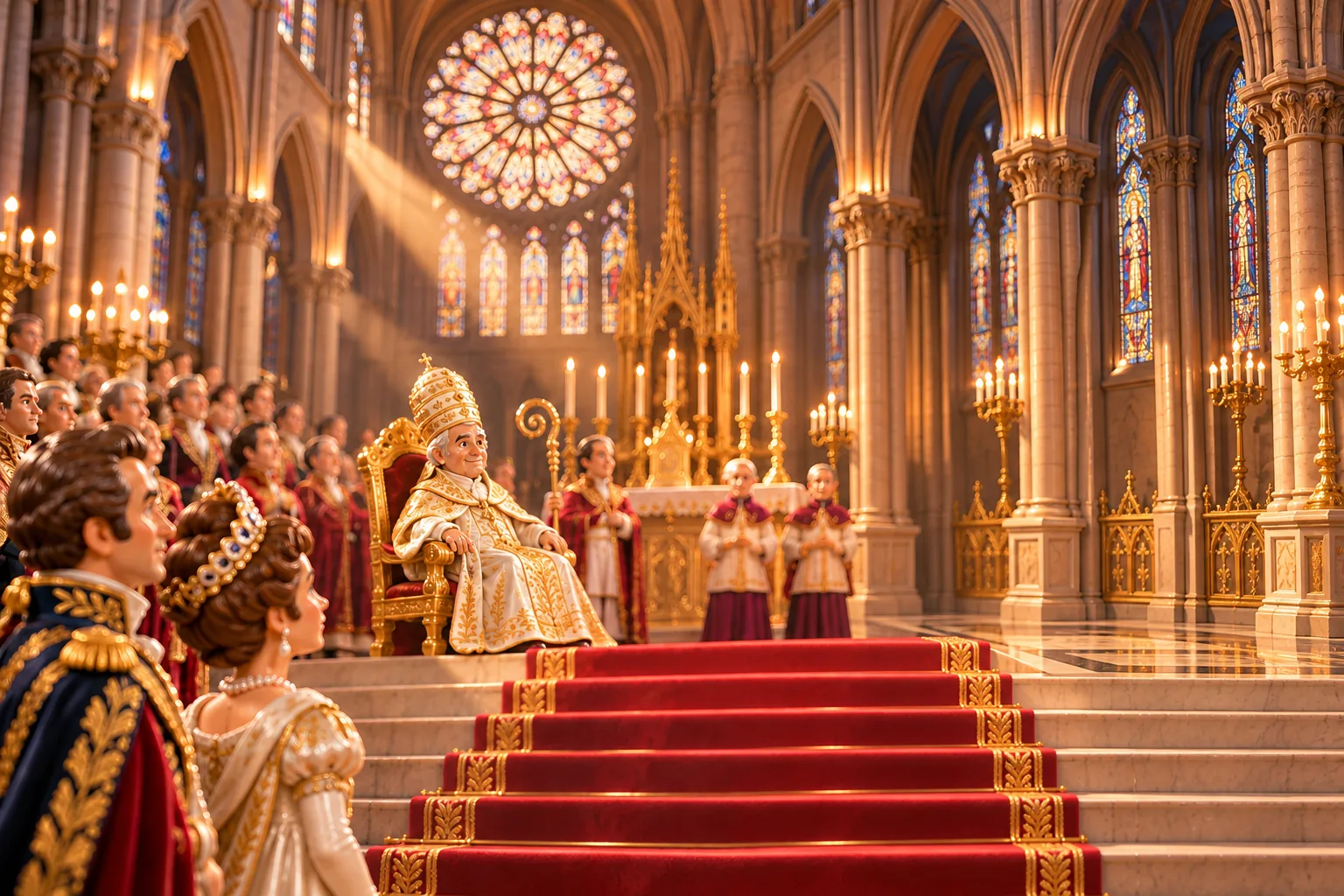
With the pope sitting beside the altar, Napoleon lifted the crown and put it on his own head.
Napoleone di Buonaparte was born on 15 August 1769 in Ajaccio, on Corsica, an island that had passed from Genoa to France only the year before. He trained as an artillery officer, and the French Revolution opened doors that would have stayed shut for a minor noble from the provinces. He rose fast in the revolutionary army, and in November 1799 he seized power in a coup and became First Consul of the Republic.
In May 1804 the Senate turned the Republic over to an emperor, and a referendum approved it by a huge margin. Napoleon wanted his new dynasty to look as old and sacred as any in Europe, so he invited Pope Pius VII to Paris. The coronation took place on 2 December 1804 in Notre-Dame. The old royal crown had been destroyed in the Revolution, so a new one was made to look medieval and was called the Crown of Charlemagne. As the pope recited the prayers, Napoleon took off his laurel wreath, crowned himself, and then crowned his wife Joséphine as she knelt before him. Jacques-Louis David turned the scene into a vast painting.
A year later he won his greatest battle at Austerlitz, on the first anniversary of the coronation. His empire would stretch across most of Europe before the invasion of Russia in 1812 broke his army. He abdicated in 1814, came back for a hundred days in 1815, lost at Waterloo and died in exile on Saint Helena on 5 May 1821. His civil code, introduced in March 1804, outlived him: his armies carried it across Europe, and it influenced law in many parts of the world.
Read more on Wikipedia
Sources: en.wikipedia.org/wiki/Napoleon, en.wikipedia.org/wiki/Coronation of Napoleon