Antiquity · state
Nabataeans
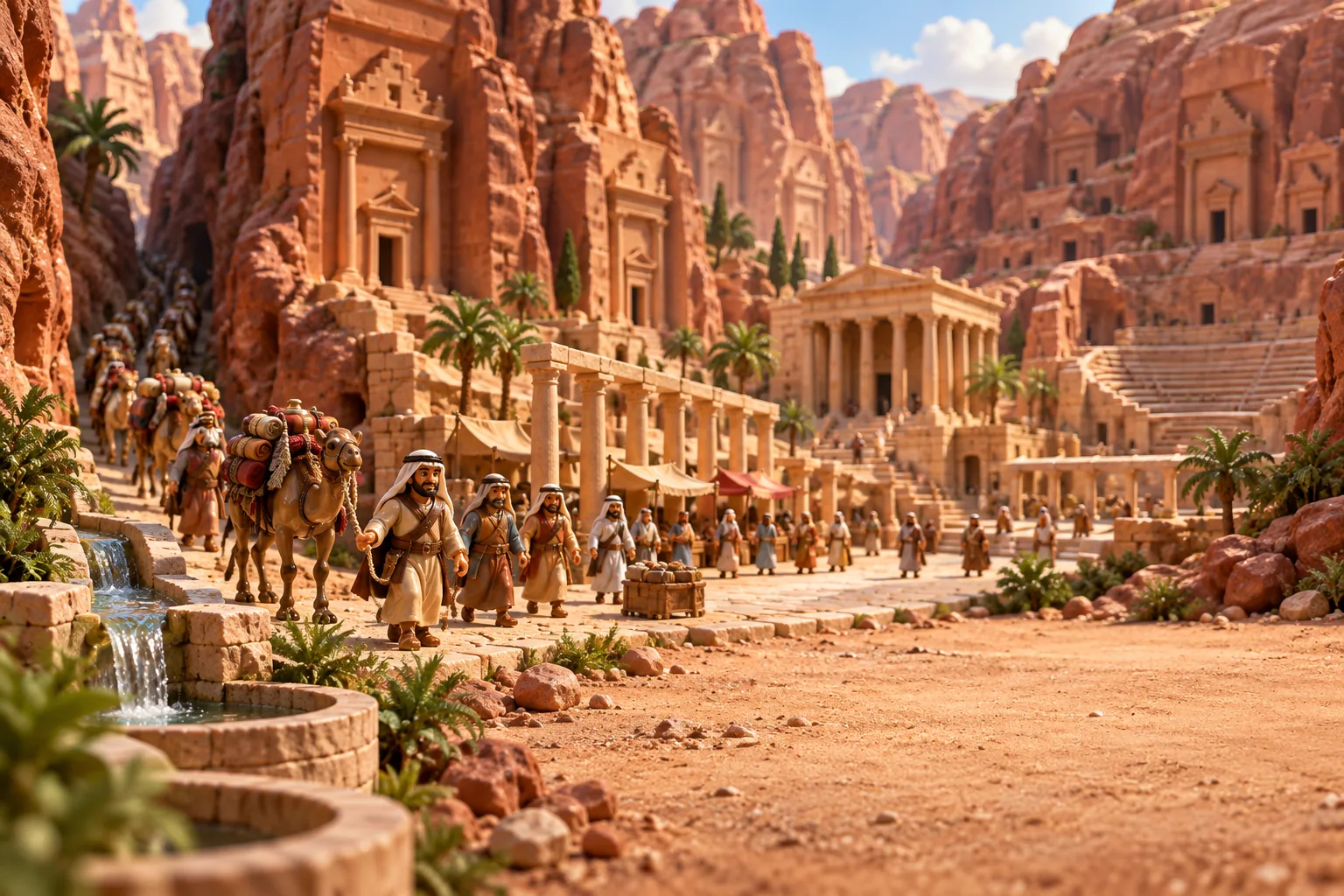
Desert traders hid their rainwater in secret cisterns, kept their routes a secret and carved a capital out of a rose-red cliff.
The Nabataeans were an Arab people of the southern Levant and northern Arabia. They first appear in 312 BC, when an officer of Antigonus I attacked them without success. The Greek writer Diodorus describes them as nomads with some 10,000 warriors who refused to farm or drink wine and grew rich carrying frankincense, myrrh and spices from southern Arabia to the ports, and bitumen from the Dead Sea to Egypt.
As the Seleucid Empire decayed, they became a kingdom and pushed north east of the Jordan. Around 85 BC King Aretas III became lord of Damascus. In 62 BC the Roman general Scaurus took a bribe of 300 talents to lift his siege of Petra, and Aretas kept his lands as a Roman vassal. The Nabataeans fought the Hasmonean kings of Judea and later Herod the Great.
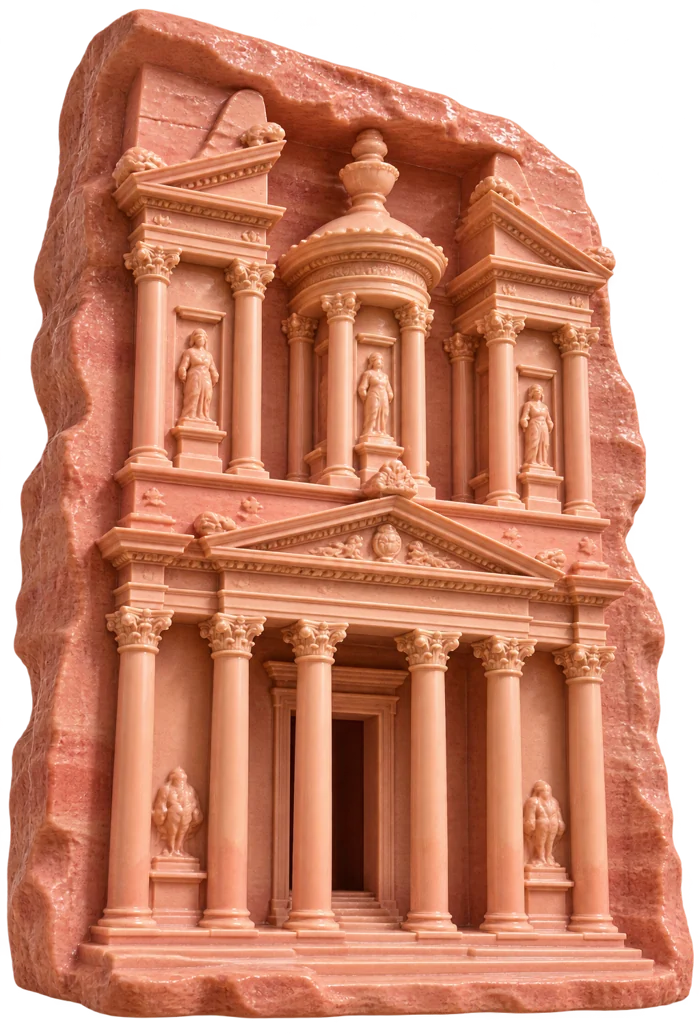
Petra grew fast in the 1st century BC and reached about 20,000 people. Under Aretas IV, who reigned from 9 BC to AD 40, the kingdom flourished and the tomb facade now called al-Khazneh, the Treasury, was cut into the cliff, possibly as his mausoleum. In 106 Emperor Trajan made the kingdom the Roman province of Arabia Petraea.
Read more on Wikipedia
Sources: en.wikipedia.org/wiki/Nabataeans, en.wikipedia.org/wiki/Petra, en.wikipedia.org/wiki/Aretas IV Philopatris