Ancient world · state
Mycenaean Greece
Agamemnon's legendary city gave its name to a civilization that wrote the earliest known Greek in a script called Linear B.
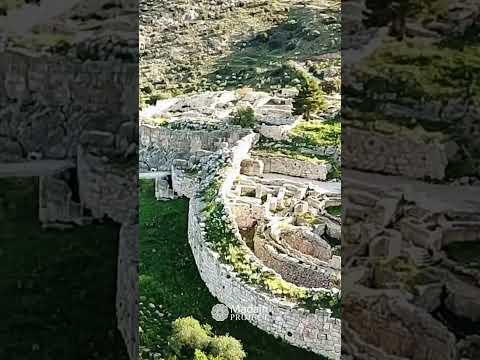
Mycenaean Greece was the last phase of the Bronze Age in Greece, from about 1750 to 1050 BC. It is named after Mycenae in the Argolid, Agamemnon's city in Homer, where Heinrich Schliemann began the first modern excavations in Greece in 1876. Other centres of power included Pylos, Tiryns and Midea in the Peloponnese, Thebes, Orchomenos and Athens in central Greece, and Iolcos in Thessaly. Around 1450 BC a Mycenaean elite took over the palace of Knossos on Crete.
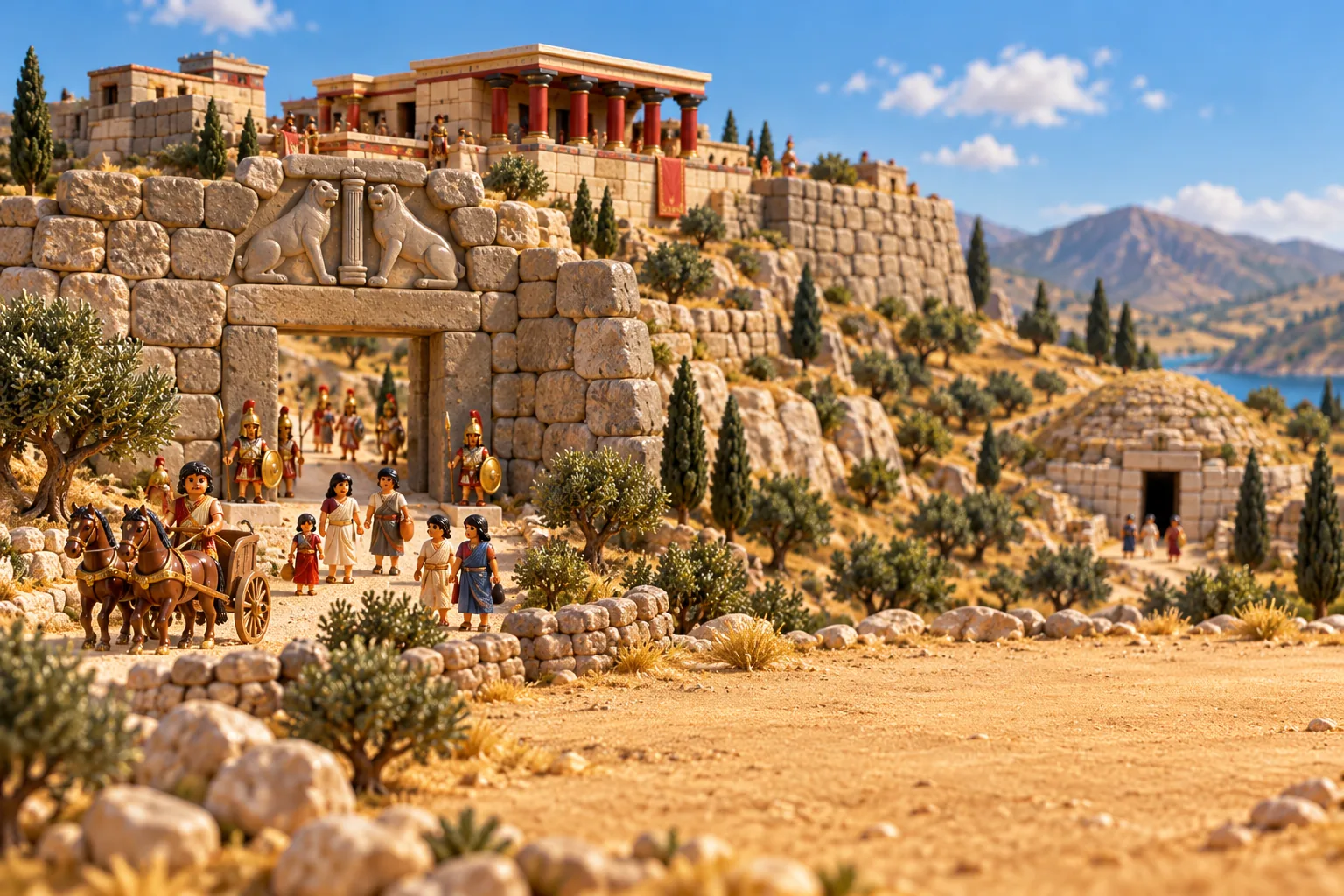
Each state was ruled from a palace by a king, the wanax, whose scribes kept records on clay tablets in Linear B, a syllabic script for Greek. When Michael Ventris deciphered it in 1952, it proved to be the oldest known Greek dialect. The gods already included Poseidon, who seems to have held a special place. From about 1400 BC huge Cyclopean walls rose at Mycenae and Tiryns, and later the Lion Gate became the entrance to Mycenae's citadel. Mycenaean trade reached Cyprus, Apulia in Italy and Spain.
From about 1250 BC waves of destruction struck the centres of mainland Greece for reasons archaeologists cannot identify. Mycenaean Greece perished in the wider collapse of the Bronze Age world of the eastern Mediterranean, blamed by various theories on a Dorian invasion or the Sea Peoples, and a recordless period, the Greek Dark Ages, followed.
Read more on Wikipedia