
Early modern · exploration
Mutiny on the Bounty
Cast adrift in an open boat with 18 men, Bligh sailed some 3,500 nautical miles to safety, while the mutineers vanished for 18 years.
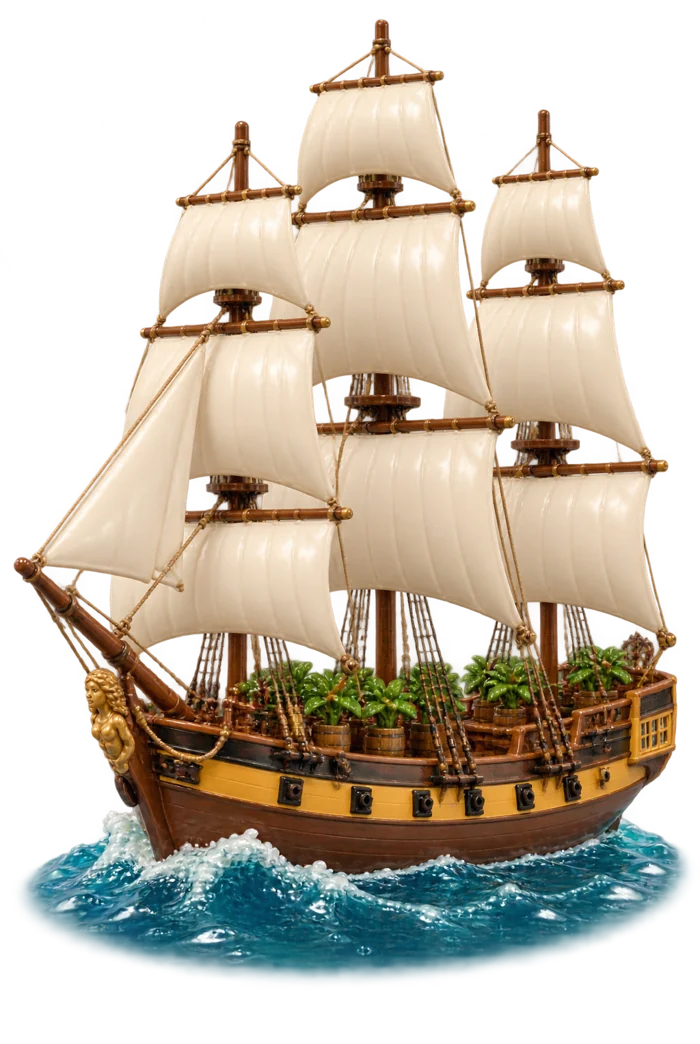
HMS Bounty was a small three-masted ship, 91 feet long, bought by the Royal Navy in 1787 to carry breadfruit plants from Tahiti to the West Indies as cheap food for enslaved workers. Lieutenant William Bligh, who had sailed with Captain Cook, commanded it, and he made Fletcher Christian acting lieutenant. After storms off Cape Horn the ship reached Tahiti and stayed five months while the plants were gathered. Many of the men lived ashore and formed relationships with Tahitians, and back at sea they chafed under Bligh's harsh discipline and abuse, with Christian his favourite target.
In the early hours of 28 April 1789, about 30 nautical miles south of the island of Tofua, Christian and his supporters seized the upper deck, armed themselves and tied Bligh's hands. Bligh and 18 loyal men were put into the ship's open launch. After a deadly clash on Tofua, Bligh sailed some 3,500 nautical miles west and reached the Dutch settlement of Kupang on Timor on 14 June.
Christian took Bounty back to Tahiti, then went looking for a hiding place. On 15 January 1790 he found Pitcairn Island, which was marked on the charts 188 nautical miles from its true position. The mutineers burned the ship eight days later. The navy sent HMS Pandora, which caught fourteen men on Tahiti; of the ten who survived to stand trial, three were hanged. When an American ship found Pitcairn in 1808, only one mutineer, John Adams, was still alive.
Read more on Wikipedia