
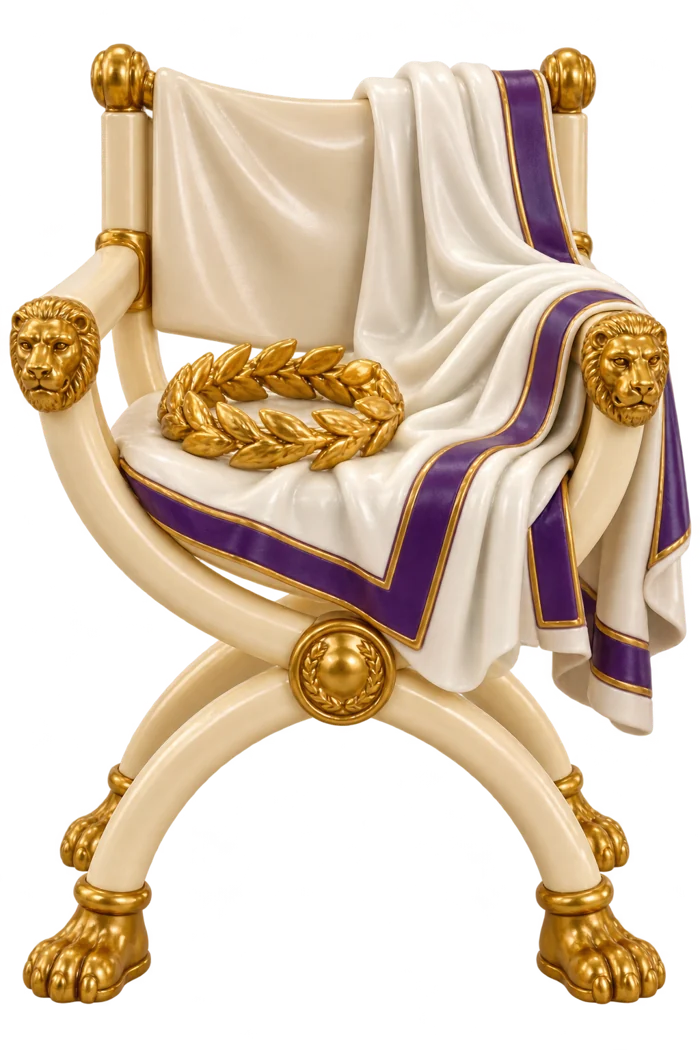
Antiquity · politics
Murder of Caesar
About sixty senators killed Julius Caesar to save the Republic, and seventeen years later Rome had an emperor instead.
By early 44 BC Julius Caesar had won a civil war and been named dictator for life. To many senators he looked like a king in all but name. At the Lupercalia festival on 15 February, Mark Antony twice placed a diadem on his head. Caesar set it aside, but many suspected he was testing the crowd. A week later Gaius Cassius Longinus and his brother-in-law Marcus Junius Brutus agreed that something had to be done.
The plotters chose a Senate meeting on the Ides of March, 15 March, in the Curia of Pompey beside Pompey's theatre. That morning Caesar's wife Calpurnia, shaken by a nightmare, persuaded him to stay home, until the conspirator Decimus Brutus talked him round. On the way Caesar passed the seer Spurinna, who had warned him about the Ides, and joked that the day had come; Spurinna answered that it had not yet gone. Inside, Tillius Cimber grabbed his toga, the Casca brothers struck, and the rest closed in. Caesar was stabbed 23 times and fell near a statue of Pompey.
The killers marched through the city proclaiming Rome free, and were met with silence. Caesar's will made his 18-year-old grandnephew Octavian his heir, and Antony turned the crowds against the assassins. Brutus and Cassius were defeated at Philippi, Caesar was declared a god in 42 BC, and in 27 BC Octavian, now called Augustus, became sole master of the Roman world.
Read more on Wikipedia
Sources: en.wikipedia.org/wiki/Assassination of Julius Caesar
