Early modern · person
Mungo Park
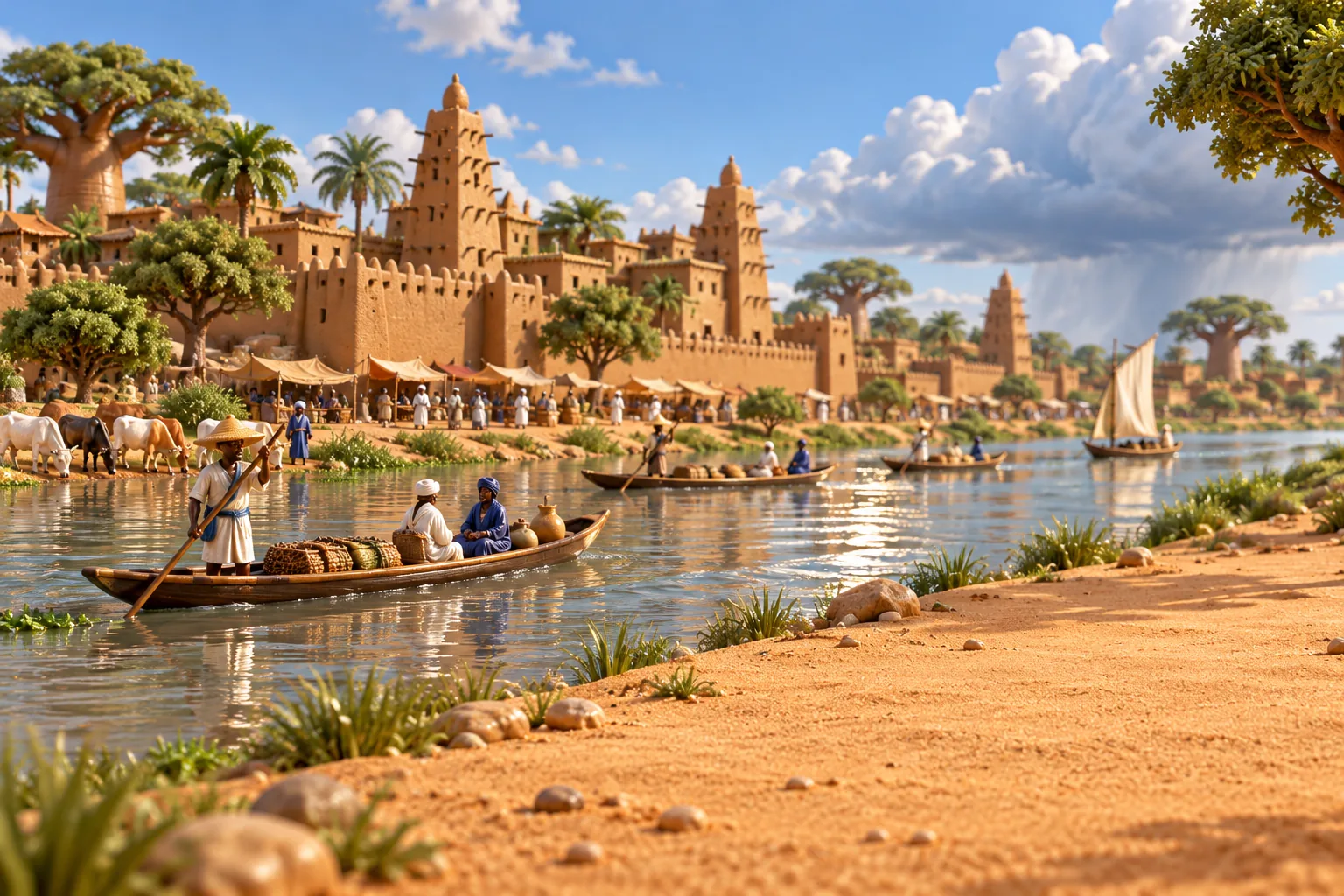
He escaped a four-month captivity with nothing but his horse and a pocket compass, and twenty days later he stood on the bank of the Niger at Ségou.
Mungo Park was born on 10 September 1771 at Foulshiels on the Yarrow Water near Selkirk, the seventh of thirteen children of a tenant farmer. At fourteen he was apprenticed to the Selkirk surgeon Thomas Anderson, and from 1788 he studied medicine and botany at Edinburgh. Joseph Banks found him a post as surgeon's mate on the East India Company ship Worcester, which sailed to Sumatra in 1793, and on his return he described eight new Sumatran fish to the Linnean Society.
The African Association then chose him to find the course of the Niger. He reached the Gambia River in June 1795 and on 2 December set off inland from the trading station of Pisania. At Ludamar a Moorish chief held him prisoner for four months. He escaped on 1 July 1796, and on 21 July reached the Niger at Ségou, the first European to do so. He followed it 80 miles downstream before turning back, and fell ill at Kamalia, where a local man cared for him for seven months. Given up for dead, he reached Britain in December 1797, and his Travels in the Interior Districts of Africa became a best-seller.
He married Allison Anderson, practised as a doctor in Peebles and befriended Walter Scott. In 1805 he returned to lead a government expedition, built the boat Joliba at Sansanding and sailed down the Niger for about 1,000 miles, until in 1806 it stuck on a rock at the Bussa rapids and he drowned.
Read more on Wikipedia