Early modern · person
Mulla Sadra
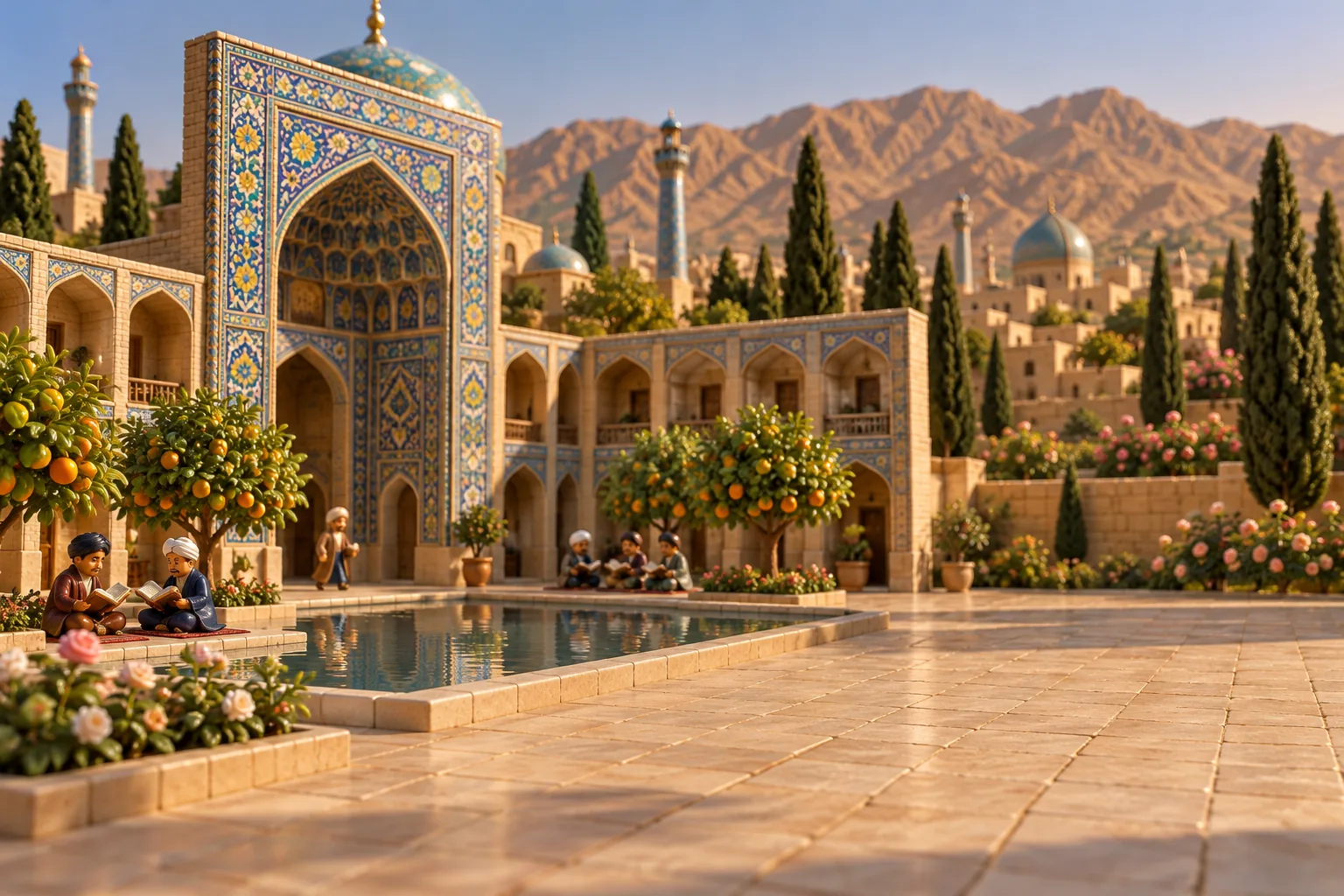
Condemned by clerics for his ideas, he lived for years in a village near Qom. In 1612 the governor of Fars called him home to Shiraz to teach in a brand-new school.
Sadr al-Din Muhammad Shirazi, known as Mulla Sadra, was born in Shiraz in 1571 or 1572, the only child of Khwajah Ibrahim Qavami, a rich and powerful official of Fars province under the Safavid dynasty. Taught by private tutors, he quickly mastered Persian and Arabic literature and calligraphy, along with riding, mathematics, astronomy, some medicine and Islamic law, but he was drawn above all to mystical philosophy. In 1591 he went to Qazvin and later to Isfahan, successive Safavid capitals, to study with Mir Damad, whom he called his true teacher, and Shaykh Baha'i.
When he began to explore unorthodox ideas, some Shi'i scholars condemned him, and he withdrew for a long time to Kahak, a village near Qom, to meditate and write. In 1612 Ali Quli Khan, the powerful governor of Fars, invited him back to Shiraz to teach at the newly built Khan School, where he spent the rest of his life teaching what he called the Transcendent Theosophy. His main work, the Four Journeys of the Intellect, joined the philosophy of Avicenna, Suhrawardi's Illuminationism and the mysticism of Ibn Arabi, with existence, not essence, as the one true reality.
He died in Basra on his way back from the pilgrimage to Mecca and was buried in Najaf. His pupils, among them his son-in-law Fayz Kashani, spread his ideas, and his influence grew strongly in the 19th century.
Read more on Wikipedia
Sources: en.wikipedia.org/wiki/Mulla Sadra