Early modern · state
Mughal Empire
A prince from Central Asia with cannon won India in a single battle, and his great-great-grandson built the Taj Mahal.
Babur, a Timurid prince from the Fergana Valley in Central Asia, defeated Ibrahim Lodi, the Sultan of Delhi, at the First Battle of Panipat in 1526, where his gunpowder weapons beat a larger army. His son Humayun was driven into exile in Persia by Sher Shah Suri and won back his throne only in 1555, dying in an accident the next year.
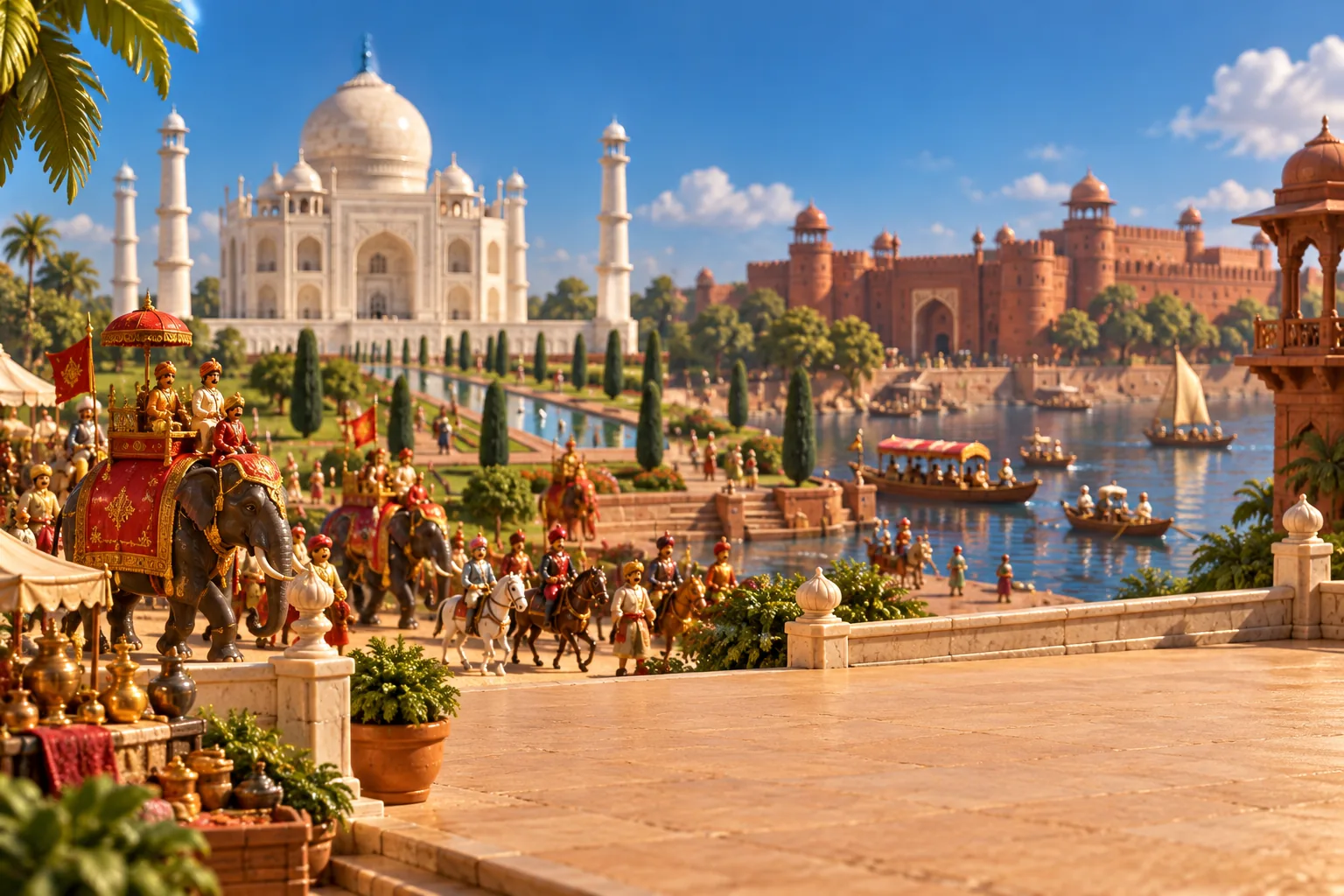
Humayun's son Akbar, who reigned from 1556 to 1605, built the imperial system: a land tax paid in silver coin, ranked military officers and freedom of religion at court. Under Shah Jahan, from 1628 to 1658, the court's splendour reached its peak, and he built the Taj Mahal at Agra. Until 1750 India produced about a quarter of the world's manufactured goods. Aurangzeb, who ruled from 1658 to 1707, pushed the empire to its greatest size, from Kashmir to the Deccan, but brought back the jizya tax on non-Muslims.
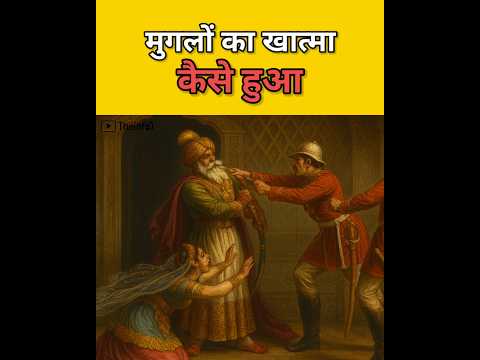
After Aurangzeb's death the empire split into regional powers. In 1739 the Persian ruler Nader Shah sacked Delhi and carried off the Mughal treasury, and by 1760 the emperor held little more than the area around Delhi. The British East India Company took real control, and after the Indian Rebellion of 1857 the last emperor, Bahadur Shah Zafar, was deposed and exiled to Rangoon in 1858.
Read more on Wikipedia
Sources: en.wikipedia.org/wiki/Mughal Empire