Our time · nature
1980 eruption of Mount St. Helens
The mountain swelled for weeks like a blister, and then an earthquake let the whole north side slide off and the volcano exploded sideways.
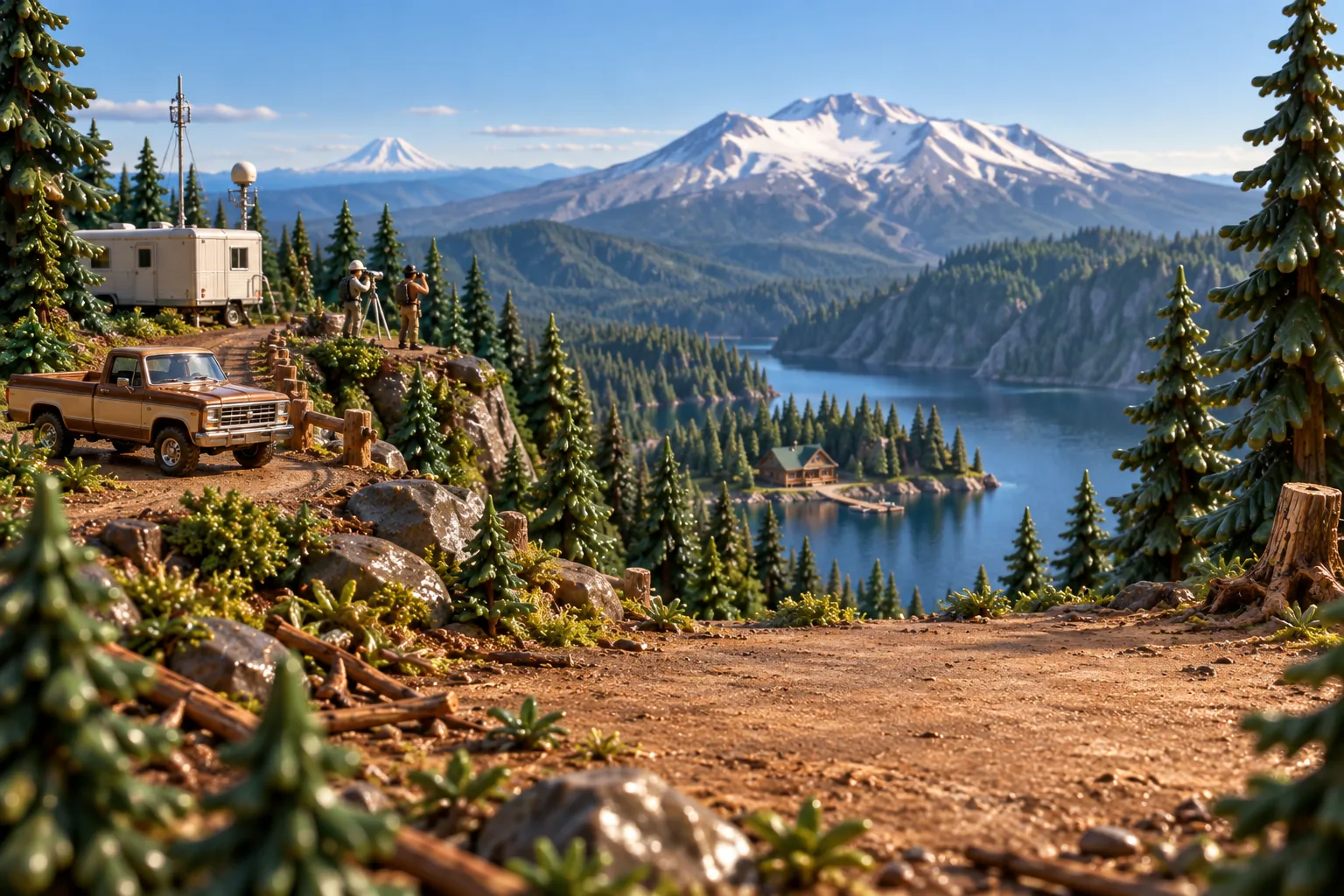
Mount St. Helens in the Cascade Range had been quiet since the 1850s. On 20 March 1980 a magnitude 4.2 earthquake under its north flank announced it was waking up, and on 27 March steam explosions blasted a new crater in the summit. Magma pushing up inside formed a huge bulge on the north slope. Scientists watched it grow through April and May, and the area around the mountain was closed.
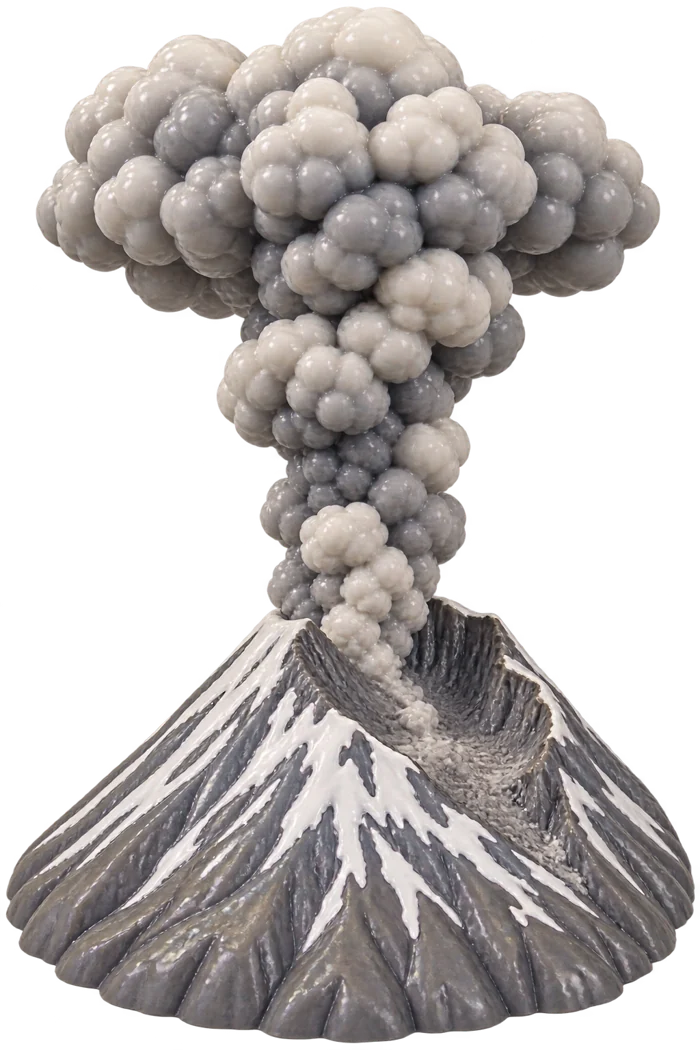
At 8:32 a.m. on Sunday 18 May an earthquake shook the weakened north face loose. It slid away in the largest landslide in recorded history, and the pressurised magma behind it exploded sideways towards Spirit Lake. The blast sped up to around 670 mph and flattened forests for miles. The landslide threw up a wave about 600 feet high in Spirit Lake. A column of ash rose 12 miles in under ten minutes; by noon Spokane, 285 miles east, was dark, and ash fell in 11 states. Melted glaciers sent mudflows as far as the Columbia River.
About 57 people died, among them the volcanologist David A. Johnston at his observation post six miles away, the photographer Reid Blackburn and the innkeeper Harry R. Truman, buried with his lodge at Spirit Lake under hundreds of feet of debris. The mountain lost about 1,300 feet of height and was left with a horseshoe-shaped crater open to the north. The area was later preserved as the Mount St. Helens National Volcanic Monument.
Read more on Wikipedia
Sources: en.wikipedia.org/wiki/1980 eruption of Mount St. Helens


