Our time · politics
Montgomery bus boycott
A whole city's Black community chose to walk, share cars and ride mules for more than a year rather than sit at the back of the bus.
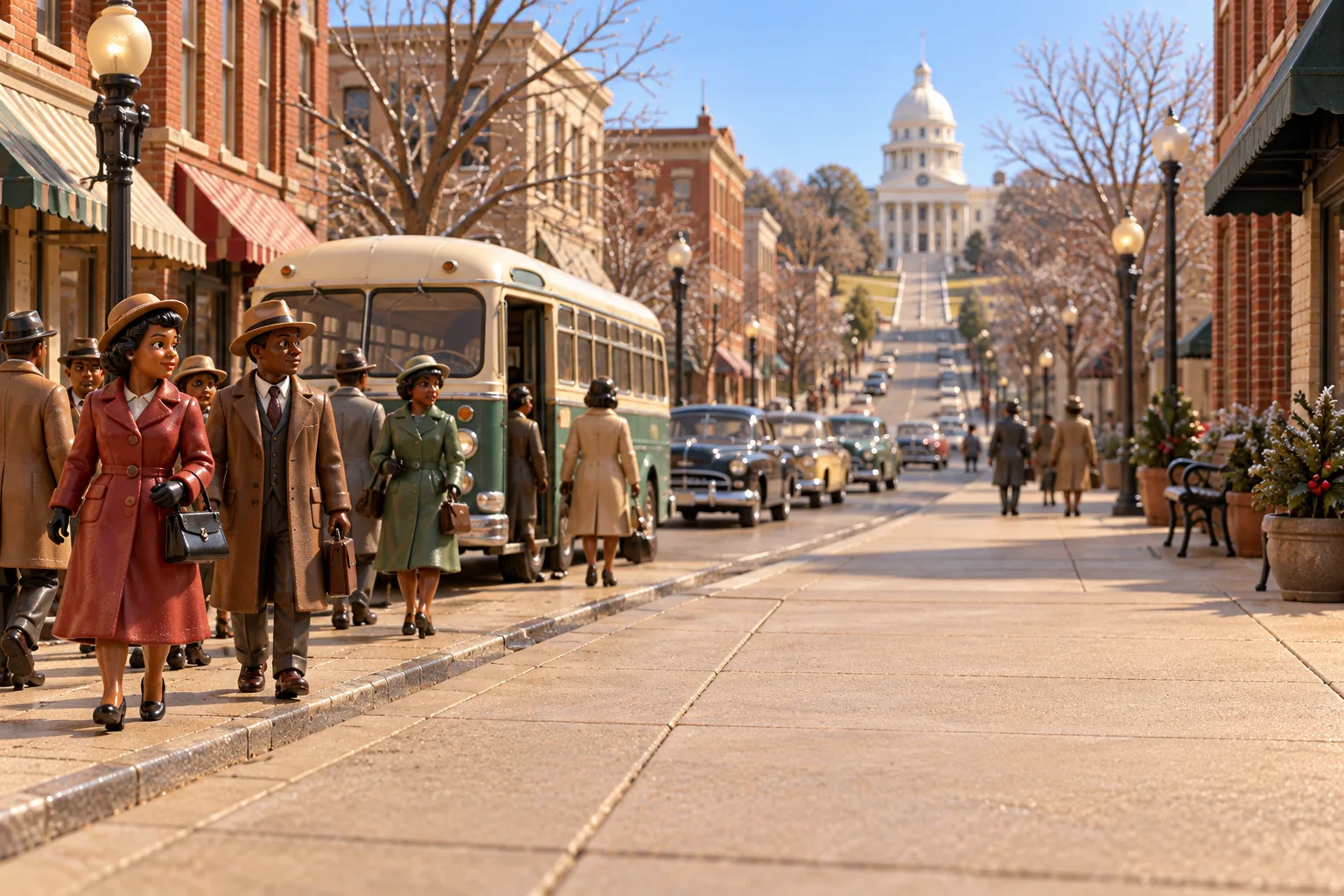
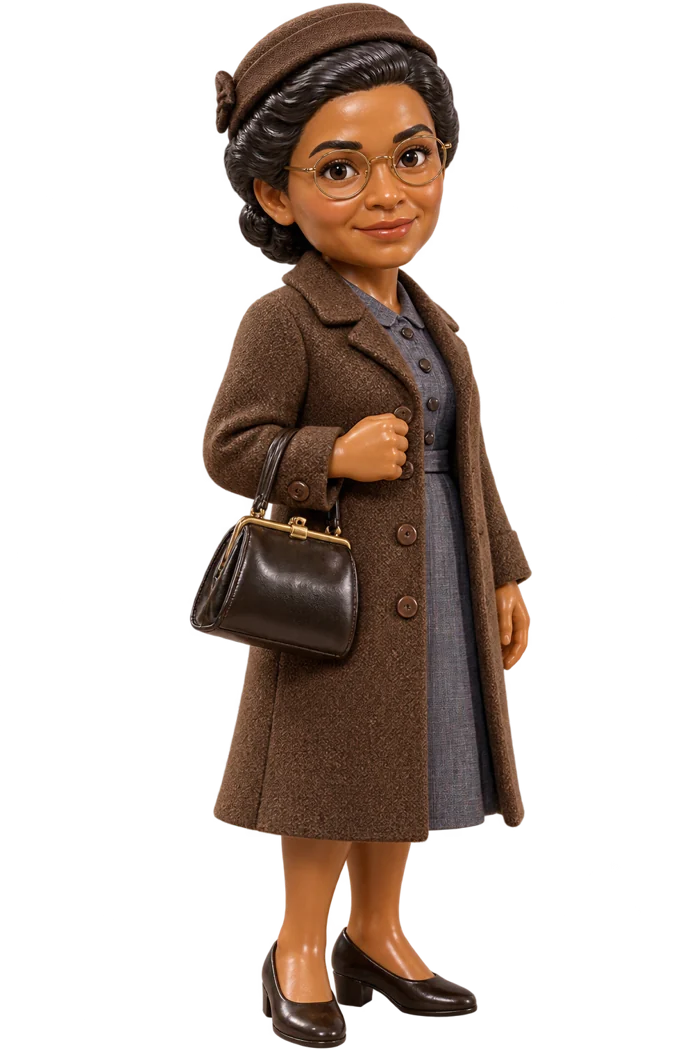
On Montgomery's buses the ten front seats were kept for white passengers, and Black riders, who made up about three quarters of all passengers, had to give up seats in the middle section whenever a driver told them to. On 1 December 1955 Rosa Parks, a seamstress and secretary of the local NAACP chapter, refused to move back when a white man boarded. She was arrested, and on 5 December she was found guilty and fined $10 plus $4 in court costs.
That night after her arrest, the Women's Political Council led by Jo Ann Robinson spread flyers asking everyone to stay off the buses on Monday. Local leaders formed the Montgomery Improvement Association and chose a young minister new to the city, Martin Luther King Jr., to lead it. People organised carpools, Black taxi drivers charged only the ten-cent bus fare, and others walked, cycled or rode mules and buggies. When the city pushed local firms to drop insurance for the carpool cars, the organisers insured them through Lloyd's of London.
Opponents struck back. King's and Ralph Abernathy's houses were bombed, and King and 88 others were indicted under an old anti-boycott law. Meanwhile a federal court ruled in Browder v. Gayle on 5 June 1956 that bus segregation was unconstitutional, and the Supreme Court upheld it on 13 November. The boycott ended on 20 December 1956 after 382 days, and King became a national leader of the civil rights movement.
Read more on Wikipedia


