
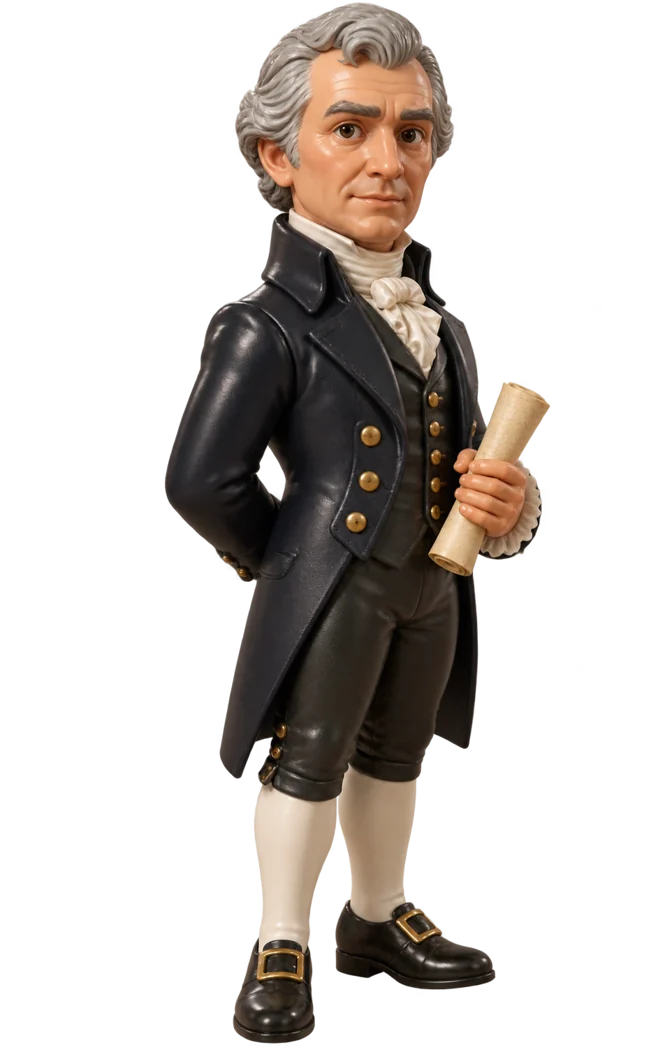
Industrial age · politics
Monroe Doctrine
When it was announced, the United States had no navy or army able to back it up, and the European powers largely ignored it.
By 1823 nearly all of Spain's colonies in the Americas had won or were close to winning independence. In Europe, after the Napoleonic Wars, Prussia, Austria and Russia had formed the Holy Alliance to defend monarchy. The United States decided to answer, and Secretary of State John Quincy Adams wrote most of the text.
On 2 December 1823, in his seventh annual message to Congress, President James Monroe declared that the American continents were "henceforth not to be considered as subjects for future colonization by any European powers". The New World and the Old were to remain separate spheres. Any European attempt to control or influence the independent states of the Americas would be seen as a threat to the United States. In return, the US would leave existing European colonies alone and stay out of Europe's internal affairs.
At first the doctrine had little force, and it was ignored several times in the 19th century, notably when France intervened in Mexico in the 1860s. By the start of the 20th century the United States could enforce it, and in 1904 Theodore Roosevelt added the Roosevelt Corollary. Presidents from Ulysses S. Grant to John F. Kennedy and Ronald Reagan invoked it. In November 2013 Secretary of State John Kerry told the Organization of American States that "the era of the Monroe Doctrine is over".
Read more on Wikipedia


