Middle Ages · war
Mongol invasions of Japan
The word kamikaze, 'divine wind', was first used for the storms that wrecked two Mongol fleets off the coast of Japan.
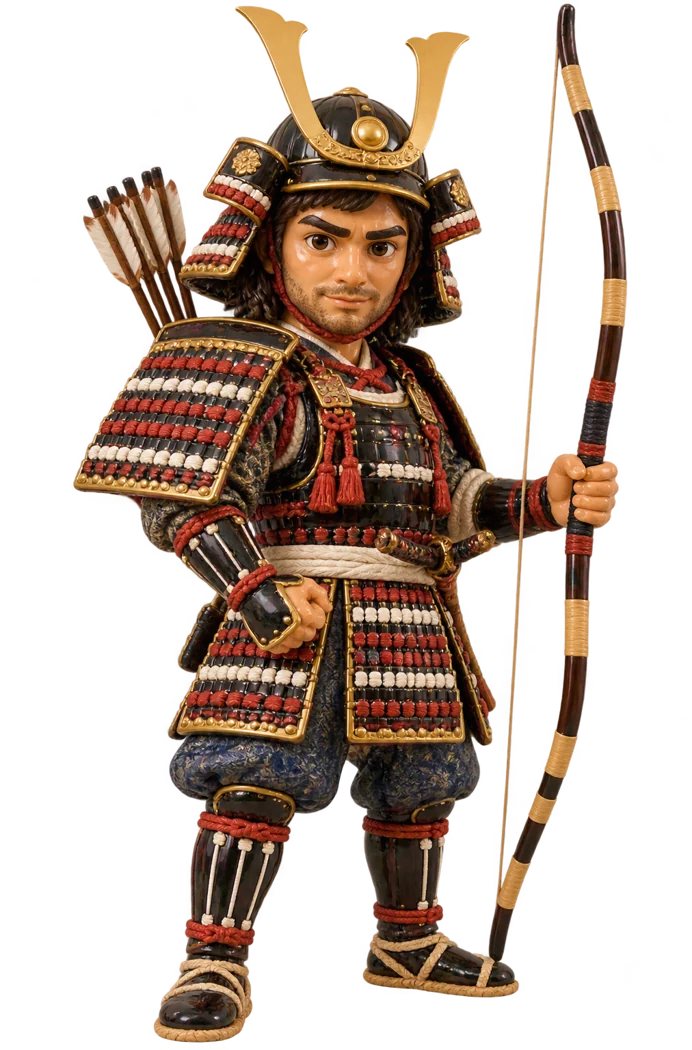
Kublai Khan, who became Great Khan of the Mongols in 1260, had made Korea's kingdom of Goryeo his vassal. Between 1266 and 1273 he sent envoys to Japan six times to demand its submission. Japan was ruled by regents of the Hōjō clan for the Kamakura shogunate, and they simply ignored the letters. In November 1274 a Mongol, Chinese and Korean fleet sailed from Korea, overran the islands of Tsushima and Iki and landed in Hakata Bay in Kyushu. The samurai fought a fierce but disorganised one-day battle, and the invaders threw iron bombs, one of the earliest uses of gunpowder weapons outside China. By the next morning most of the fleet had gone, driven off by a sudden wind and storm.
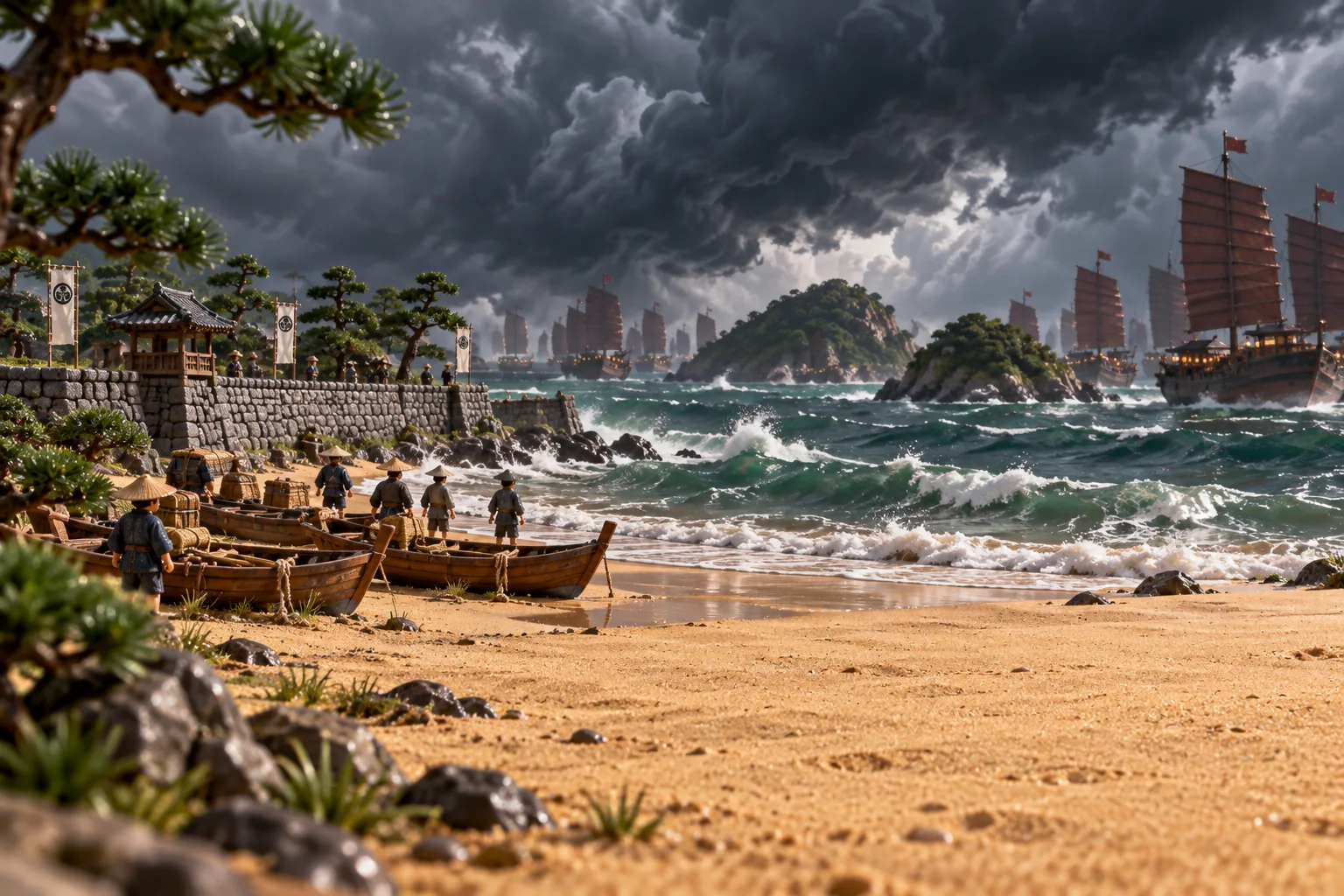
Japan prepared for a second attack. In 1276 a stone wall about two metres high was built along the shore of Hakata Bay. When Kublai sent envoys again in 1275, the regent Hōjō Tokimune had them beheaded. In 1281 two fleets came, one from Korea and one from southern China; the sources speak of 900 ships from Korea and 3,500 from China with 142,000 men, though modern historians think the real force was far smaller. The wall stopped the landings, and small Japanese boats raided the fleet at night.
On 15 August 1281 a great typhoon struck the fleet at anchor and wrecked it. Thousands of stranded soldiers were killed or captured. The Mongols never tried again.
Read more on Wikipedia
