Middle Ages · state
Mongol Empire
Within about fifty years riders from the Mongolian steppe built the largest connected land empire in history, from the Pacific to the Danube.
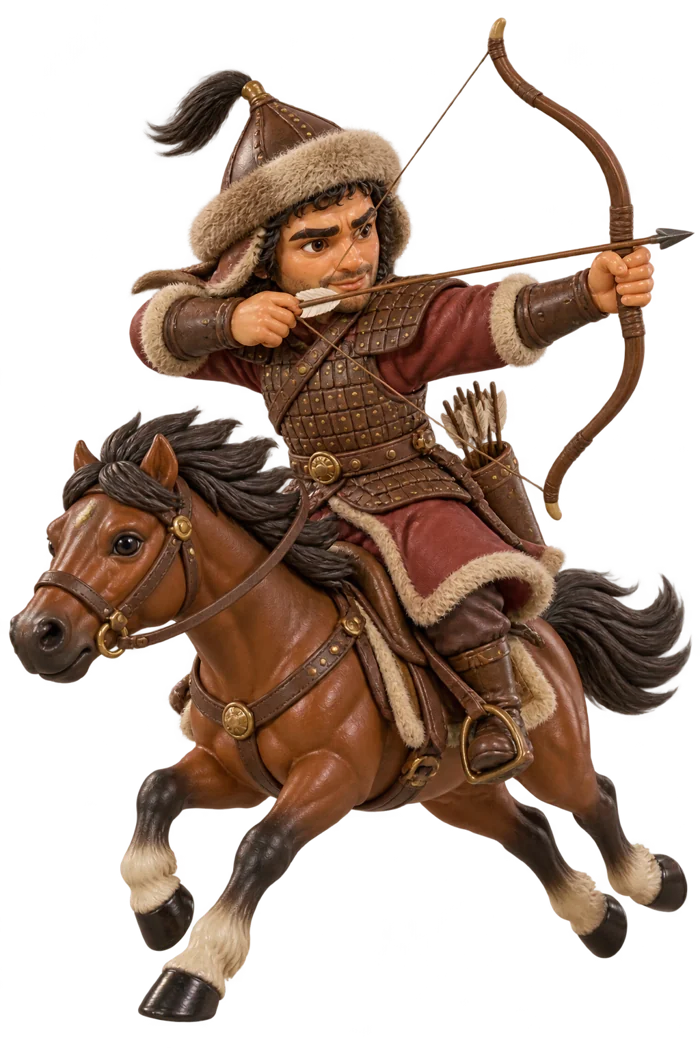
In 1206 an assembly of the steppe tribes proclaimed Temüjin Genghis Khan. He reorganised every Mongol man into army units of ten, a hundred, a thousand and ten thousand, and led them against the Western Xia, the Jin dynasty in northern China and the Khwarazmian Empire in Central Asia. When he died in 1227 the conquests went on.
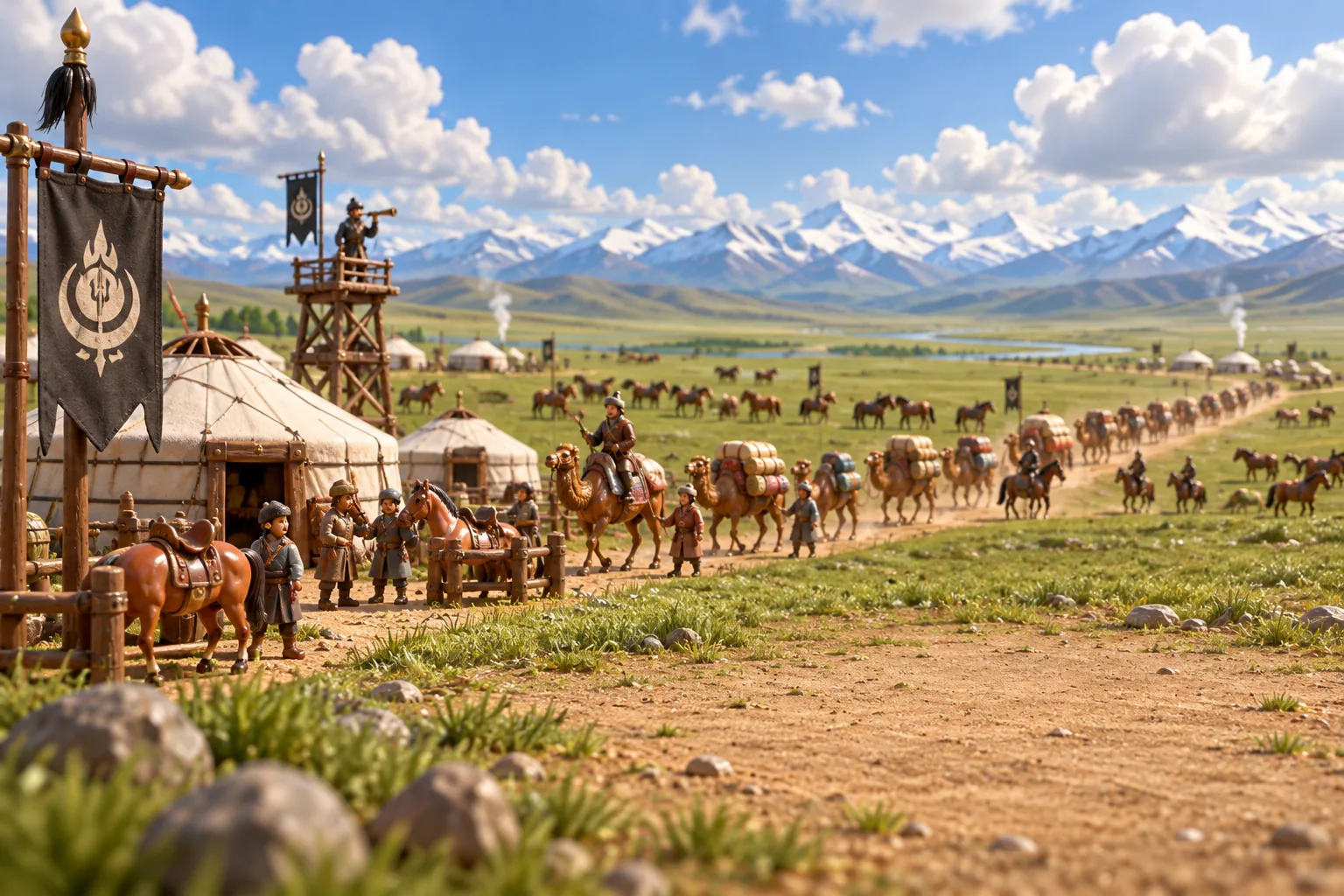
His son Ögedei built a capital at Karakorum. Batu and the general Subutai crushed the Rus principalities from 1237 and in 1241 defeated Polish and Hungarian armies at Legnica and Mohi, then turned back after news of Ögedei's death. In 1258 Hülegü sacked Baghdad and ended the Abbasid Caliphate, but in 1260 the Mamluks of Egypt stopped the Mongols at Ain Jalut. A chain of relay stations with fresh horses, the yam, carried orders across the whole empire, and merchants and envoys like Marco Polo travelled its roads.
After the great khan Möngke died in 1259, the empire broke into four parts: the Golden Horde in the west, the Chagatai Khanate in Central Asia, the Ilkhanate in Persia and the Yuan dynasty of Kublai Khan in China, who conquered the Song by 1279. In 1368 the Ming drove the Yuan out of China.
Read more on Wikipedia
Sources: en.wikipedia.org/wiki/Mongol Empire, en.wikipedia.org/wiki/Karakorum, en.wikipedia.org/wiki/Mongol invasions of Japan