Ancient world · state
Mitanni
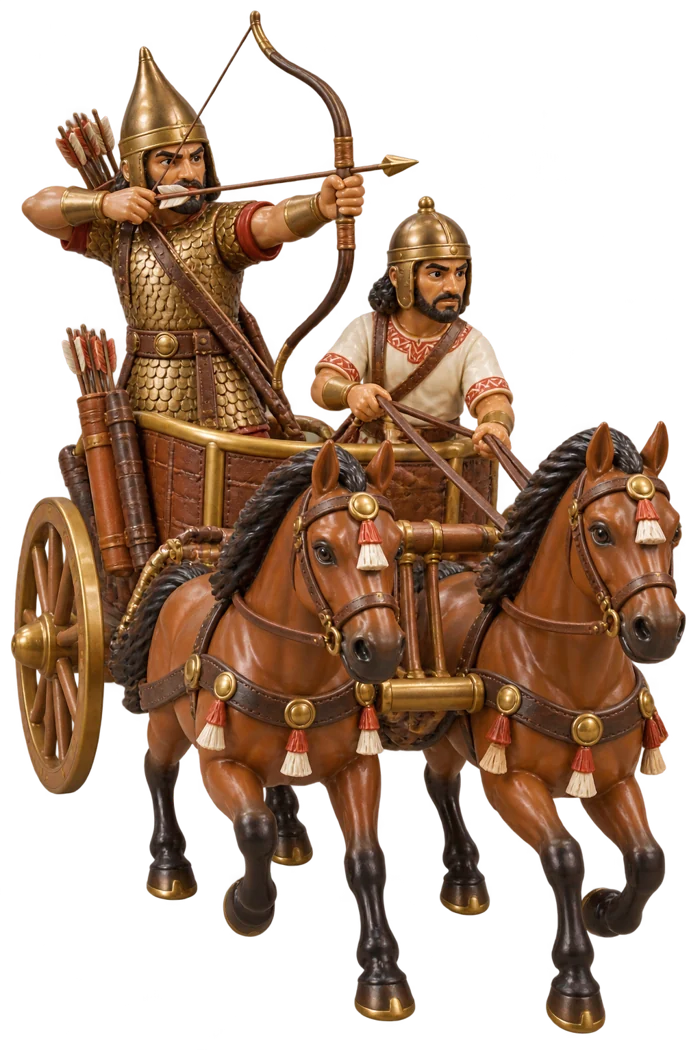
Mitanni's chariot lords had kings with Indo-Aryan names, and their treaty with the Hittites calls on the gods Mitra, Varuna and Indra.
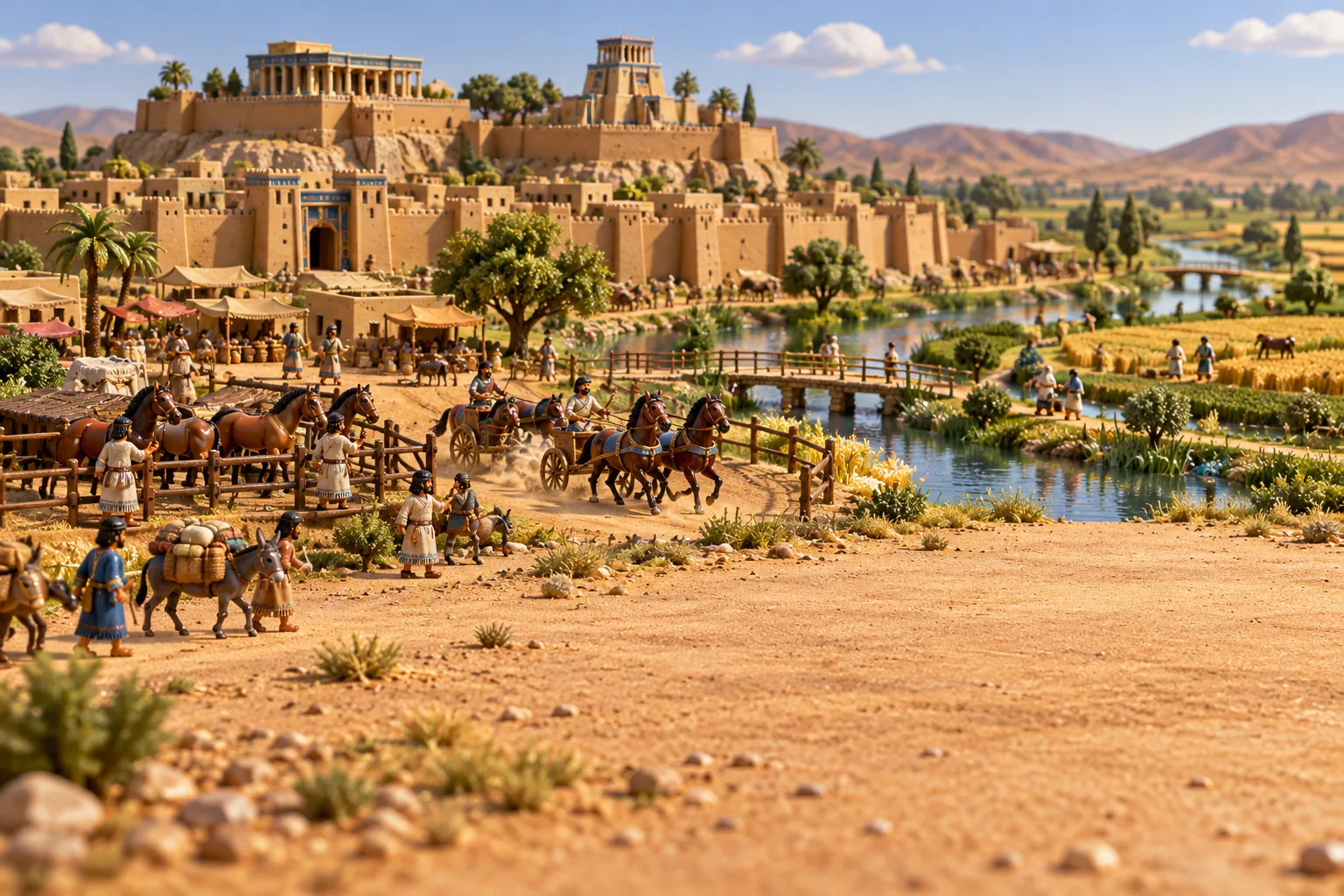
Mitanni was a kingdom of Hurrian-speaking people in northern Syria and south-eastern Anatolia, called Hanigalbat by the Assyrians and Naharin by the Egyptians. Its capital, Washukanni, lay at the headwaters of the Khabur River, most likely at today's Tell Fekheriye. From Shuttarna I on, its kings bore Indo-Aryan throne names, and its power rested on an elite of chariot warriors, the maryannu. King Barattarna pushed west to Aleppo and made Idrimi of Alalakh his vassal, and Assyria in the east became largely a Mitannian vassal.
Egypt under the pharaohs of the Thutmose line was its great rival for Syria, but as the Hittites grew stronger the two made an alliance. In the early 14th century BC Shuttarna II sent his daughter Gilu-Hepa to marry Pharaoh Amenhotep III, and Mitanni was at the peak of its power. His son Tushratta wrote to Egypt in letters found at Amarna and married his own daughter Tadu-Heba to the same pharaoh.
A war over the succession weakened the kingdom. Ashur-uballit I of Assyria seized its eastern lands, and the Hittite king Suppiluliuma I crossed the Euphrates and sacked Washukanni. The Hittites made Tushratta's son Shattiwaza their vassal over a realm shrunk to the Khabur valley, and in the 13th century BC Shalmaneser I of Assyria annexed it.
Read more on Wikipedia
Sources: en.wikipedia.org/wiki/Mitanni, en.wikipedia.org/wiki/Kikkuli