Industrial age · person
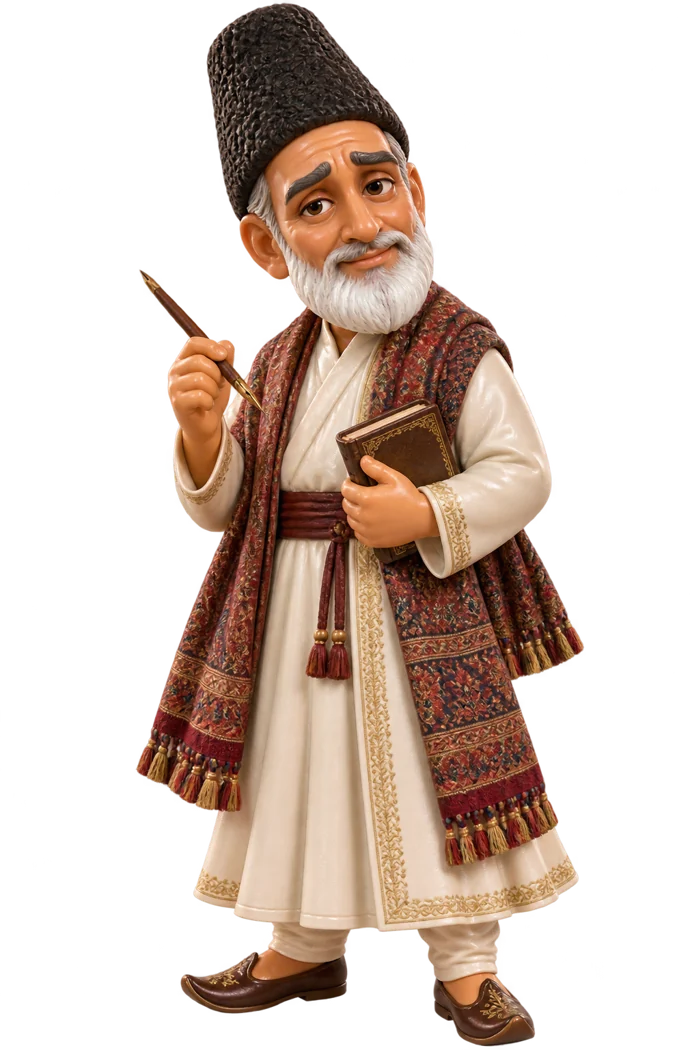
Mirza Ghalib
Hauled before a British colonel after the fall of Delhi in 1857 and asked if he was a Muslim, the poet answered: half. I drink wine, but I don't eat pork.
Mirza Asadullah Beg Khan was born on 27 December 1797 in Kala Mahal, Agra, into a family of Turkic descent; his father died in battle when he was five, and the uncle who raised him died in 1806 after falling from an elephant. He began writing poetry at 11, first under the pen name Asad, the lion, and later as Ghalib, the all-conquering. A Persian visitor who lived in the house for two years taught him Persian, Arabic and logic. At 13 he married Umrao Begum and moved to Delhi. None of their seven children survived infancy.
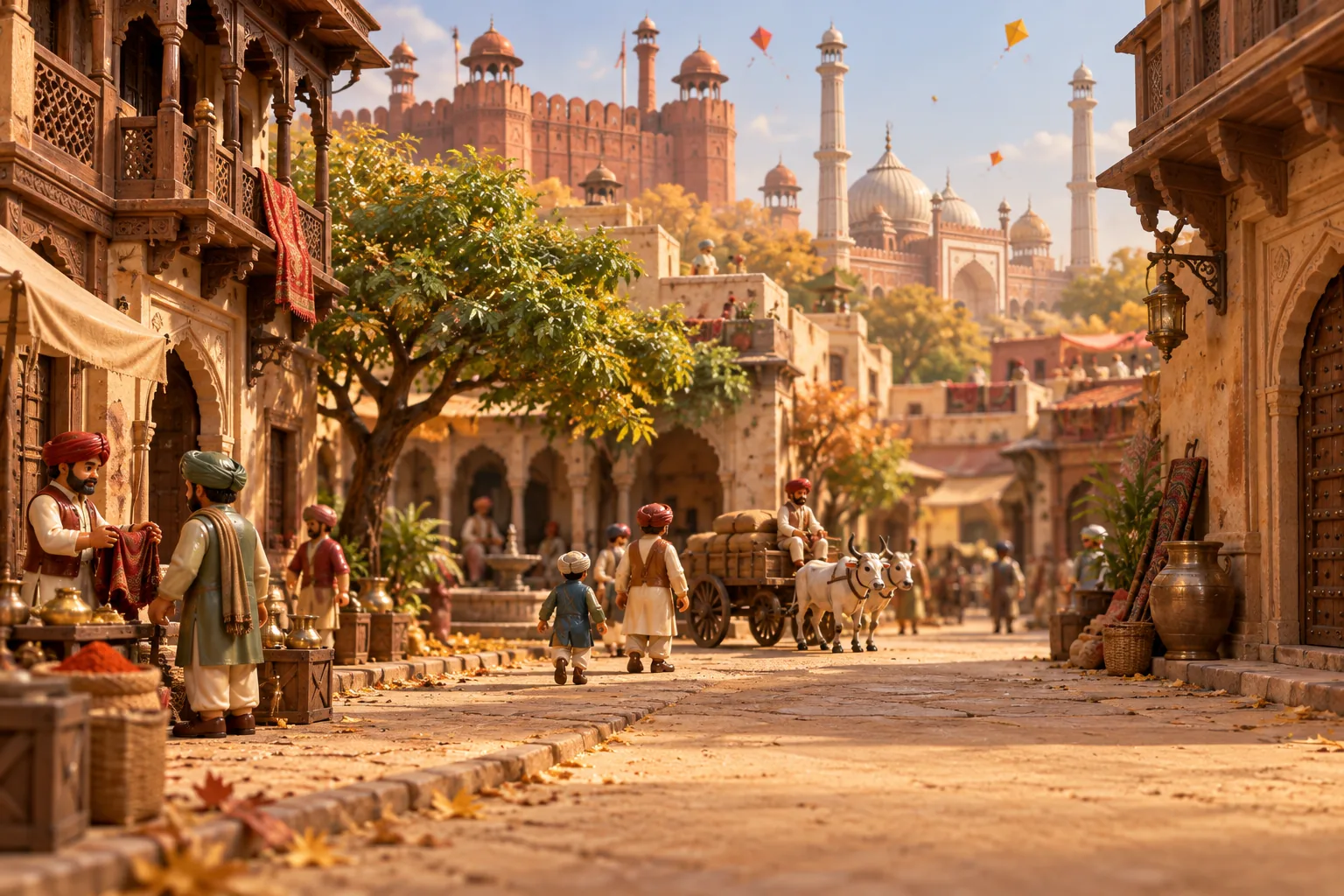
He never worked for a living and lived on patronage, credit and friends, and he made a long journey to Calcutta to plead with the British for his family pension. In 1850 the last Mughal emperor, Bahadur Shah Zafar, himself a poet, gave him the titles Dabir-ul-Mulk and Najm-ud-daula, while the emperor's tutor Zauq was his great rival. Ghalib wrote far more in Persian, but his fame rests on his Urdu ghazals, which carried the form from lovesickness to philosophy and the mysteries of life. In 1857 he lived through the rebellion and the British capture of Delhi, describing it in his Persian Dastanbu and in letters that mourn vanished bazaars and razed mansions.
His conversational letters helped create simple modern Urdu prose. He died in Delhi on 15 February 1869 and was buried near the shrine of Nizamuddin Auliya. His house in Ballimaran, Ghalib ki Haveli, is now a museum.
Read more on Wikipedia
Sources: en.wikipedia.org/wiki/Mirza Ghalib
