Ancient world · nature
Minoan eruption of Thera
A whole Bronze Age town was buried under metres of pumice, yet archaeologists have found almost no one inside: its people seem to have left in time.
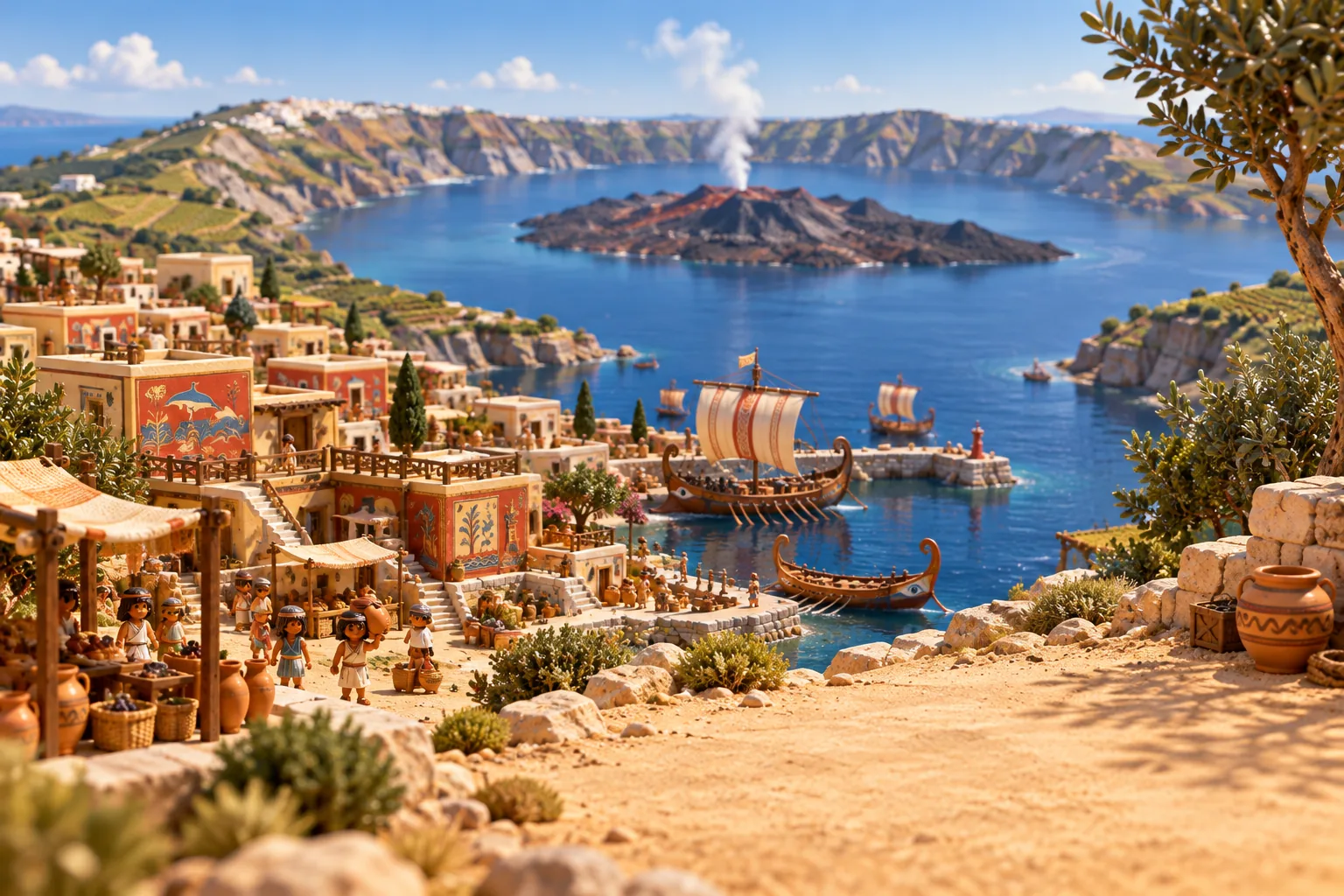
In the Bronze Age the island of Thera, today's Santorini, was a ring of land around a lagoon, home to Akrotiri, a prosperous town of Minoan culture with multi-storey houses and painted walls. The volcano beneath it had erupted and collapsed many times over hundreds of thousands of years. Around 1600 BC it erupted again, rated 7 on the Volcanic Explosivity Index, one of the largest eruptions in human history. A thin first ash layer and signs of earthquakes suggest the islanders had a few months' warning, and no human remains have been found at Akrotiri, so most probably fled.
The main blast sent an eruption column some 30 to 35 kilometres high into the stratosphere. Pumice and ash buried Thera under a white layer up to 60 metres thick, and the northern part of the caldera, filled with ash and lava, collapsed into the sea again. Tsunamis hit the north coast of Crete, 110 kilometres away, knocking walls out of line at towns like Amnisos, and ash fell across the eastern Mediterranean as far as Turkey.
On Crete, Minoan towns were damaged but soon rebuilt, and new palaces rose at Zakros and Phaistos. Because the ash forms a marker layer at sites all over the region, its date matters greatly, but it is still argued over: radiocarbon dating long pointed to the 17th century BC, while links to Egyptian history suggest the 16th.
Read more on Wikipedia