Ancient world · state
Minoan civilization
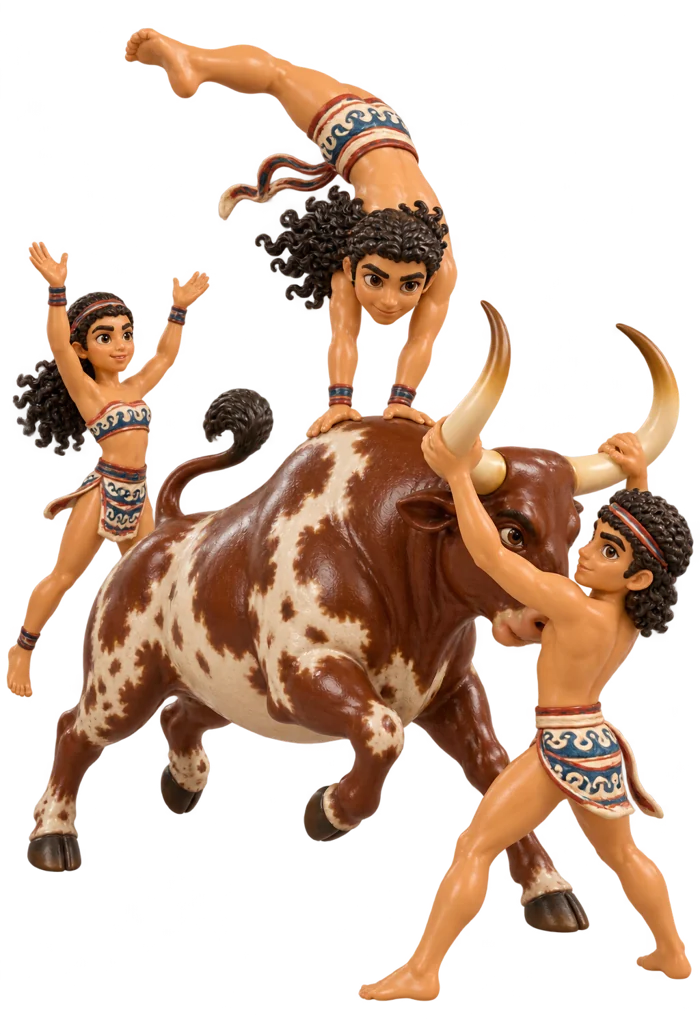
Europe's first civilization painted acrobats leaping over bulls, piped water through its palaces and wrote in a script nobody can read.
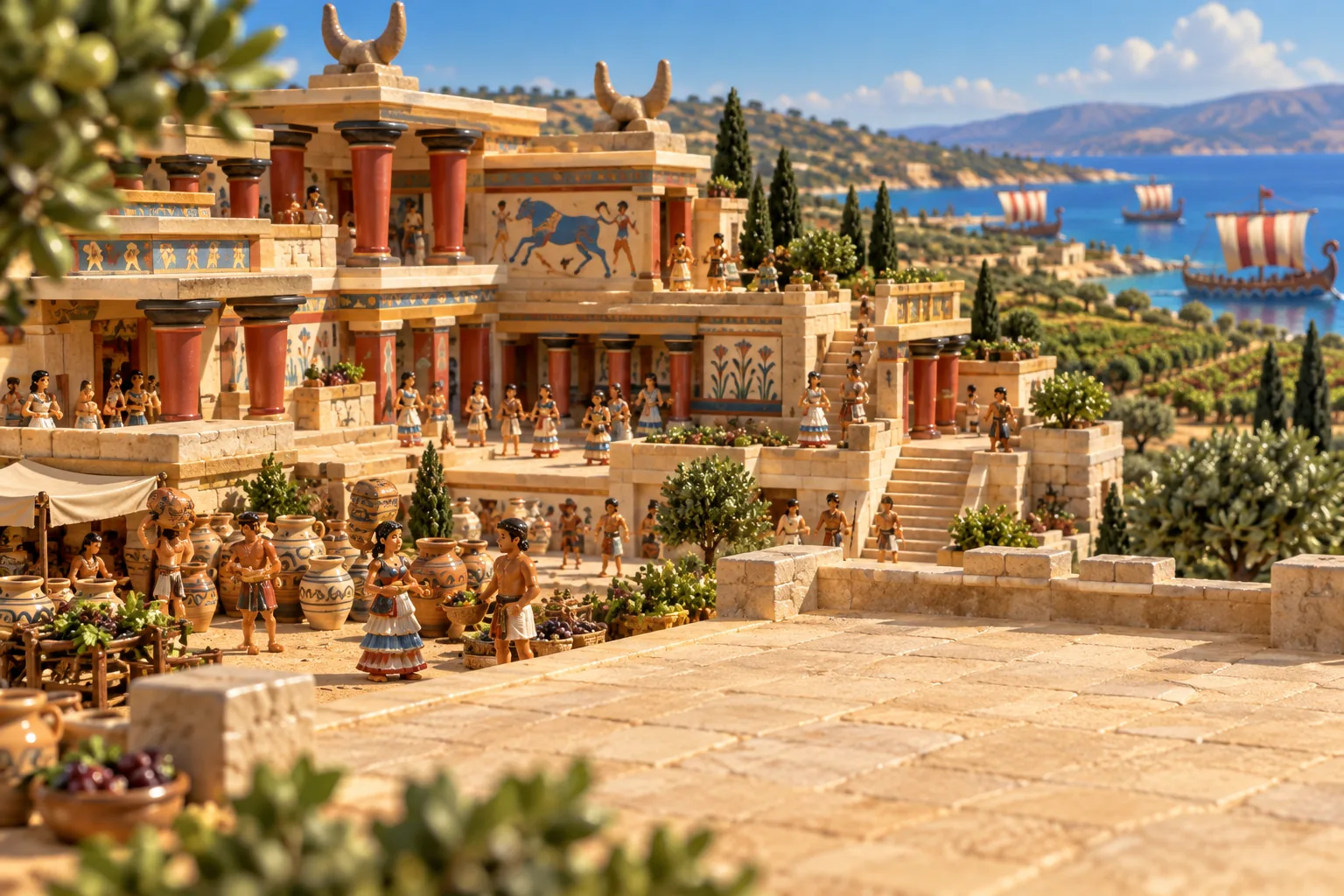
The Minoan civilization grew out of the Neolithic culture of Crete around 3100 BC, and towns appeared around 2000 BC. Around 1925 BC the first great palaces rose at Knossos, Phaistos and Malia, rambling buildings that served religious and economic purposes as much as royal ones. The name Minoan is modern, taken by Arthur Evans from the mythical King Minos. What the Minoans called themselves is unknown, but the Egyptians called them Keftiu.
In the Neopalatial period, from about 1750 BC, most palaces were rebuilt and the Minoans wrote in Linear A. They traded farm produce and fine crafts for metals with Egypt, Cyprus, the Levant and Anatolia, and Minoan-style frescoes appear as far away as Avaris in the Nile Delta. Around 1600 BC the volcano of Thera erupted, one of the largest explosions in recorded history, and buried the town of Akrotiri. Knossos kept prospering, and the following decades brought new buildings, booming trade and the marine style of pottery painted with octopuses.
Around 1470 BC severe destructions struck sites across the island, perhaps by Mycenaean invaders, perhaps in internal unrest. After about 1450 BC Mycenaean Greeks dominated Crete and wrote their Greek in Linear B, and the hybrid culture faded around 1100 BC.
Read more on Wikipedia


