Middle Ages · state
Ming dynasty
A penniless peasant and former Buddhist monk threw the Mongols out of China and founded the dynasty that built the Forbidden City.
The Ming was founded by Zhu Yuanzhang, a penniless peasant and Buddhist monk who joined the Red Turban rebels in 1352. He took Nanjing in 1356, destroyed his rival Chen Youliang at Lake Poyang in 1363 and in 1368 drove the Mongol Yuan out of China, ruling as the Hongwu Emperor. His standing army grew to more than a million men.
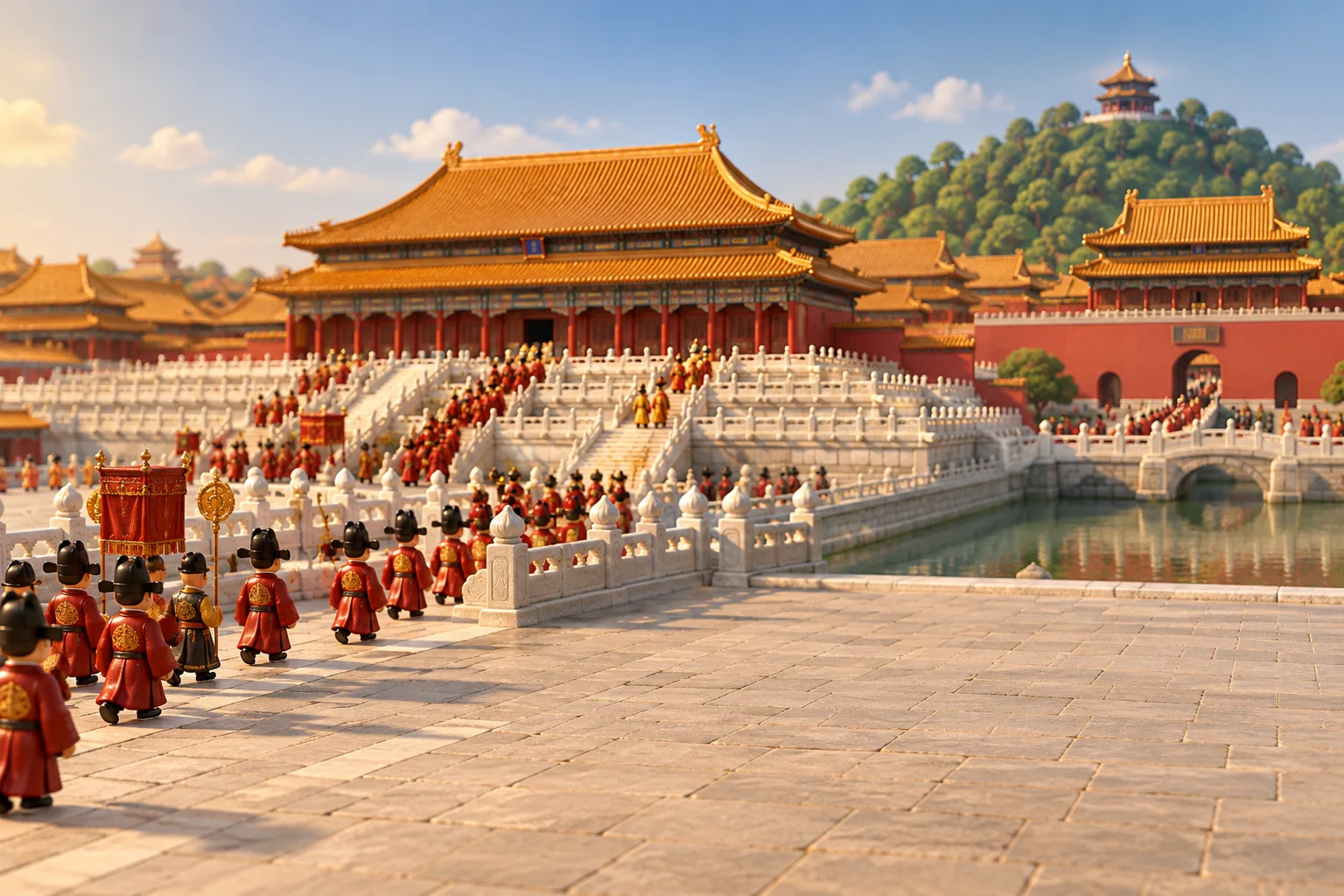
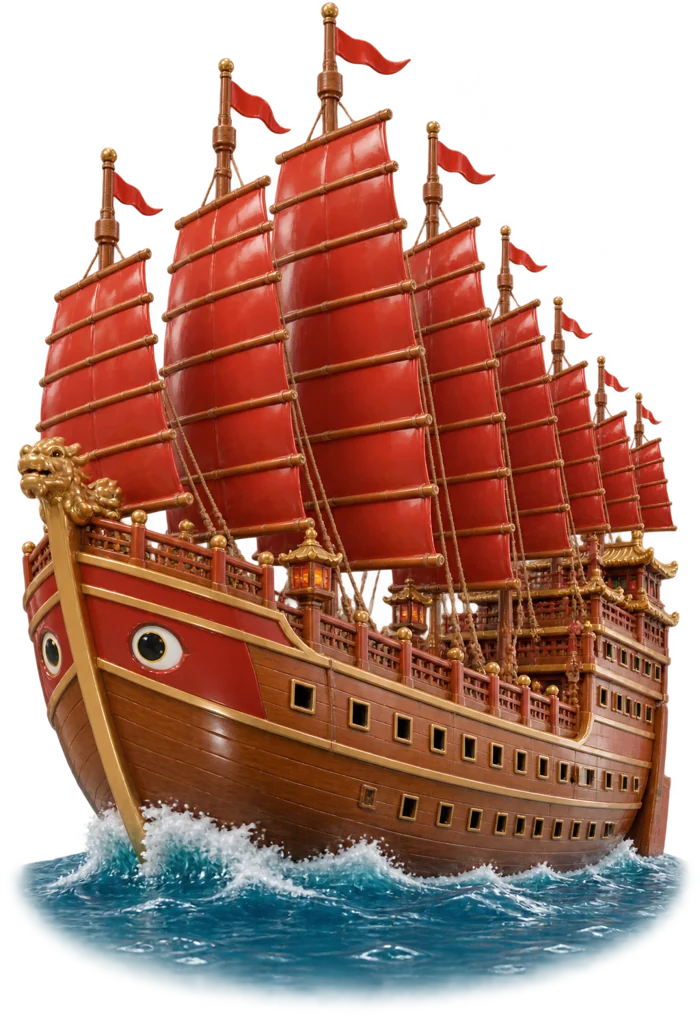
His son, the Prince of Yan, rebelled against his nephew and took the throne as the Yongle Emperor in 1402. Yongle moved the capital to Beijing and built the Forbidden City, and from 1405 his eunuch admiral Zheng He led seven huge voyages across the Indian Ocean as far as Arabia and East Africa. After the Oirat Mongols captured the emperor Yingzong in the Tumu Crisis of 1449, the Ming turned to defence and fortified the Great Wall into its modern form. Later, European traders brought South American silver, maize and potatoes.
In the early seventeenth century a shortage of silver, crop failures, floods and epidemics ruined farmers who owed their taxes in silver. The rebel Li Zicheng took Beijing in 1644, and the last emperor, Chongzhen, hanged himself on a tree in the imperial garden outside the Forbidden City. The Manchu Qing then marched in through the Shanhai Pass, and Ming loyalists in the south held out until 1662.
Read more on Wikipedia
Sources: en.wikipedia.org/wiki/Ming dynasty, en.wikipedia.org/wiki/Yongle Emperor


