Industrial age · state
Mexico
Its capital stands on the ruins of the Aztec city of Tenochtitlan, and its 1917 constitution, written in the middle of a revolution, is still in force.
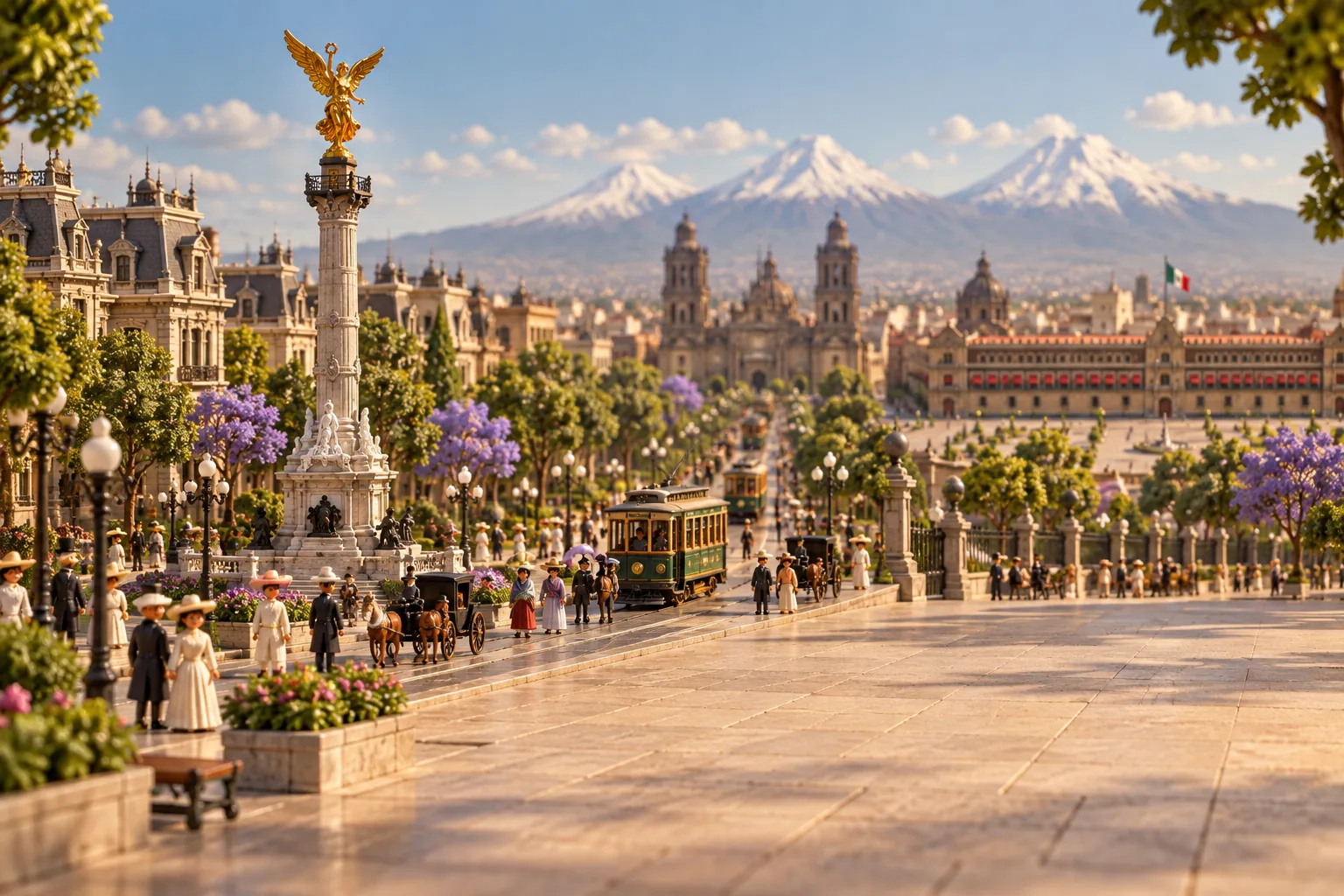
When Republican forces executed Emperor Maximilian in 1867, Benito Juárez returned to the capital as the symbol of the republic that had survived the French intervention. He won re-election and died in office in 1872. Four years later General Porfirio Díaz, a hero of the Cinco de Mayo, took power and kept it, with short breaks, until 1911. His rule, the Porfiriato, brought railways, telegraph lines and foreign investment, but at the cost of severe social unrest.
In 1910 the Mexican Revolution broke out. Díaz fell, rival armies fought for a decade, and in February 1917 a convention of the winners ratified a new constitution that gave the state power over land and mineral resources and gave rights to workers. Generals governed through the 1920s and 1930s. In 1938 President Lázaro Cárdenas nationalised foreign oil companies, and the state company Pemex was created. In the 20th century Diego Rivera, José Clemente Orozco and David Alfaro Siqueiros painted huge murals of Mexican history on public buildings.
Growth was fast from the 1940s to the 1970s, and in 1968 Mexico City hosted the Summer Olympics. In 1994 Mexico joined the North American Free Trade Agreement, and in 2000, after 71 years in power, the PRI lost the presidency to Vicente Fox.
Read more on Wikipedia
Sources: en.wikipedia.org/wiki/Mexico, en.wikipedia.org/wiki/Mexican Revolution, en.wikipedia.org/wiki/Porfiriato
