Industrial age · war
Mexican War of Independence
A village priest called his parishioners to church one September morning, and eleven years later New Spain was an independent country.
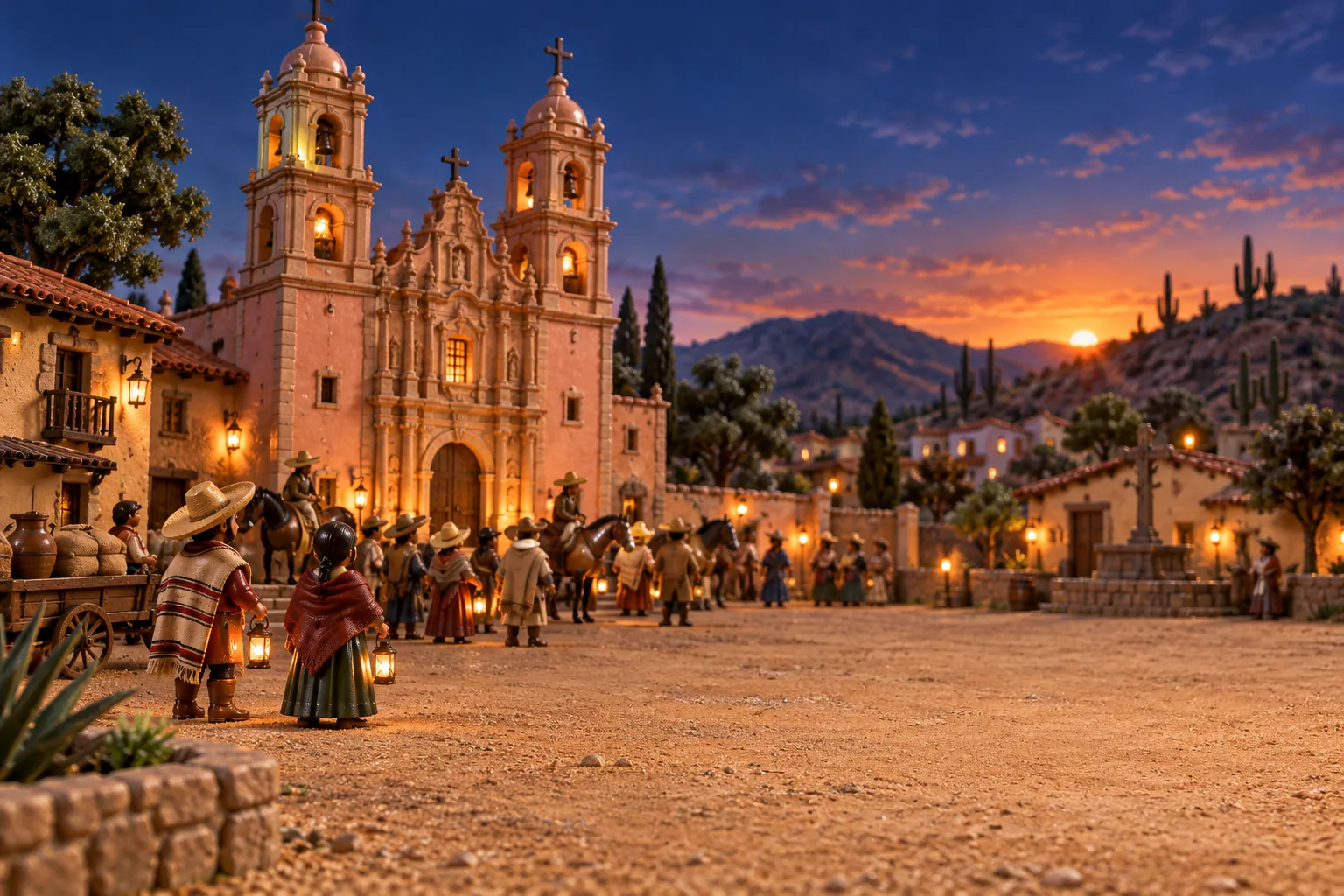
When Napoleon invaded Spain in 1808 and put his brother Joseph on the throne, Spain's rule over its American colonies was thrown into crisis. In New Spain, American-born Spaniards called criollos resented the privileges of Spaniards born in Europe, and some began to plot. One of the conspirators was Miguel Hidalgo y Costilla, a learned priest of the poor parish of Dolores. On 16 September 1810 he rang the church bell and called on his people to rise up, a speech remembered as the Cry of Dolores.
Estate workers, freed prisoners and Indians armed with farm tools and bows joined him, many wearing the image of the Virgin of Guadalupe on their hats. On 28 September some 30,000 rebels stormed the granary of Guanajuato. But the huge crowd was never a disciplined army. Royalist troops beat it at the Calderón Bridge, and Hidalgo was captured and executed in July 1811. The priest José María Morelos carried the fight on in the south until he too was executed in December 1815, and Vicente Guerrero kept up a guerrilla war in the mountains.
The end came from an unexpected side. After a liberal revolt in Spain in 1820, the royalist officer Agustín de Iturbide made a deal with Guerrero. Their Plan of Iguala of 24 February 1821 promised independence, the Catholic faith and equality for all inhabitants. Royalist troops changed sides, and on 27 September 1821 the Army of the Three Guarantees entered Mexico City in triumph.
Read more on Wikipedia

