Middle Ages · state
Maya civilization
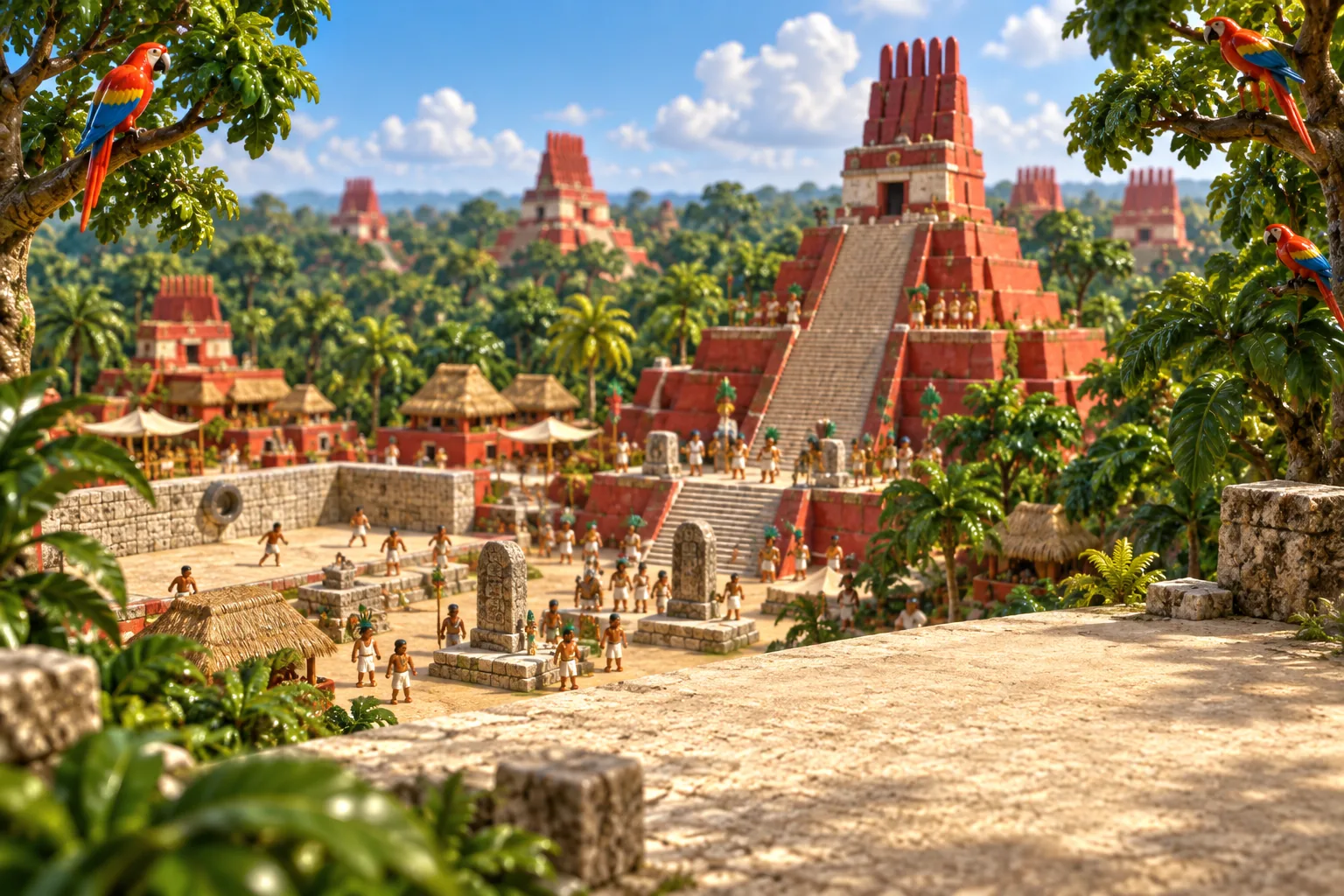
In the rainforests of Central America, rival god-kings raised stone temples, wrote in glyphs and counted the days with a zero centuries before Europe had one.
The Maya lived in what is now south-eastern Mexico, Guatemala, Belize and the western edges of Honduras and El Salvador. Farmers there grew maize, beans, squashes and chili peppers, the first Maya cities rose around 750 BC, and hieroglyphic writing was in use by the third century BC. The Maya never formed one empire: they lived in many city-states, each led by a divine king who stood between people and the gods.
In the Classic period, from about AD 250 to 900, kings raised carved monuments dated in the Long Count calendar. In the Petén lowlands the great rivals Tikal and Calakmul built competing networks of allies and vassals, and the distant city of Teotihuacan meddled in Maya politics. Palenque, whose king Kʼinich Janaabʼ Pakal was buried with a jade mosaic mask, and Yaxchilan led the Usumacinta region. Maya scribes created the most sophisticated writing system of the pre-Columbian Americas.
In the ninth century the central region fell into civil wars, cities emptied and people moved north; the last Long Count date was carved at Toniná in 909. Chichen Itza rose in the north and the Kʼicheʼ kingdom in the highlands. Spanish campaigns began in the sixteenth century, and in 1697 Martín de Ursúa stormed Nojpetén, the Itza capital and the last independent Maya city. More than six million Maya still live in the region.
Read more on Wikipedia


