Industrial age · politics
May Fourth Movement
China had sent 140,000 labourers to help win the First World War, and the peace conference rewarded it by giving part of China to Japan.
After the fall of the Qing dynasty in 1911, China was weak and divided among warlords, and the government in Beijing could do little against foreign powers. Japan had taken Germany's ports in Shandong province in 1914 and pressed its Twenty-One Demands on China in 1915. China joined the Allies in 1917 and sent 140,000 labourers to the Western Front, and at the Paris Peace Conference its diplomats asked for Shandong back. Instead, in April 1919, the treaty gave Germany's rights there to Japan.
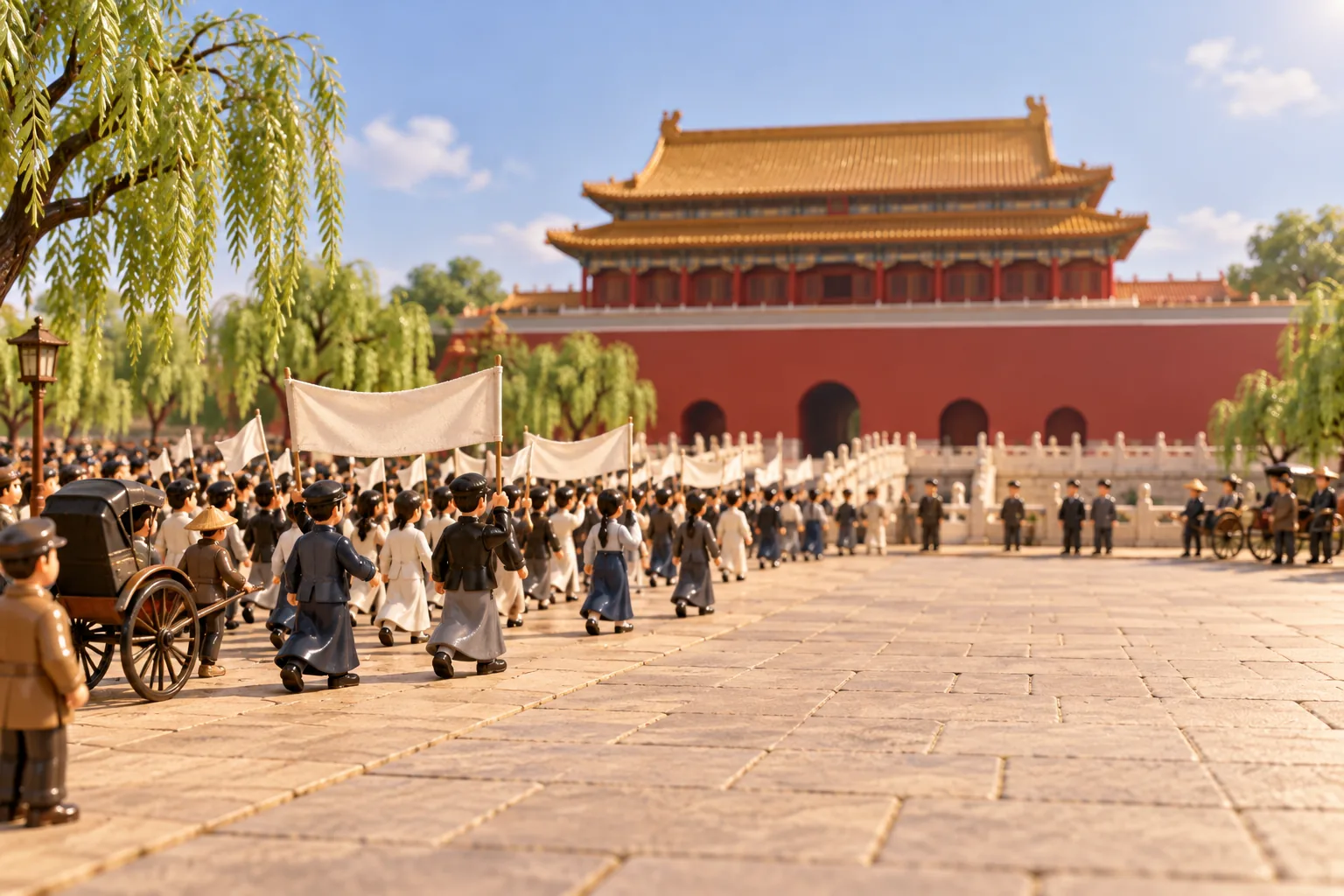
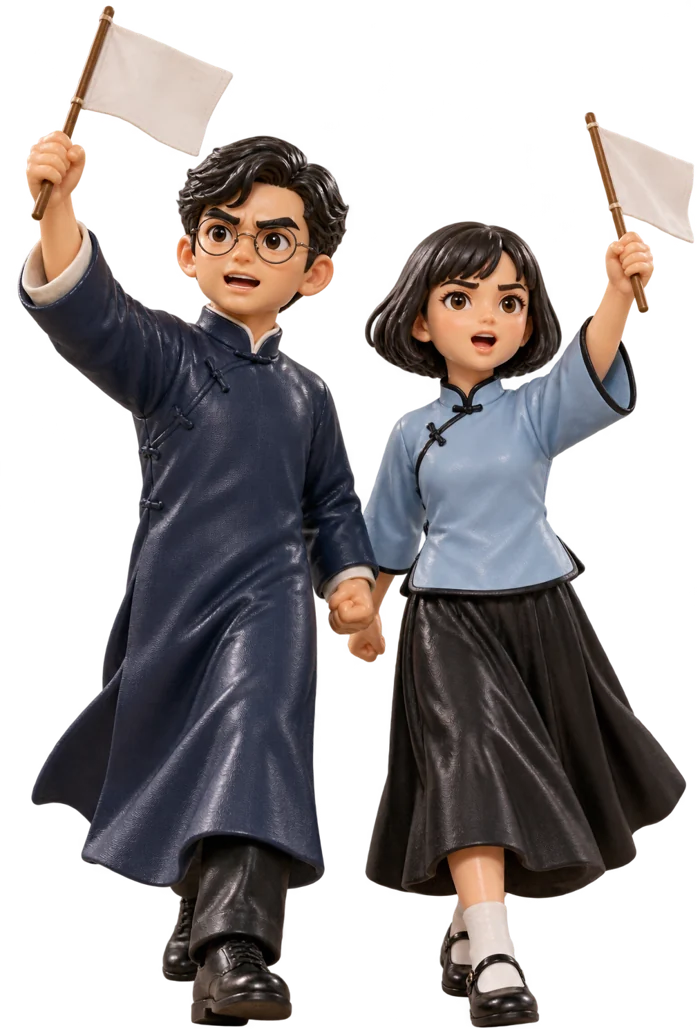
On the afternoon of 4 May 1919 more than 4,000 students from Peking University, Yenching University and other schools marched to Tiananmen, shouting "Give Qingdao back to us!" and "Don't sign the Versailles Treaty!" They went on to burn the homes of officials they saw as collaborators with Japan, and many were arrested and beaten. Students across China went on strike. After nearly 1,000 more arrests on 3 June, merchants and workers in Shanghai joined in a general strike that almost stopped the economy.
On 12 June the government dismissed the three officials, Cao Rulin, Zhang Zongxiang and Lu Zongyu, and China's delegates in Paris refused to sign the treaty. The movement also gave new force to the New Culture campaign of thinkers such as Chen Duxiu and Hu Shih, who called for "Mr. Science" and "Mr. Democracy" in place of "Mr. Confucius", and for writing in everyday spoken Chinese.
Read more on Wikipedia
