
Our time · politics
May 68
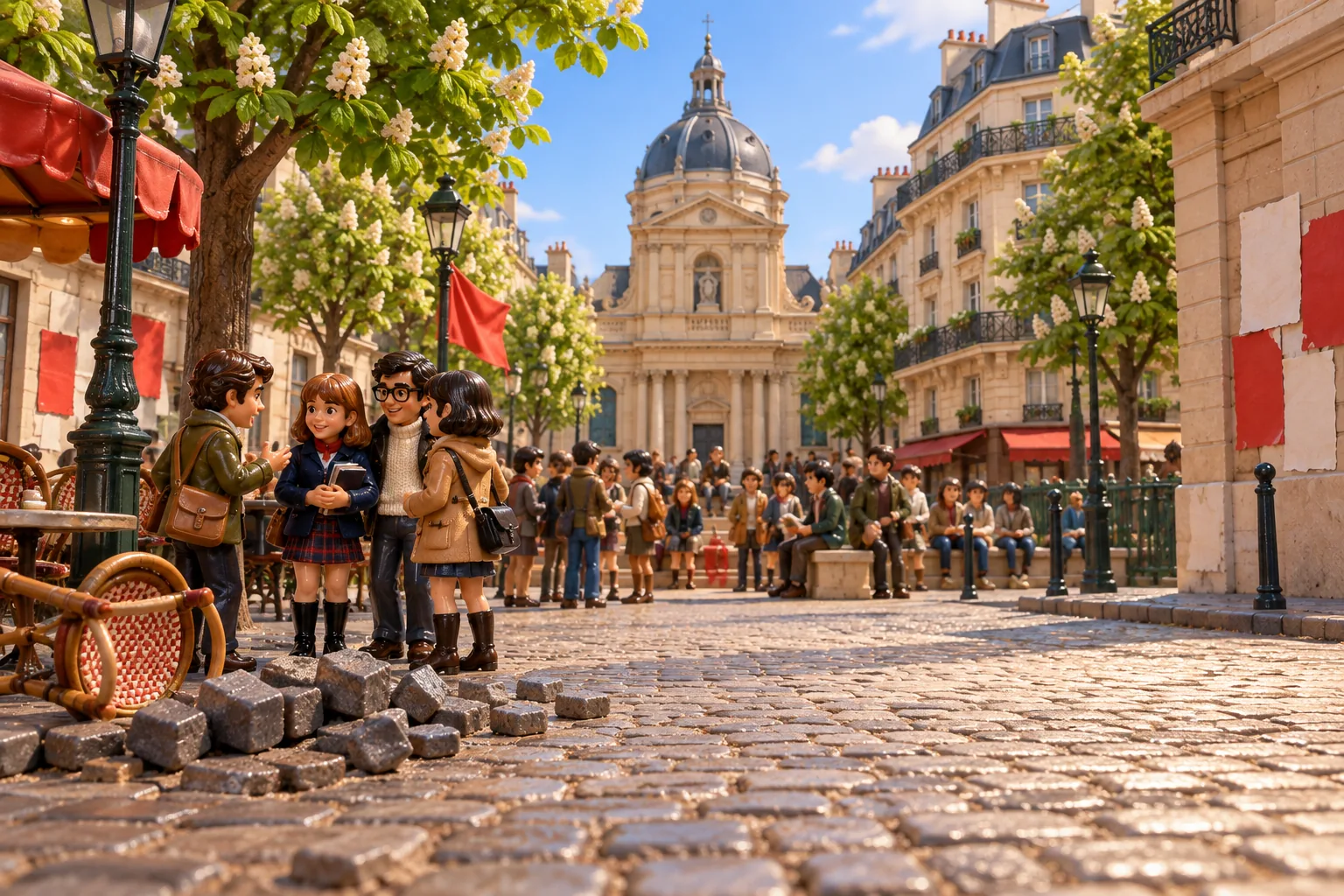
When students pried up the cobblestones of Paris to build barricades, they found sand underneath, and it gave them their most famous slogan: under the paving stones, the beach.
France in the 1960s was richer than ever, but its universities were overcrowded and rigid, young workers felt shut out, and President Charles de Gaulle's Fifth Republic seemed old-fashioned to many. Student protests began in March 1968 at Nanterre University outside Paris. After police moved in, Nanterre was shut on 2 May, and the protests moved to the Sorbonne in the Latin Quarter. On 6 May police broke up a student gathering there by force, and on the night of 10 May students fought the police behind barricades in the streets.
Public anger turned the student revolt into a national crisis. On 13 May the unions called a one-day general strike, and well over a million people marched through Paris. The strikes then spread: about ten million workers, two-thirds of the labour force, stopped work, shutting factories, transport and public services in the largest general strike in French history. Students occupied the reopened Sorbonne. On 29 May de Gaulle left Paris by helicopter, without telling his ministers where he was going, to the French army headquarters in Baden-Baden, West Germany.
He returned the next day, dissolved the National Assembly and called elections. The Grenelle agreements had already given workers higher wages, and the movement lost its momentum. On 23 June de Gaulle's party won a landslide, but he resigned the following year. May 68 left a lasting mark on French culture, feminism, environmentalism and the gay rights movement.
Read more on Wikipedia
Sources: en.wikipedia.org/wiki/May 68
