Our time · war
Mau Mau rebellion
The fight was about land: about 7 million acres of Kenya's best farmland had been reserved for a few thousand European settlers.
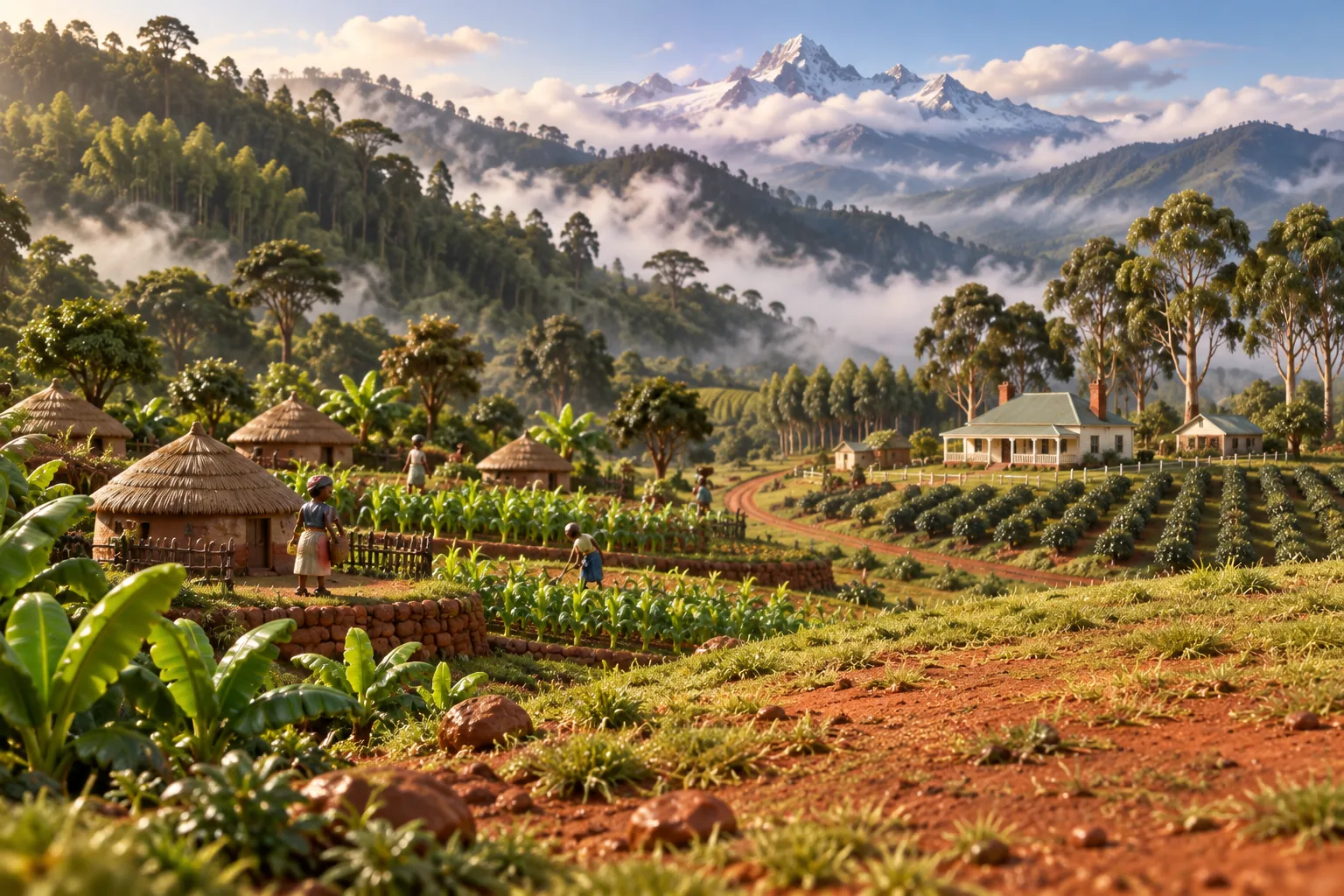
Britain claimed Kenya as a protectorate in 1895 and made it a colony in 1920. In the cool, fertile highlands the government took about 7 million acres for the 'White Highlands', reserved for European farmers. The Kikuyu, who lived in what became Central Province, lost much of their land and many became squatters or poor workers in Nairobi. When peaceful politics brought no change, younger militants formed the Kenya Land and Freedom Army, which the British called Mau Mau. Its fighters were mostly Kikuyu, Meru and Embu, and they bound followers with secret oaths.
On 20 October 1952 Governor Evelyn Baring declared a State of Emergency. The next morning police arrested Jomo Kenyatta and about 180 other suspected leaders. Thousands of fighters went into the forests of the Aberdares and Mount Kenya. The war also tore Kikuyu society apart: rebels killed at least 1,819 African 'loyalists', and in March 1953 they massacred villagers at Lari. The British answered with air raids on the forests, the mass round-up of Nairobi called Operation Anvil, a network of detention camps for tens of thousands of suspects, and fenced villages for whole communities.
The capture of Dedan Kimathi on 21 October 1956 marked the rebels' defeat, though the Emergency lasted until 1960. It cost at least 11,000 lives, including 1,090 hangings. Kenya became independent in December 1963. In June 2013 the British government agreed to pay £19.9 million to 5,228 Kenyans who had been ill-treated in the camps.
Read more on Wikipedia