Early modern · culture
Martin Luther
A monk who had joined his monastery after a terrifying thunderstorm wrote a list of objections to his church, and Western Christianity split in two.
Martin Luther was born on 10 November 1483 in Eisleben, in the Holy Roman Empire. He had enrolled in law to please his father. On 2 July 1505, riding back to university, a bolt of lightning struck near him during a thunderstorm. Terrified, he cried out to Saint Anna that he would become a monk, and he kept the vow. He became an Augustinian friar and later taught theology at Wittenberg.
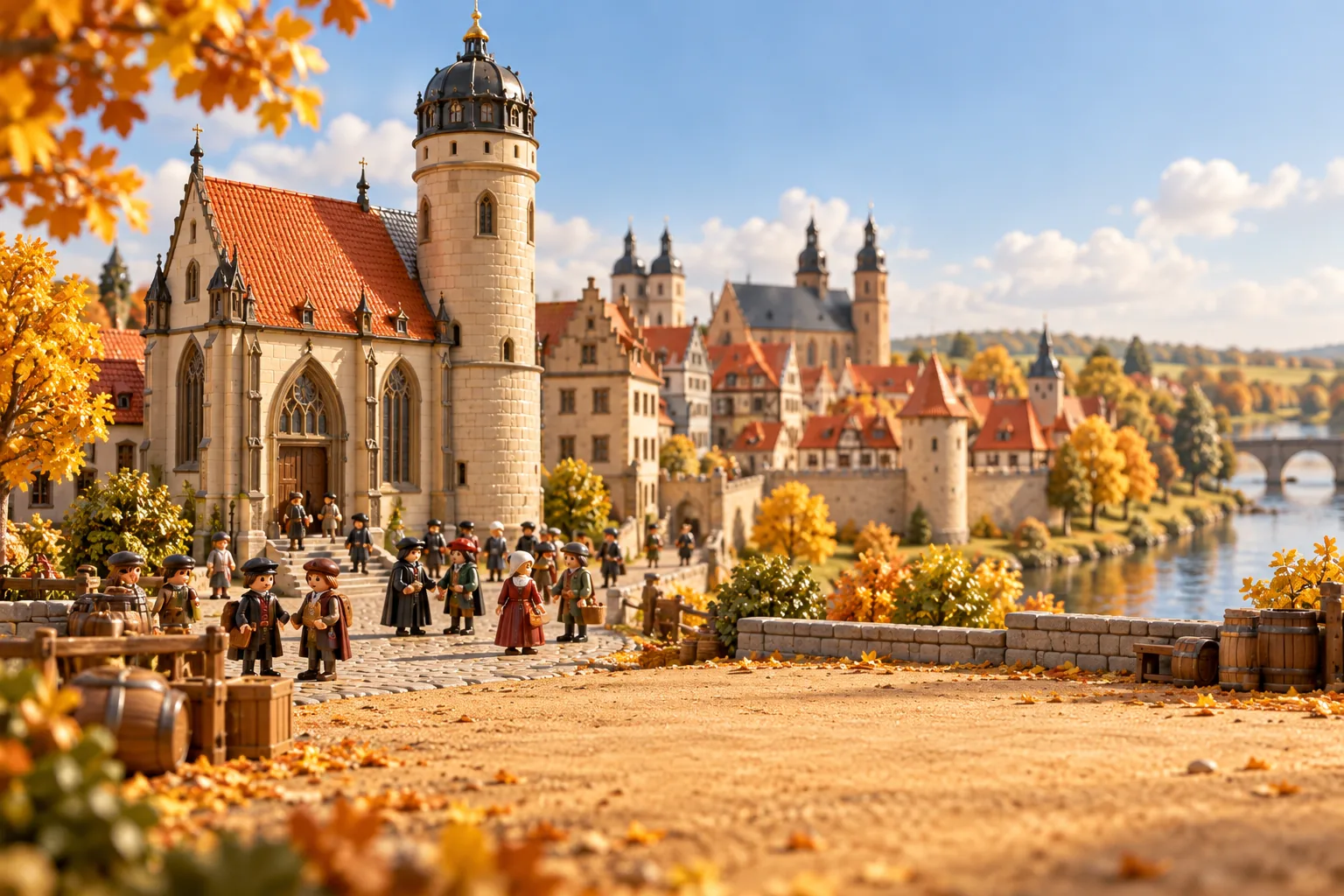
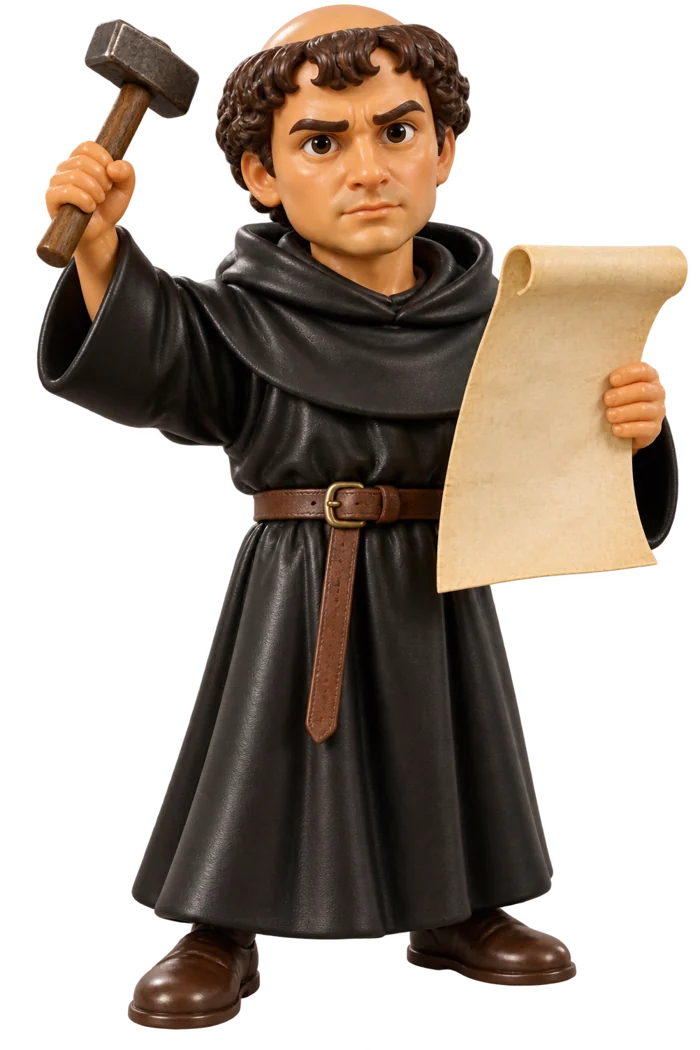
In 1516 the Dominican friar Johann Tetzel was sent to Germany to sell indulgences, payments that promised to reduce punishment for sins, to raise money for rebuilding St Peter's Basilica in Rome. Tetzel was credited with the jingle "As soon as the coin in the coffer rings, the soul from purgatory springs." Luther held that only God could forgive. On 31 October 1517 he wrote to Archbishop Albert of Mainz protesting against the sale and enclosed his Ninety-five Theses. According to one account he also nailed them to the door of All Saints' Church in Wittenberg. Copies spread through Germany within two weeks.
On 17 April 1521 he stood before the Diet of Worms, the assembly of the empire, and refused: "I cannot and will not recant anything, since it is neither safe nor right to go against conscience." The Emperor Charles V declared him an outlaw. His protector, Elector Frederick of Saxony, had masked horsemen waylay him and hide him at Wartburg Castle, where he translated the New Testament from Greek into German. His teaching that people are saved by faith alone, not by works or payments, became the foundation of Protestantism. In later life he also called for Jews to be expelled and synagogues burned.
Read more on Wikipedia
Sources: en.wikipedia.org/wiki/Martin Luther