Industrial age · person
Marie Curie
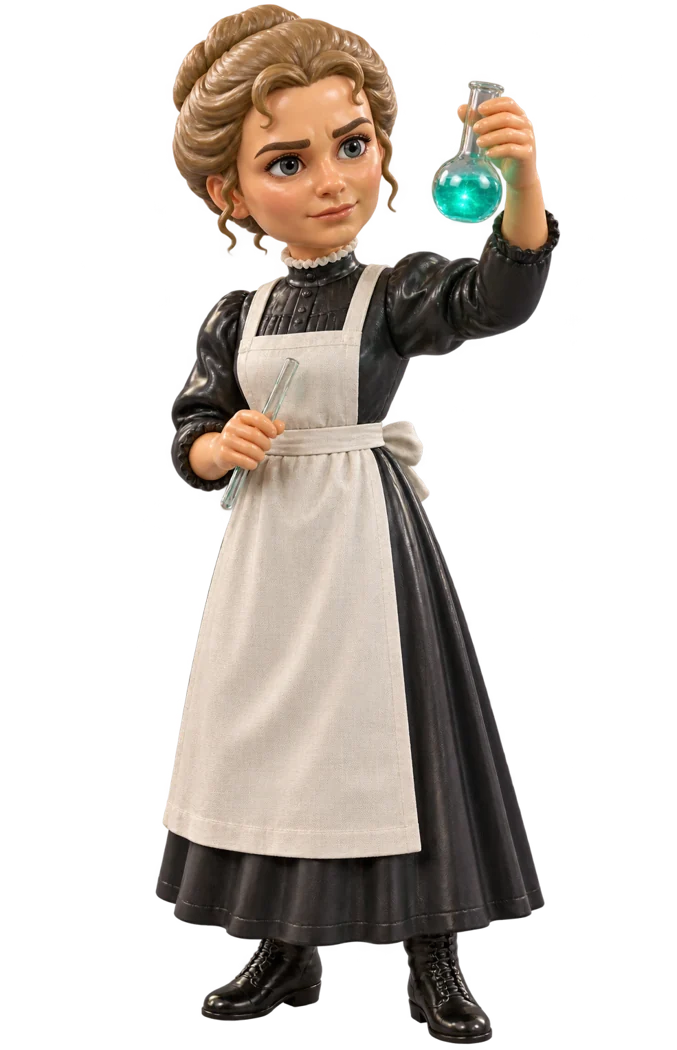
In a former dissecting room that let in the rain, a Polish student and her French husband ground up pitchblende and found two elements no one had seen.
Maria Skłodowska was born in Warsaw, then ruled by the Russian Empire, on 7 November 1867, the youngest of five children of two teachers. She studied at the secret Flying University and worked as a governess to help her elder sister Bronisława study medicine in Paris. In 1891 she followed her. She earned a degree in physics in 1893 and a second degree in 1894, and on 26 July 1895 she married the physicist Pierre Curie.
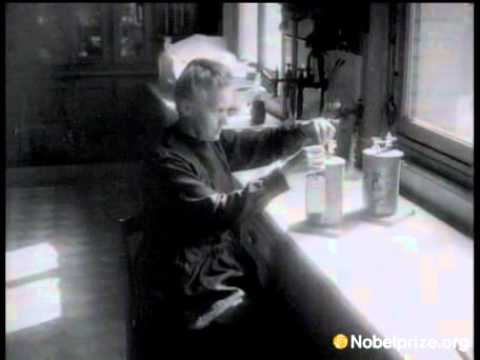
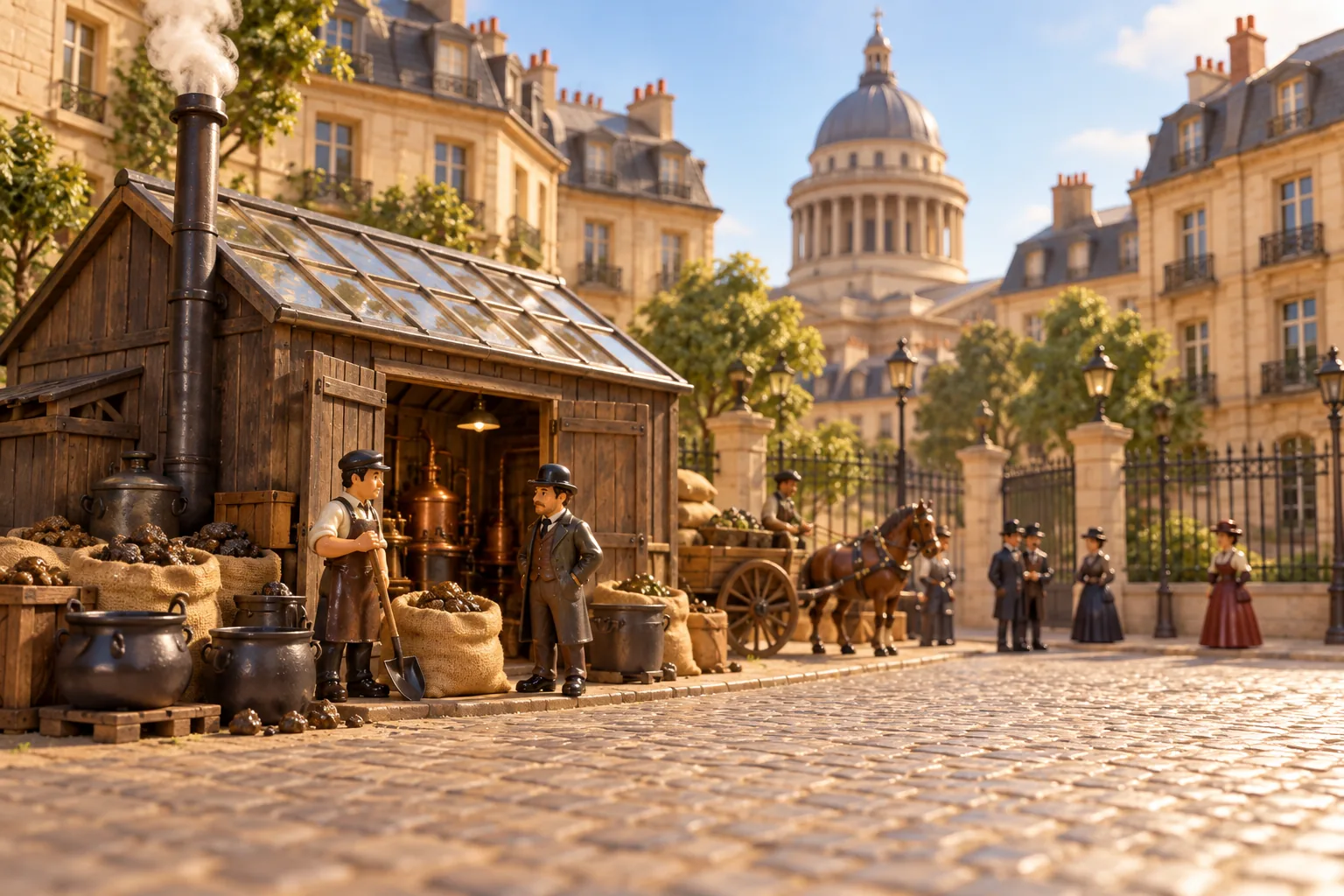
For her doctorate she studied the rays that Henri Becquerel had found coming from uranium. Her electrometer showed that the mineral pitchblende was four times as active as uranium itself, so it had to hold something new. The Curies had no proper laboratory, only a converted shed beside Pierre's school, the ESPCI, poorly ventilated and not even waterproof. In July 1898 they announced polonium, named after her partitioned homeland, and on 26 December radium, from the Latin word for ray. In 1903 they shared the Nobel Prize in Physics with Becquerel.
Pierre was killed in a Paris street accident on 19 April 1906, and Marie took over his post, the first woman professor at the University of Paris. She won the 1911 Nobel Prize in Chemistry, and in the First World War built mobile X-ray units, the "little Curies". She died on 4 July 1934 of aplastic anaemia, probably caused by radiation.
Read more on Wikipedia
Sources: en.wikipedia.org/wiki/Marie Curie