Early modern · state
Maratha Empire
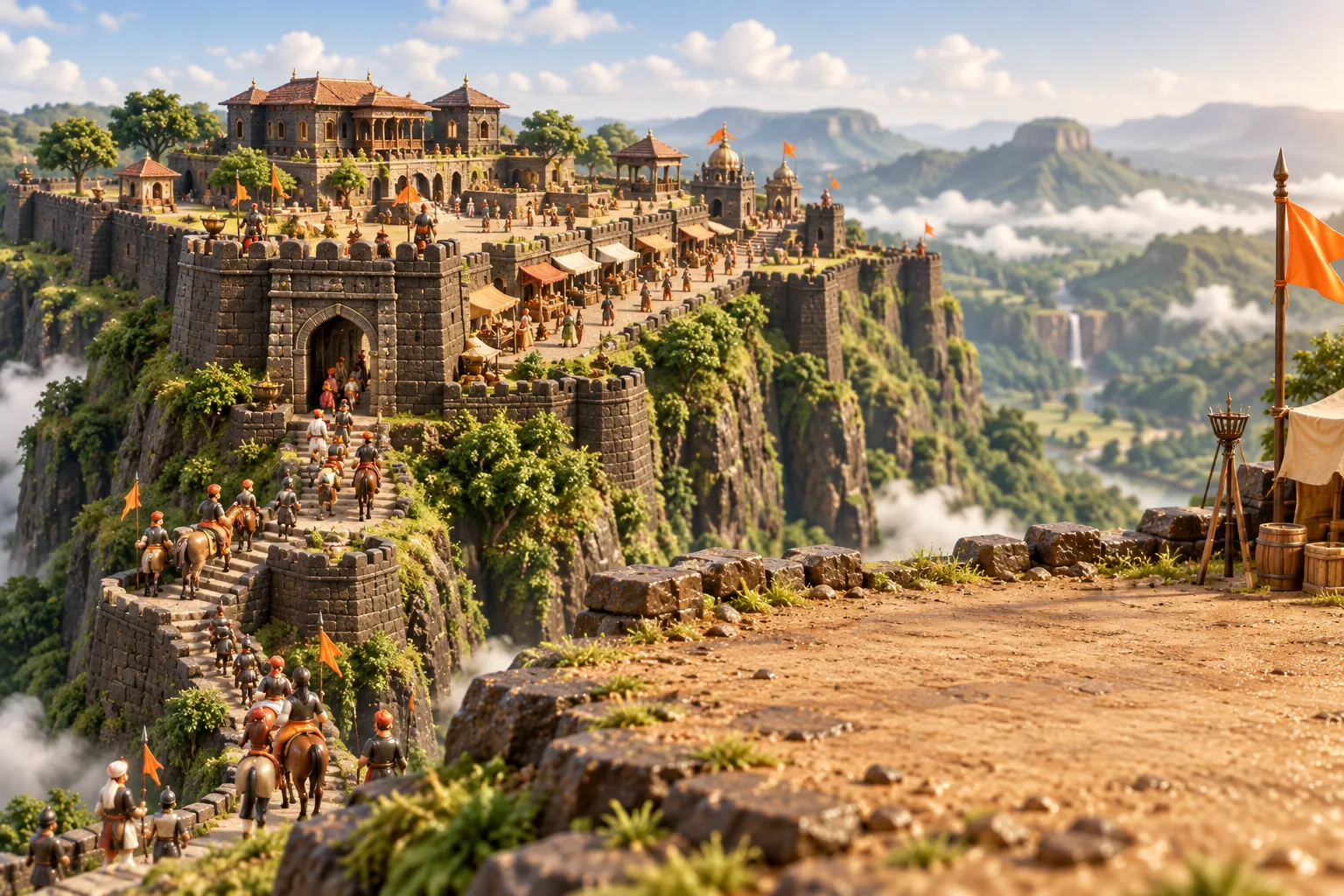
Born of Shivaji's revolt from the hill forts of the Deccan, Maratha armies by 1758 had taken Attock and Peshawar, far to the north-west.
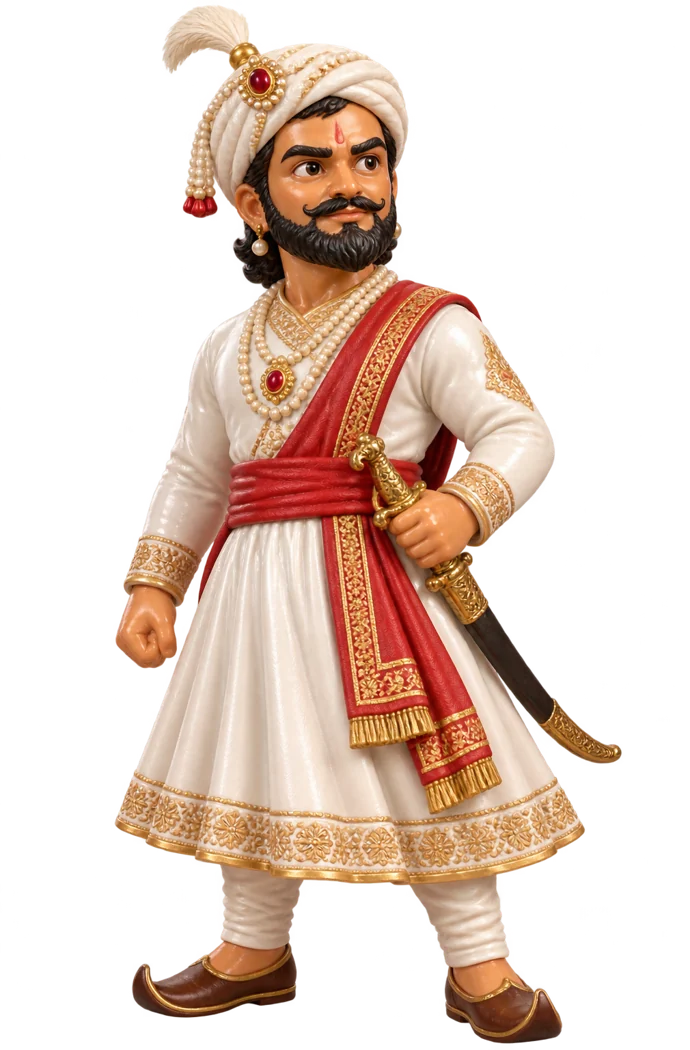
The Marathas were warriors of the western Deccan. In 1645 Shivaji, of the Bhonsle clan, rebelled against the Bijapur Sultanate by taking the fort of Torna. He made Raigad his capital, fought the Mughals and was crowned Chhatrapati in 1674; at his death in 1680 his kingdom held about 300 forts. The Mughal emperor Aurangzeb marched south in 1681 and executed Shivaji's son Sambhaji in 1689, but the Marathas kept fighting from their forts.
After Aurangzeb died in 1707, Shivaji's grandson Shahu gave great power to his chief ministers, the Peshwas. Peshwa Baji Rao I defeated the Nizam of Hyderabad at Palkhed in 1728 and raided Delhi in 1737, and the Scindia, Holkar, Bhonsle and Gaekwad families expanded north and east. In Bengal, Bhonsle raiders tortured or killed villagers who could not pay. In 1758 Maratha armies took Attock and Peshawar, and by 1760 their territory covered over 2.5 million square kilometres.
On 14 January 1761 Ahmad Shah Durrani crushed the Marathas at the Third Battle of Panipat. Peshwa Madhavrao I restored their power, and in 1771 Mahadaji Shinde retook Delhi and kept Mughal emperor Shah Alam II as a puppet. Rival chiefs grew independent,, and the British East India Company used their quarrels. After the Third Anglo-Maratha War of 1817–1818 the last Peshwa, Baji Rao II, was exiled, and Gwalior, Indore and Nagpur became British princely states.
Read more on Wikipedia
Sources: en.wikipedia.org/wiki/Maratha Empire


