Middle Ages · people
Mansa Musa in Cairo
A West African king gave away so much gold in Cairo that the metal was still cheaper there twelve years later.
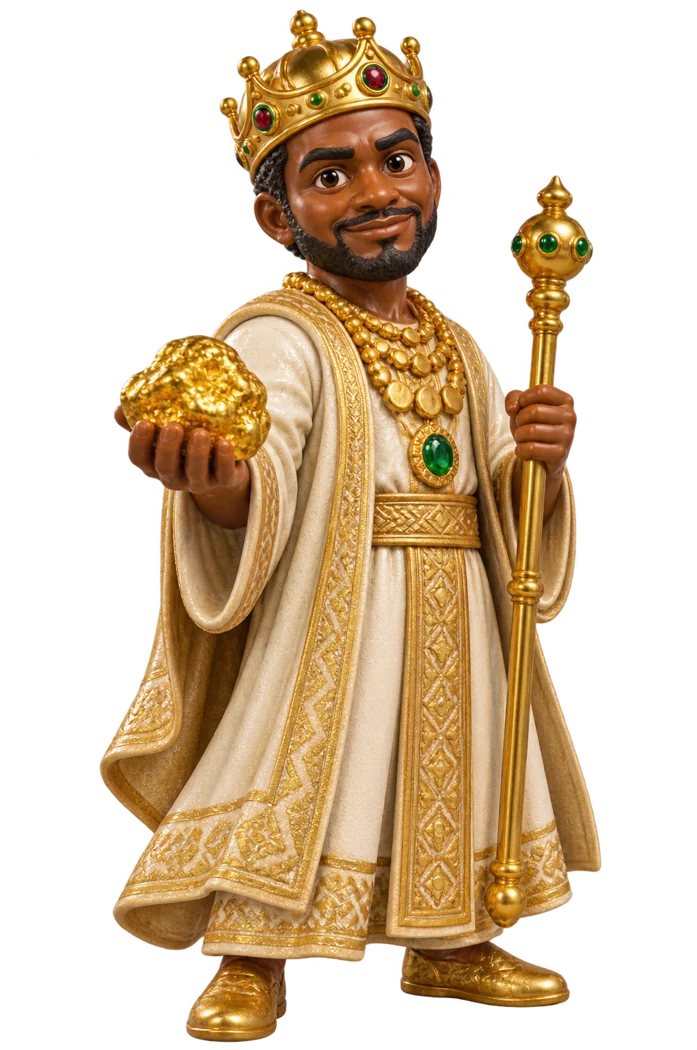
Mansa Musa was the ninth mansa, or king, of the Mali Empire, which under him reached its greatest extent, stretching across parts of today's Mali, Senegal, Guinea, Mauritania and the Gambia. Mali taxed the trade in salt from the north and controlled the gold panned and mined in Bambuk and Bure to the south. West Africa is estimated to have supplied about two-thirds of the gold circulating in the medieval Mediterranean.
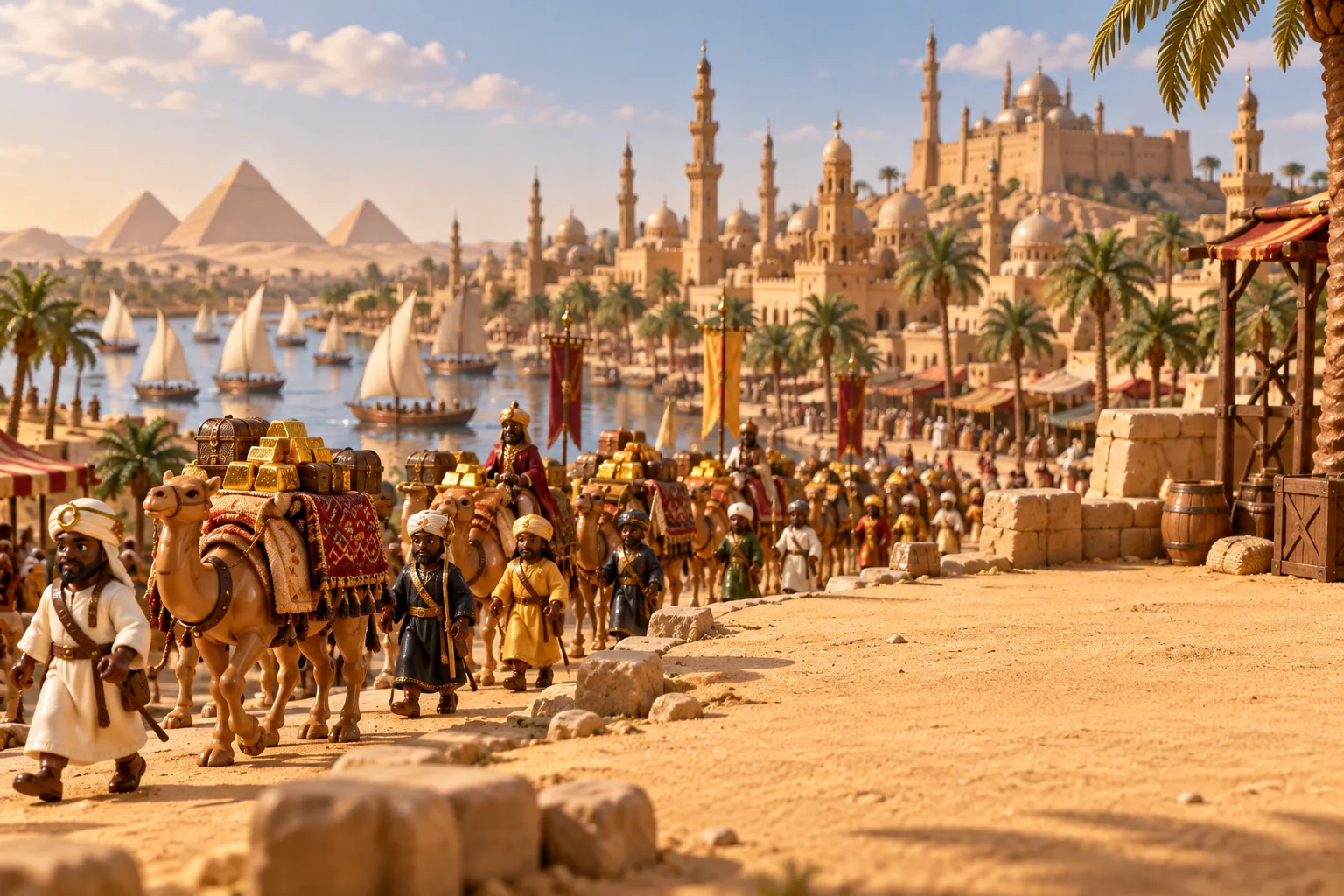
In 1324 Musa set out on the hajj, the pilgrimage to Mecca, with an enormous caravan. Later Arabic accounts speak of 12,000 enslaved attendants dressed in silk and camels loaded with gold dust, though modern historians treat those figures as literary exaggeration. In July the procession camped for three days by the pyramids of Giza, and on 19 July it crossed the Nile into Cairo. Musa stayed three months. The Mamluk sultan, al-Nasir Muhammad, expected him to prostrate himself; Musa at first refused, and when he finally bowed, he said it was for God alone. He gave and spent gold freely across the city.
According to the historian al-Umari, before Musa arrived a mithqal of gold was worth 25 silver dirhams; afterwards it fell below 22, and it stayed there for at least twelve years. On his return Musa brought scholars and the Andalusian poet al-Sahili to Mali, added Gao and Timbuktu to his empire and helped make Timbuktu a centre of Islamic learning.
Read more on Wikipedia
Sources: en.wikipedia.org/wiki/Mansa Musa

