Early modern · culture
Manila galleon
Once a year a huge ship stuffed with silk, porcelain and spices left Manila and spent at least four months alone on the Pacific before it saw Mexico.
Spain reached the Philippines with Magellan in 1521, but for decades no one could sail back east across the Pacific against the winds. In 1565, on the expedition of Miguel López de Legazpi, the Augustinian friar and navigator Andrés de Urdaneta found the way: sail north to catch the Kuroshio Current and the westerlies, then cross to California. His ship, the San Pedro, reached Acapulco on 8 October 1565. This return route, the tornaviaje, opened the first regular trade line between Asia and the Americas.
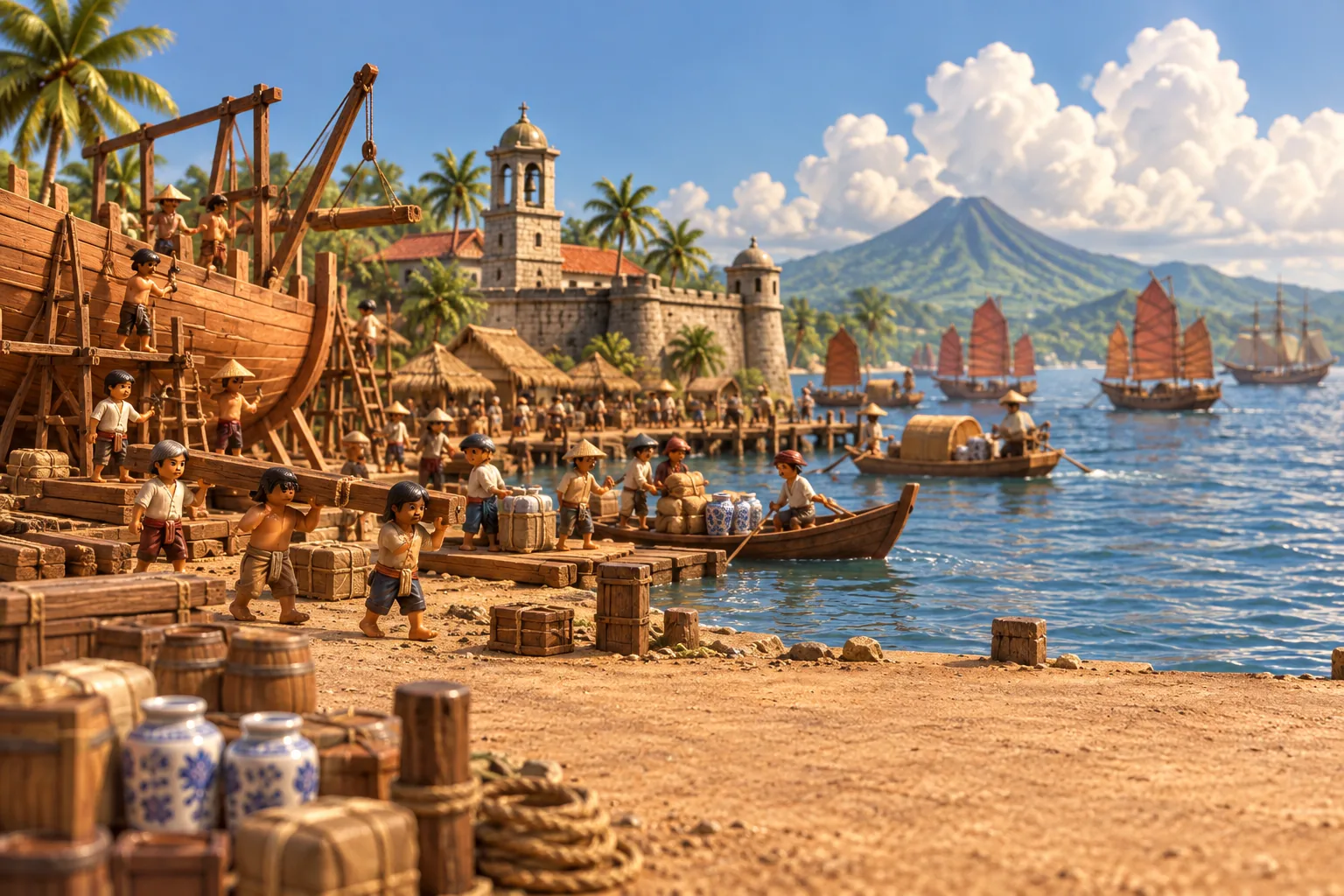
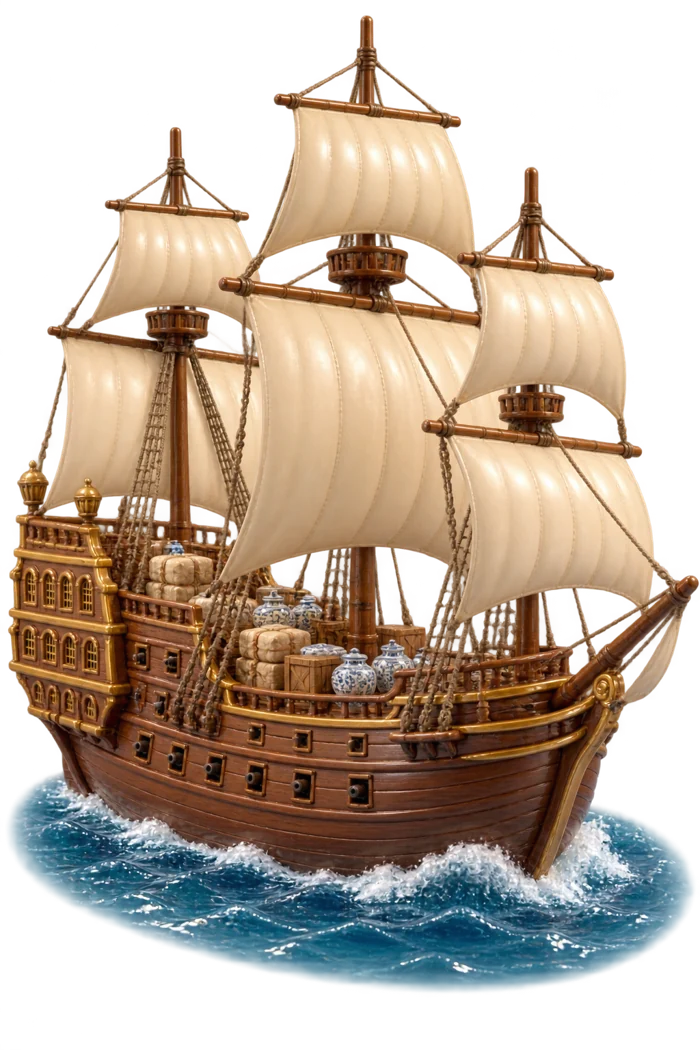
Every year one or two galleons left Cavite in Manila Bay at the end of June or early July and reached Acapulco around March or April, a voyage of at least four months. The ships were built in the Philippines of local hardwoods, with rigging of salt-resistant Manila hemp, and most of the crew were Filipinos, many of them forced into service. They carried Chinese silk and porcelain, Indian ivory, cloves, cinnamon and perfumes, and also enslaved Asians, east; New World silver, worth far more in China than in America, went back west.
Mexicans called the ship La Nao de China, "the China Ship". In all 108 ships sailed as Manila galleons, and 26 were captured or sunk by enemies in wartime, among them the Santa Ana taken by Thomas Cavendish in 1587 and the Covadonga taken by George Anson in 1743. The trade ended in 1815, when the Mexican War of Independence broke it off.
Read more on Wikipedia
Sources: en.wikipedia.org/wiki/Manila galleon