
Industrial age · science
Manhattan Project
To wind the giant magnets that separated uranium, the Army borrowed 14,700 tons of silver from the US Treasury.
In August 1939 the physicists Leo Szilard and Eugene Wigner drafted a letter, signed by Albert Einstein, warning President Franklin D. Roosevelt that Germany might build "extremely powerful bombs of a new type". The United States began research, and in 1942 the Army took over. Its engineer district was named the Manhattan District, after the city of its first headquarters, and from 1942 General Leslie Groves ran the whole project, working with the United Kingdom and Canada.
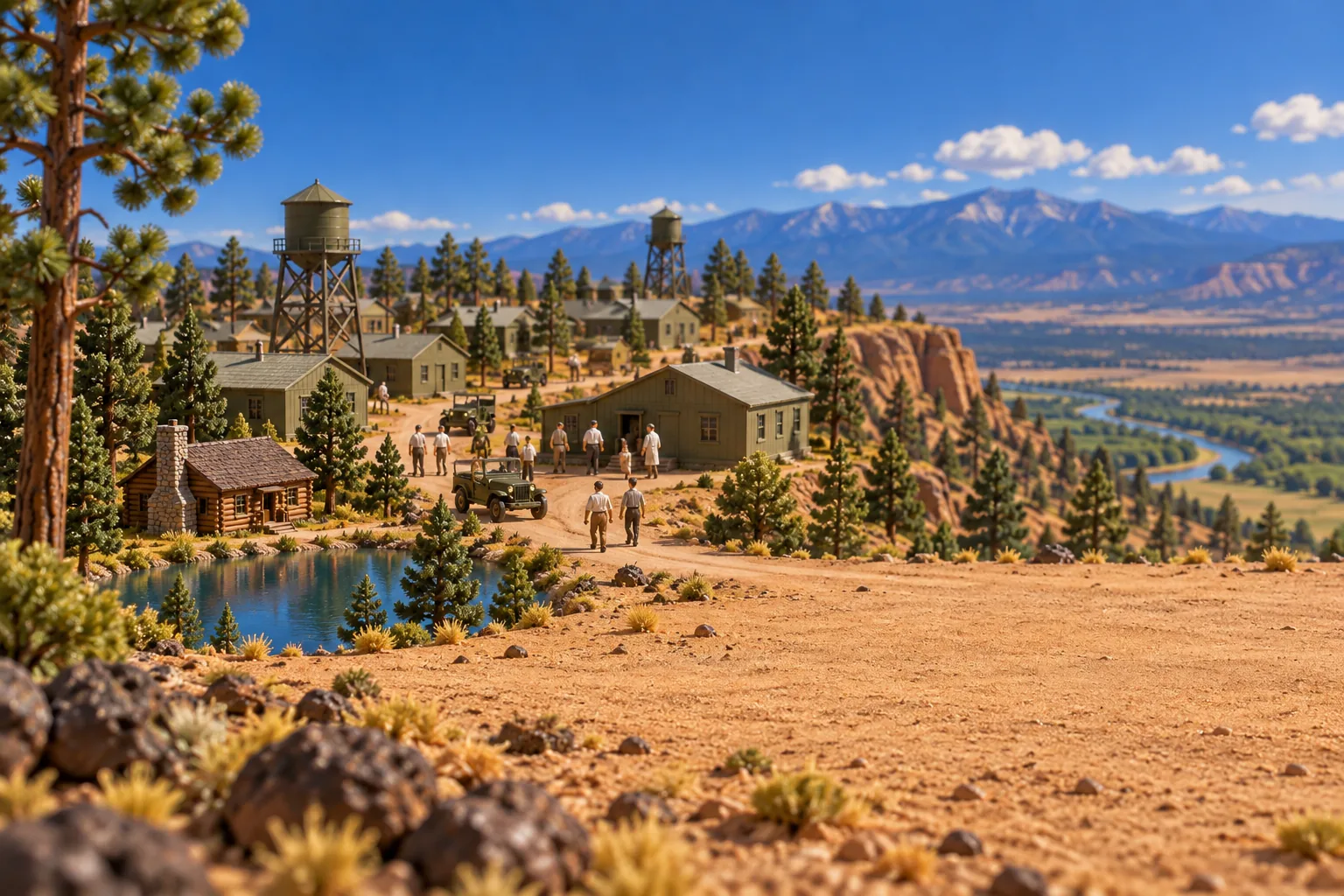
On 2 December 1942 Enrico Fermi's team started the first self-sustaining nuclear chain reaction in Chicago Pile-1, built under the west stands of Stagg Field at the University of Chicago. Most of the money went into giant factories. Uranium was enriched at the Clinton Engineer Works in Tennessee, where the new town of Oak Ridge grew to 75,000 people, and plutonium came from the first industrial-scale reactors at Hanford in Washington. On a remote mesa at Los Alamos, New Mexico, J. Robert Oppenheimer's laboratory designed the bombs.
At 05:30 on 16 July 1945 the first nuclear device, a plutonium implosion bomb called the gadget, exploded in the Trinity test in the New Mexico desert, with the force of about 20 kilotons of TNT. Three weeks later the uranium bomb Little Boy and the plutonium bomb Fat Man were dropped on Hiroshima and Nagasaki. Despite strict secrecy, Soviet spies had penetrated the project, the most successful being the physicist Klaus Fuchs.
Read more on Wikipedia


