Middle Ages · state
Mamluk Sultanate
Ruled by freed slave soldiers, the Mamluks stopped the Mongols at Ain Jalut in 1260 and took Acre, the last great Crusader stronghold, in 1291.
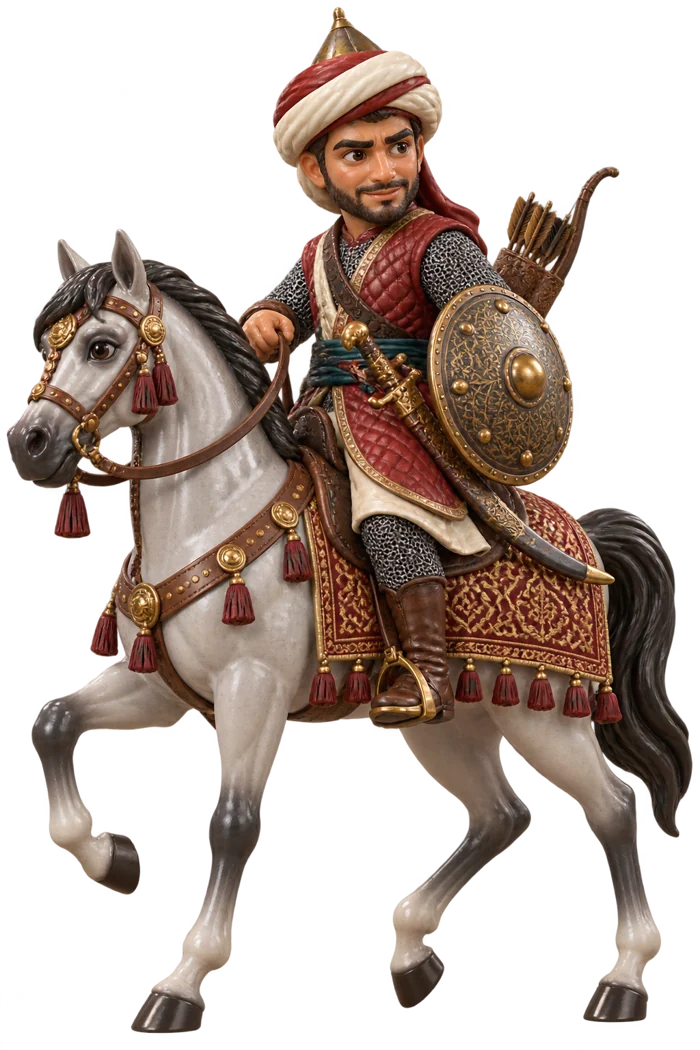
Mamluks were slave soldiers, mostly Kipchak Turks from Central Asia, converted to Islam, trained in war and freed to serve their masters. They formed the core of the Ayyubid army in Egypt. In 1250, after helping crush the crusade of Louis IX of France, mamluk officers murdered the new sultan Turanshah and took power. In September 1260 Qutuz and Baybars routed the Mongols at Ain Jalut in Palestine, and Baybars then made himself sultan.
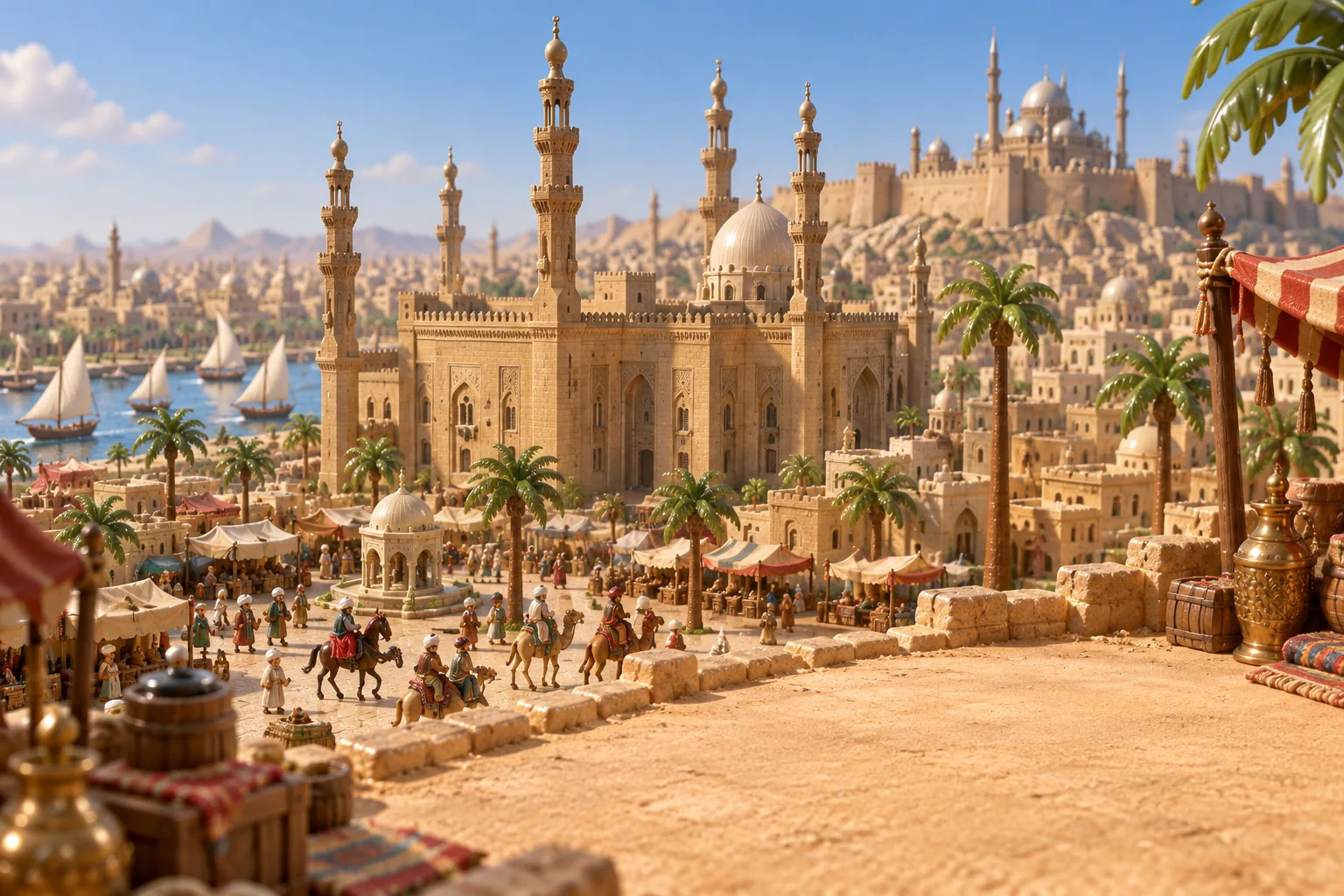
Baybars grew the army from 10,000 to 40,000 cavalry, built a postal road network across Egypt and Syria and took Crusader castles such as Krak des Chevaliers in 1271. Qalawun built a great hospital complex in Cairo, and his son al-Ashraf Khalil captured Acre in 1291. Under al-Nasir Muhammad, who ruled from 1310 to 1341, Cairo became one of the largest cities in the world, at the centre of the spice trade between Europe and the Indian Ocean.
The Black Death reached Egypt in 1347, and repeated plagues cut farm output. Circassian mamluks took the throne with Barquq in 1382, and the year he died Timur sacked Aleppo and Damascus. Vasco da Gama's sea route to India in 1498 drew trade away. In August 1516 the Ottoman sultan Selim I defeated and killed Sultan al-Ghuri at Marj Dabiq, took Cairo in January 1517, and had the last sultan, Tuman Bay, hanged at the Bab Zuwayla gate.
Read more on Wikipedia


