Middle Ages · politics
Magna Carta
A peace deal that failed within three months became the most quoted document in the history of English law.
King John of England had lost most of his family's lands in France to Philip II, and he squeezed his barons for tax after tax to win them back. The war ended in failure in 1214. By May 1215 rebel barons had renounced their loyalty to him and taken London. John had to talk.
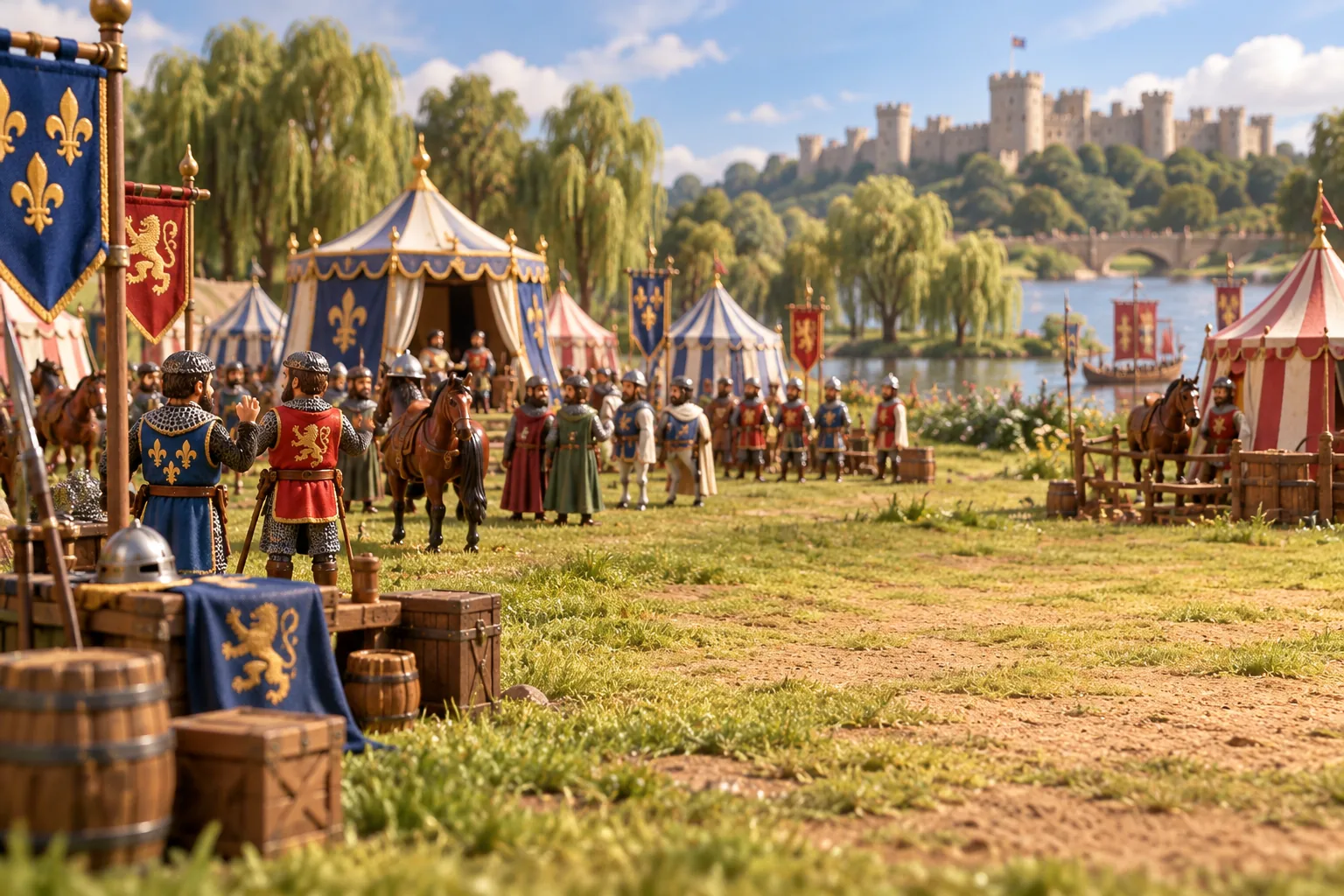
On 10 June the two sides met at Runnymede, a water-meadow on the Thames between the royal castle at Windsor and the rebel base at Staines. Archbishop Stephen Langton spent ten days turning the barons' demands into a charter, and by 15 June a text was agreed. It promised the freedom of the church, protection from illegal imprisonment, swift justice and limits on what the Crown could demand in feudal payments. Its boldest clause set up a council of 25 barons who could seize the king's castles and lands if he broke his word.
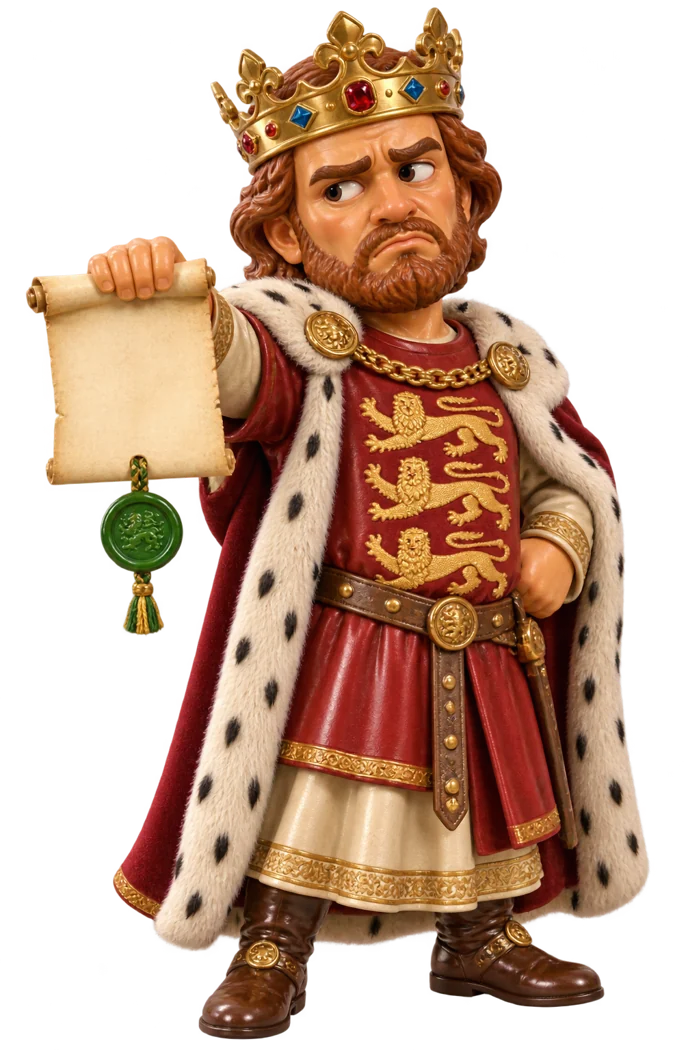
No king could live with that. John appealed to Pope Innocent III, who declared the charter 'null, and void of all validity for ever'. Within three months the country was at war again. But after John died in October 1216, his young son's government reissued the charter, and it was confirmed again and again. Centuries later lawyers turned it into a symbol of liberty, and its promise of lawful judgement echoes in the 'due process of law' of the United States Constitution.
Read more on Wikipedia
Sources: en.wikipedia.org/wiki/Magna Carta