Ancient world · state
Lydia
Lydia struck the first known coins, and its last king, Croesus, became a byword for wealth.
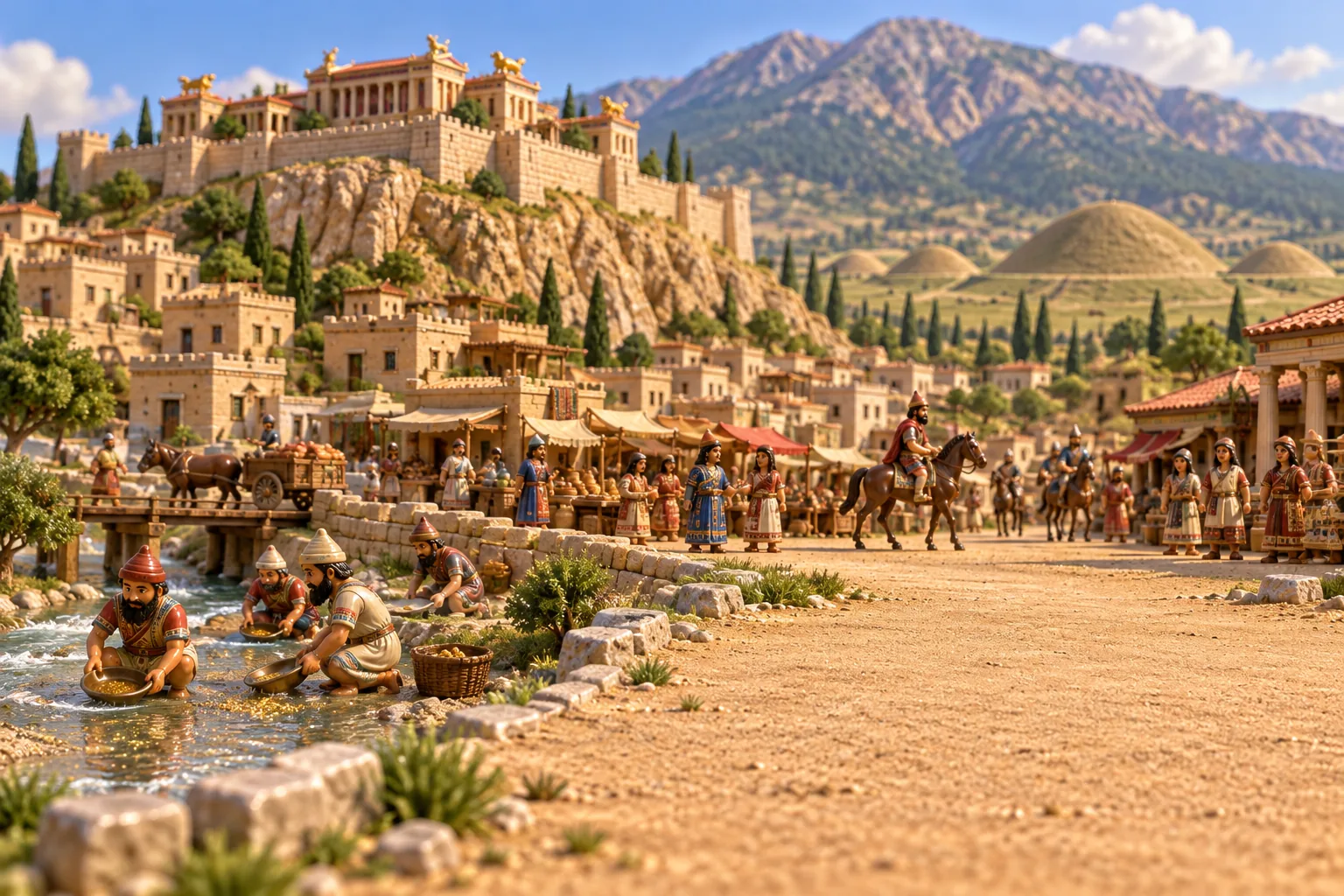
Lydia lay in western Anatolia, with its capital and only city at Sardis, and its people spoke their own Indo-European language. The kingdom became a power under the Mermnad dynasty. Its first king known from records of his own time, Gyges, sent envoys to the Assyrian court at Nineveh for help against the Cimmerian raiders, but in 644 BC the Cimmerians sacked Sardis and killed him.
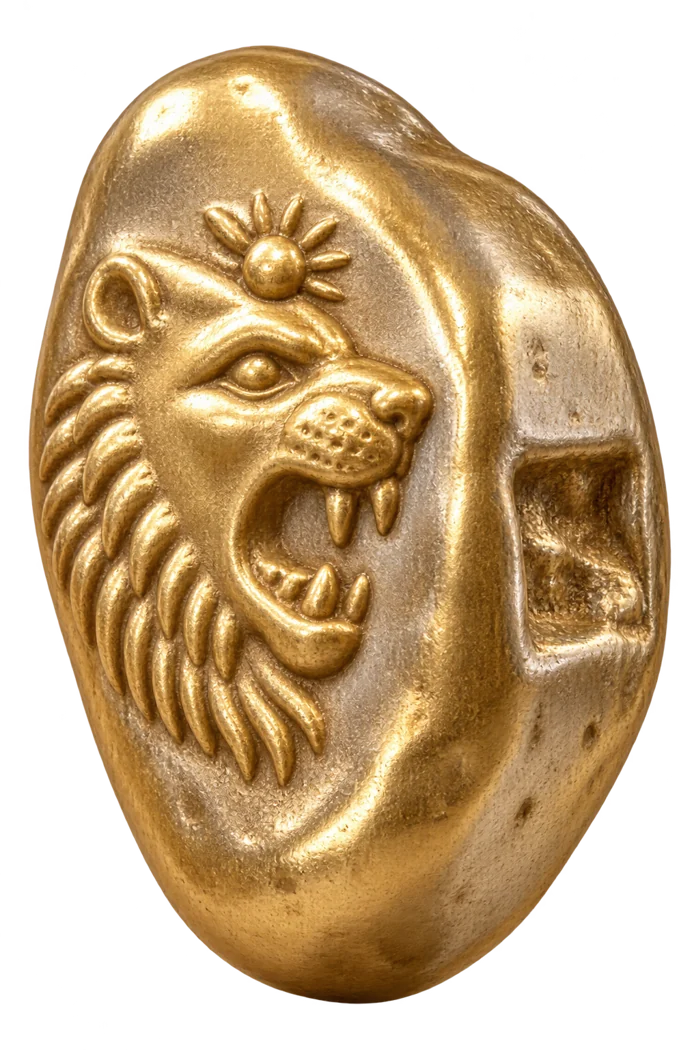
From 635 BC King Alyattes turned Lydia into an empire, pushing east into Phrygia. A war with the Medes dragged on for five years until a solar eclipse darkened a battle in 585 BC and both armies took it as a sign to make peace. Around the start of Alyattes's reign, most scholars think, Sardis struck the first known coins, lumps of electrum, a natural alloy of gold and silver, stamped with a lion's head. His son Croesus issued the first gold coins of standard purity.
Croesus ruled almost everything west of the Halys River and brought the Greek cities of Ionia under his control, and around 550 BC he paid for the temple of Artemis at Ephesus. When Cyrus the Great of Persia overthrew the Medes, Croesus attacked. Herodotus says the oracle of Delphi told him he would destroy a great empire. It turned out to be his own. Cyrus took Sardis by 546 BC, and Lydia became a Persian province.
Read more on Wikipedia
Sources: en.wikipedia.org/wiki/Lydia, en.wikipedia.org/wiki/Croesus
