
Industrial age · politics
Louisiana Purchase
The American envoys went to Paris to buy one city, New Orleans, and came back having bought half a continent.
France had ruled Louisiana, the huge basin west of the Mississippi River, from 1682 until it handed the colony to Spain in 1762. In 1800 Napoleon Bonaparte, then First Consul, got it back in exchange for lands in Tuscany, dreaming of a new French empire in America. President Thomas Jefferson was alarmed. American farmers west of the Appalachians shipped their goods out through the port of New Orleans, and he sent Robert Livingston and then James Monroe to Paris to buy it.
But France had failed to crush the revolt in Saint-Domingue, today's Haiti, and a new war with Britain was coming. On 10 April 1803, against the advice of his foreign minister Talleyrand, Napoleon told his treasury minister François Barbé-Marbois that he was thinking of selling. The next day Barbé-Marbois offered Livingston the whole of Louisiana. The envoys feared Napoleon might change his mind, and they settled quickly on 80 million francs, or $15 million, less than three cents an acre. The treaty was signed in Paris on 30 April 1803.
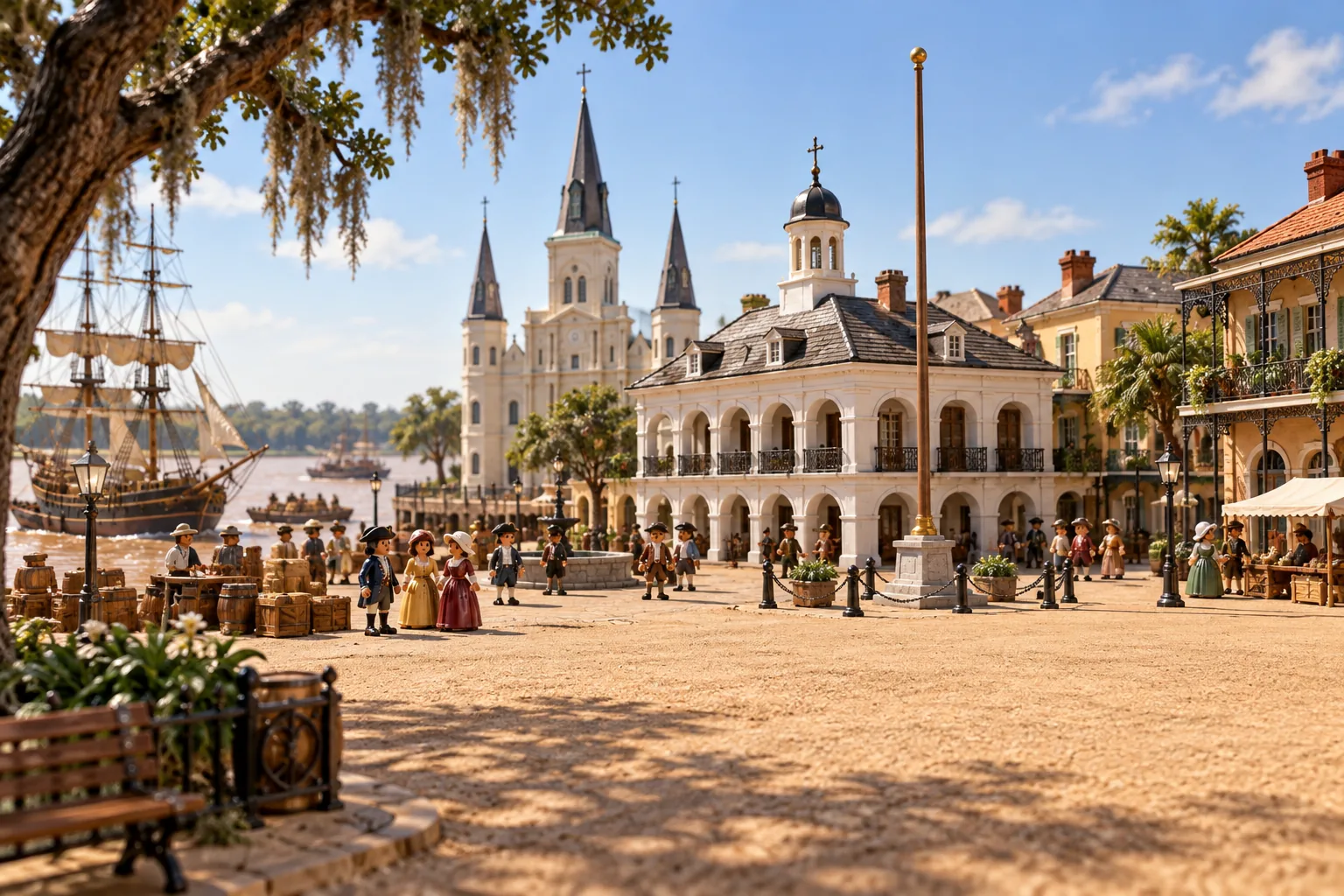
The Senate approved it by 24 votes to 7 that October, and on 20 December France handed over New Orleans at the Cabildo. On paper the United States gained about 828,000 square miles, now parts of fifteen states and two Canadian provinces, nearly doubling the country. France itself had controlled only a small part of it. Most of it was Native American land, and what the United States had really bought was the right, against other colonial powers, to take it by treaty or by conquest.
Read more on Wikipedia


