
Middle Ages · state
Lombards
In 568 the Long-beards left Pannonia with their wives, children and allies and marched into Italy, where their name survives in Lombardy.
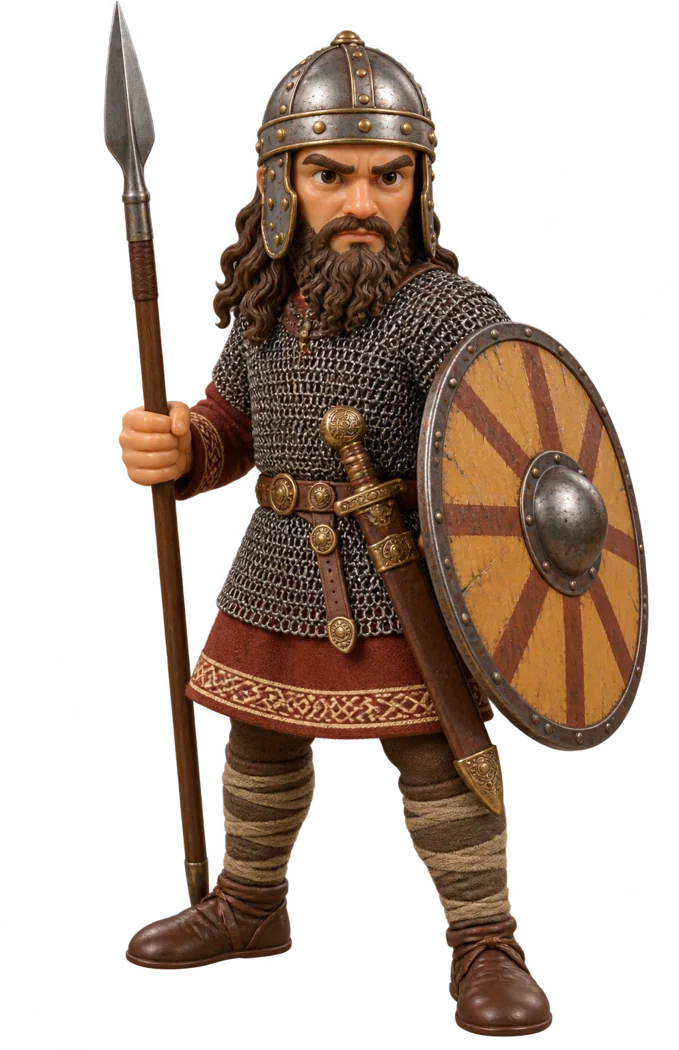
The Lombards, or Langobards, were a Germanic people whose name means the Long-beards; in the 7th century Isidore of Seville wrote that they never cut their beards. A Roman officer first recorded them on the lower Elbe between AD 9 and 16, and around 100 Tacitus described them as a small people who kept safe among stronger neighbours by daring the perils of war. Their own legends, told by Paul the Deacon, say they came from an island in the far north.
Late in the 5th century they moved to the middle Danube, and in 546–547 King Audoin led them into the old Roman province of Pannonia, in today's Hungary. There they fought long wars with the Gepids. His son Alboin made a hard bargain with the Avar khagan Bayan in 566, and in 567 the allies destroyed the Gepid kingdom. Alboin killed the Gepid king Cunimund and married his daughter Rosamund.
On Easter Monday, 2 April 568, fearing the Avars, Alboin led his people and their allies, including at least 20,000 Saxon warriors, over the Julian Alps into Italy. He took Milan unopposed in 569, and Pavia after a three-year siege. On 28 June 572 he was murdered in a plot backed by Rosamund, but the Lombard kingdom in Italy lasted until 774.
Read more on Wikipedia
Sources: en.wikipedia.org/wiki/Lombards, en.wikipedia.org/wiki/Alboin
