Middle Ages · state
Liao dynasty
The Khitan rulers of the Liao were so well known along the Silk Road that their name reached Europe as Cathay.
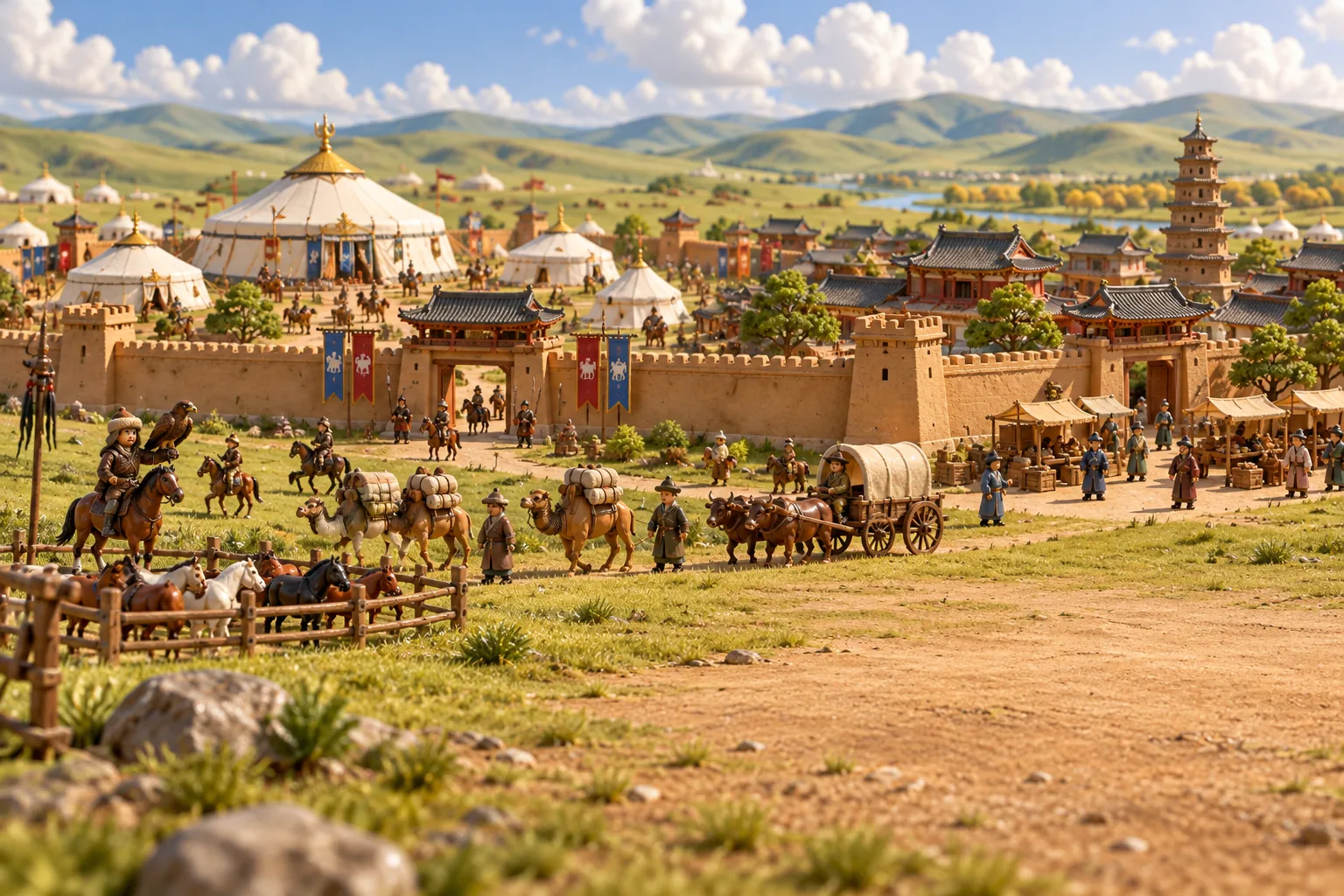
The Khitans were nomads of the steppes of today's Inner Mongolia. Around 907 Abaoji, chief of the Yila tribe, became their leader, and in 916 he proclaimed a Chinese-style dynasty. In 920 he ordered a Khitan writing system, the large script; a small script with more phonetic signs followed under Uyghur influence. After his death his widow Shulü Ping, who had commanded thousands of horsemen herself, ruled as regent and put her younger son Deguang on the throne.
In 938 a puppet emperor of the Later Jin handed the Khitans the Sixteen Prefectures, including present-day Beijing, and in early 947 Deguang entered Kaifeng unopposed. At its height the empire ruled Manchuria, the Mongolian Plateau, the north of the Korean Peninsula and the tip of the North China Plain. It had a dual government: a northern administration for the tribes and a southern one on the Tang model for its Chinese subjects. In January 1005 the Song signed the Chanyuan Treaty, paying the Liao yearly tribute in silk and silver while the two emperors called each other equals.
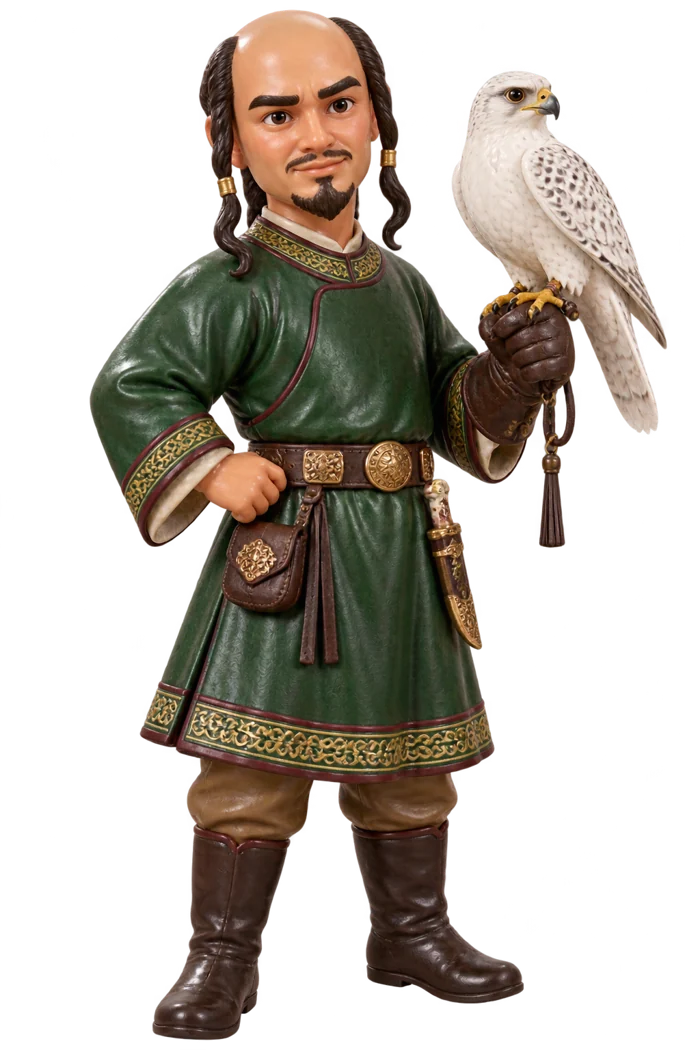
The Jurchens of Manchuria, made to supply gyrfalcons to the Liao emperors, rose under Aguda in 1114. In 1125 they captured Emperor Tianzuo and ended the dynasty. Liao loyalists under Yelü Dashi went west and founded the Western Liao, or Qara Khitai, which ruled parts of Central Asia for almost a century.
Read more on Wikipedia
Sources: en.wikipedia.org/wiki/Liao dynasty
