Early modern · war
Battles of Lexington and Concord
Two lanterns in a church steeple sent riders galloping through the night, and by sunrise farmers with muskets were waiting for the king's soldiers.
After the Boston Tea Party, Parliament punished Massachusetts with the Coercive Acts, and the colonists set up their own Provincial Congress and drilled their militias. On 18 April 1775 General Thomas Gage sent about 700 British regulars under Lieutenant Colonel Francis Smith to destroy military supplies stored at Concord. The Patriots had been warned weeks before and had moved most of them. That night lanterns were hung in the steeple of Boston's Old North Church, and riders including Paul Revere, William Dawes and Samuel Prescott raised the alarm across the countryside.
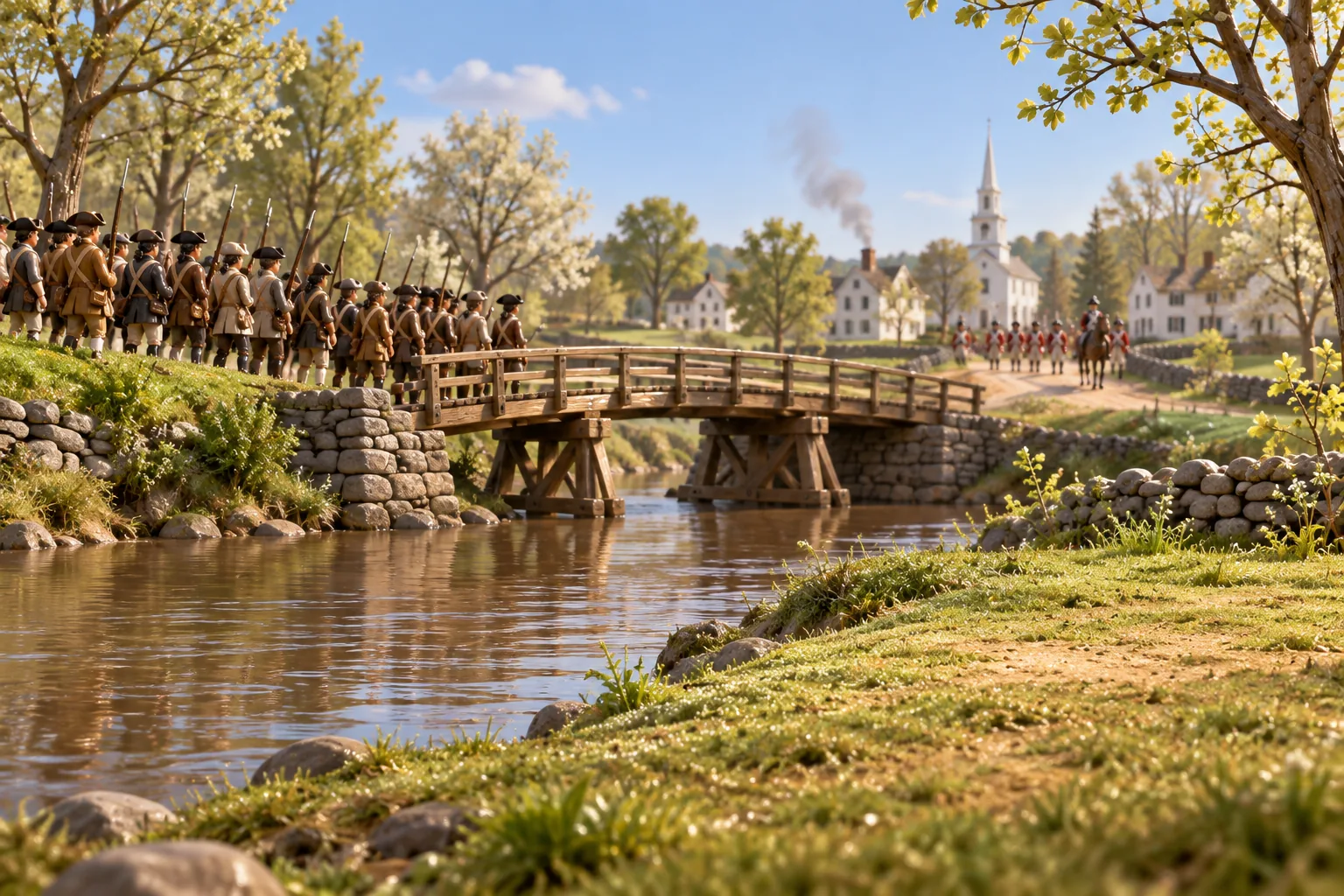
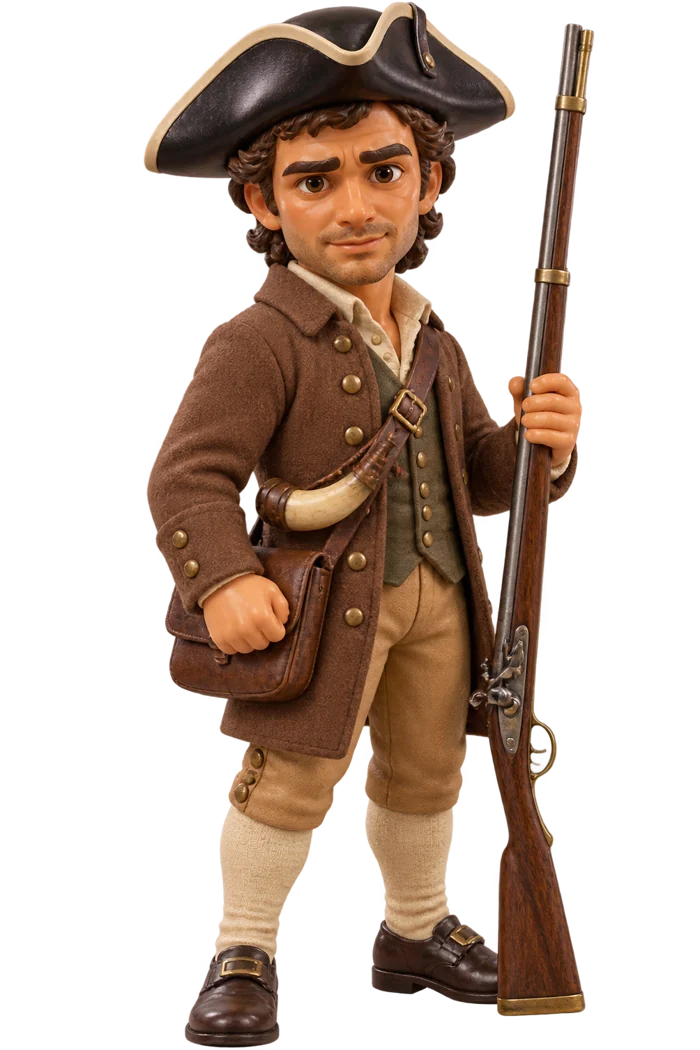
At sunrise on 19 April the advance guard under Major John Pitcairn reached Lexington, where about 80 militiamen under Captain John Parker stood on the common. Parker did not mean to fight, but in the confusion a shot rang out and the regulars fired. Eight Lexington men were killed and ten wounded; one British soldier was hurt. The British marched on to Concord. At about 11 a.m., at the Old North Bridge, some 400 militiamen faced about 100 regulars, and the outnumbered British fell back.
On the road back to Boston the British came under fire from militiamen behind walls, trees and houses, with some 4,000 joining over the day. Only reinforcements under Earl Percy at Lexington saved Smith's column. The combined force of about 1,700 reached Charlestown with heavy losses, and the militias then besieged Boston. The war for American independence had begun.
Read more on Wikipedia
Sources: en.wikipedia.org/wiki/Battles of Lexington and Concord


