Industrial age · exploration
Lewis and Clark Expedition
When the explorers voted on where to spend their first winter on the Pacific, an enslaved man and a Shoshone woman cast votes too.
In 1803 the United States bought the vast Louisiana territory from France, and President Thomas Jefferson wanted to know what was in it. He hoped for "the most direct and practicable water communication across this continent", and he wanted to claim the land before European powers did. Congress gave $2,324. Jefferson put Captain Meriwether Lewis in command, and Lewis invited his friend William Clark to lead with him. Their Corps of Discovery packed 193 pounds of portable soup, presents for Native American nations, and a Newfoundland dog named Seaman.
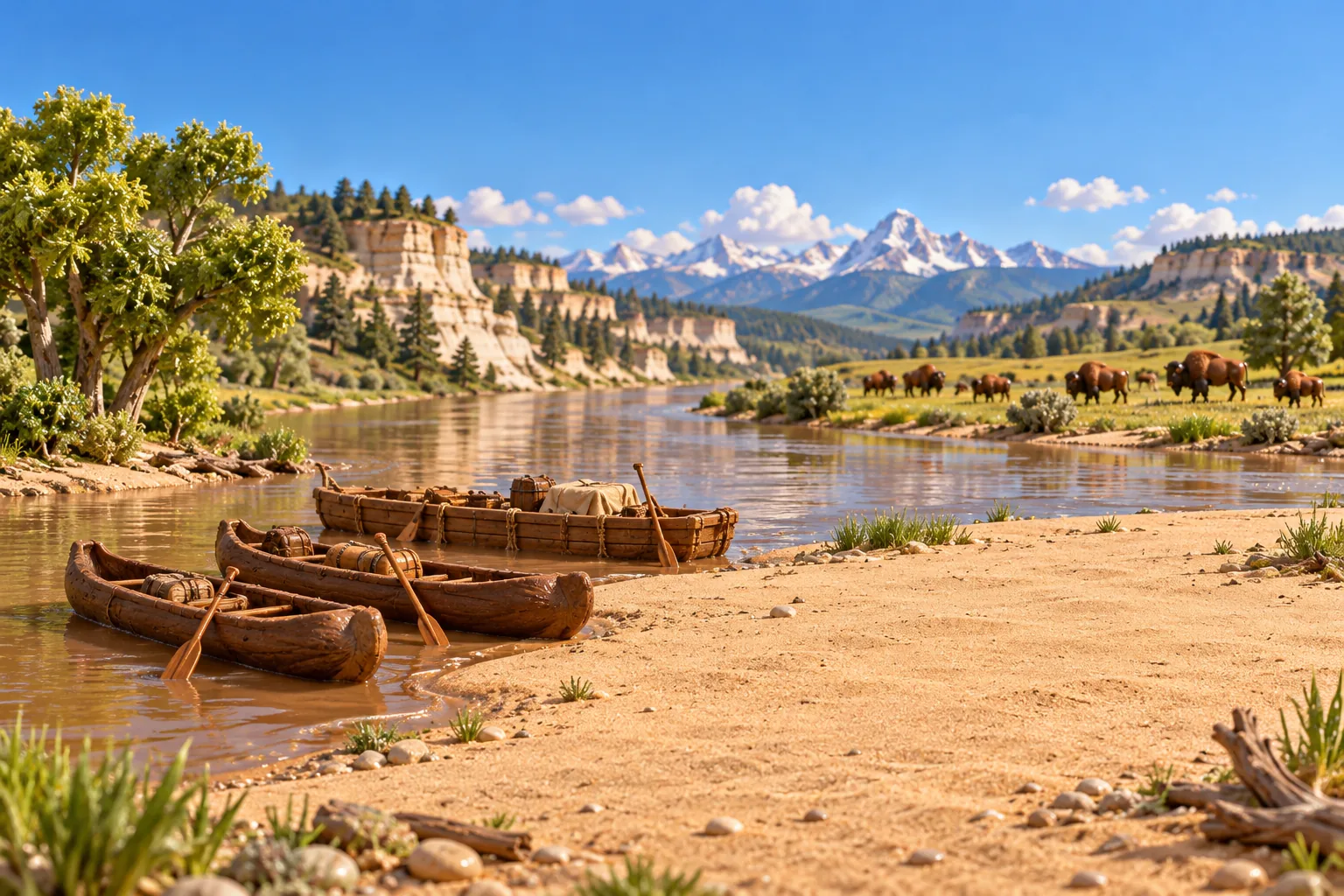
On 14 May 1804 Clark and some 30 men set out from Camp Dubois in Illinois, met Lewis at St. Charles and started up the Missouri River. Sergeant Charles Floyd died that August, probably of appendicitis; he was the only member of the expedition to die. They spent the winter at Fort Mandan in today's North Dakota, where they took on the French-Canadian trapper Toussaint Charbonneau and his young Shoshone wife, Sacagawea. In 1805 they followed the Missouri to its source, crossed the Continental Divide at Lemhi Pass and the Bitterroot Mountains, and canoed down the Columbia River to the Pacific.
They wintered at Fort Clatsop, near today's Astoria in Oregon, and started home on 23 March 1806. They reached St. Louis on 23 September. On the way they had met more than 70 Native American nations and described over 200 plant and animal species new to science.
Read more on Wikipedia


