Early modern · state
Later Jin
A Jurchen chieftain who began as a Ming vassal founded a khanate in Manchuria that, under a new name, went on to rule all of China.
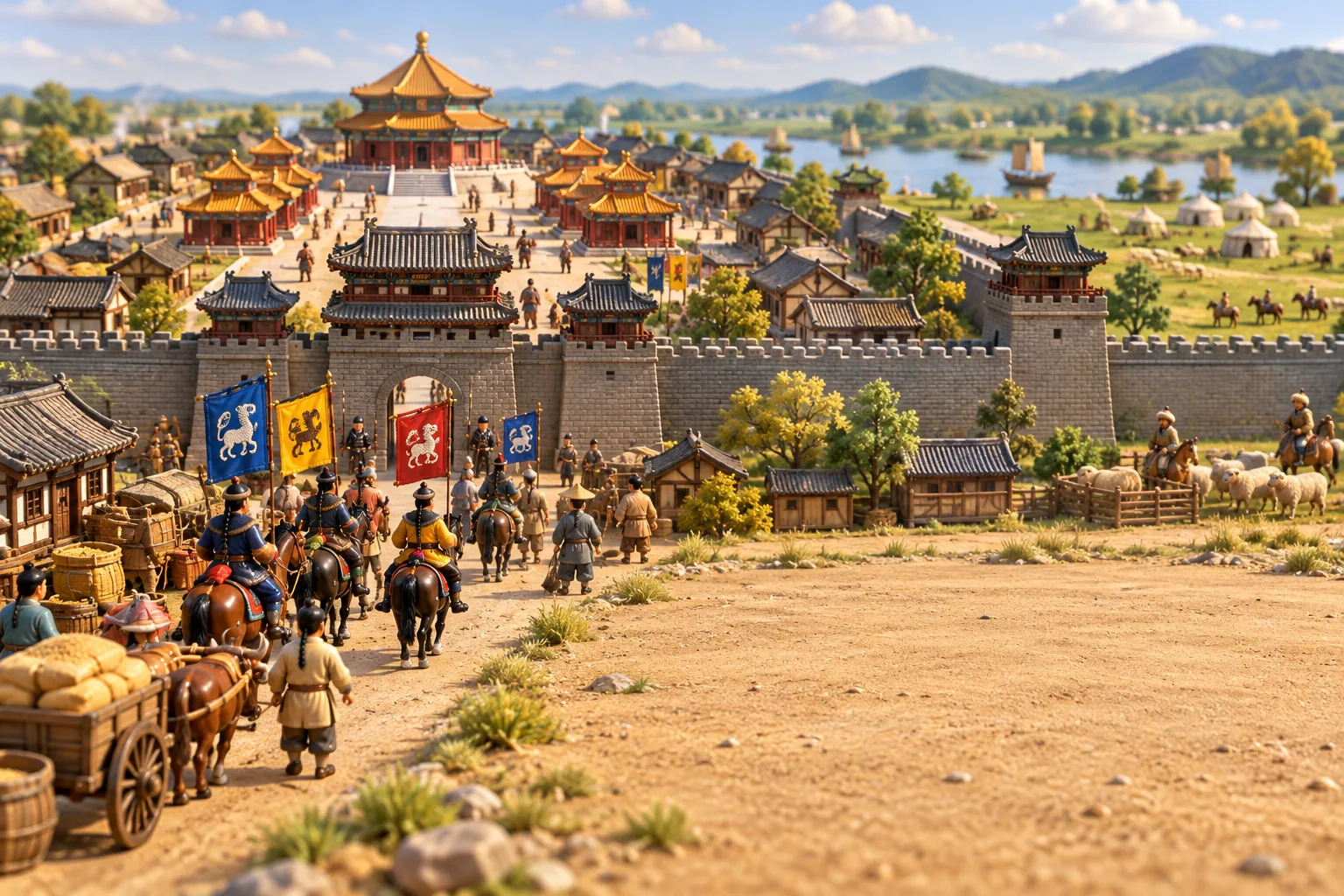
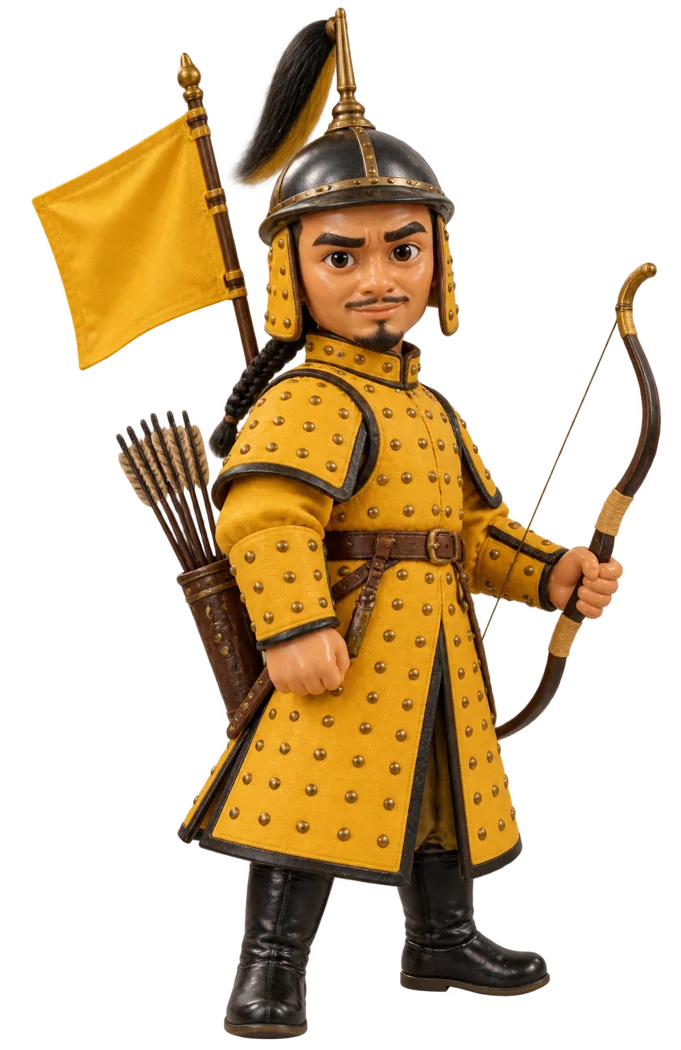
At the start of the 17th century the Jurchens of Manchuria were split into rival tribes, and many of their chiefs held titles from the Ming emperors. Nurhaci, leader of the Jianzhou Jurchens, brought most of them together and organised his people into Banners, military and social units that also took in Han Chinese and Mongols. In 1616 he proclaimed a new state called Jin, or Great Jin, after the Jurchen dynasty that had ruled northern China five centuries earlier, and ruled it as khan.
In 1618 Nurhaci announced his Seven Grievances against the Ming, which amounted to a declaration of war, and took Fushun. In 1619 the Ming sent four armies against his capital Hetu Ala, and at the Battle of Sarhū his horsemen broke three of them. He moved into Liaodong and in 1625 settled his court at Shenyang, where he began a palace. His run of victories ended at Ningyuan in early 1626, beaten by Yuan Chonghuan and his cannon, and he died a few months later.
His eighth son, Hong Taiji, became khan and built up an artillery corps of Han troops. In 1635 he gave the united Jurchens a new name, Manchu, and in April 1636 he declared himself emperor and renamed the state Great Qing. Eight years later Qing armies rode through the Shanhai Pass and took Beijing.
Read more on Wikipedia
Sources: en.wikipedia.org/wiki/Later Jin (1616–1636), en.wikipedia.org/wiki/Battle of Sarhū, en.wikipedia.org/wiki/Eight Banners, en.wikipedia.org/wiki/Manchu alphabet, en.wikipedia.org/wiki/Mukden Palace