Ancient world · exploration
Lapita culture
The name of one of history's greatest seafaring peoples comes from a misheard word: archaeologists in 1952 took a local phrase for 'the place where one digs' as a place name.
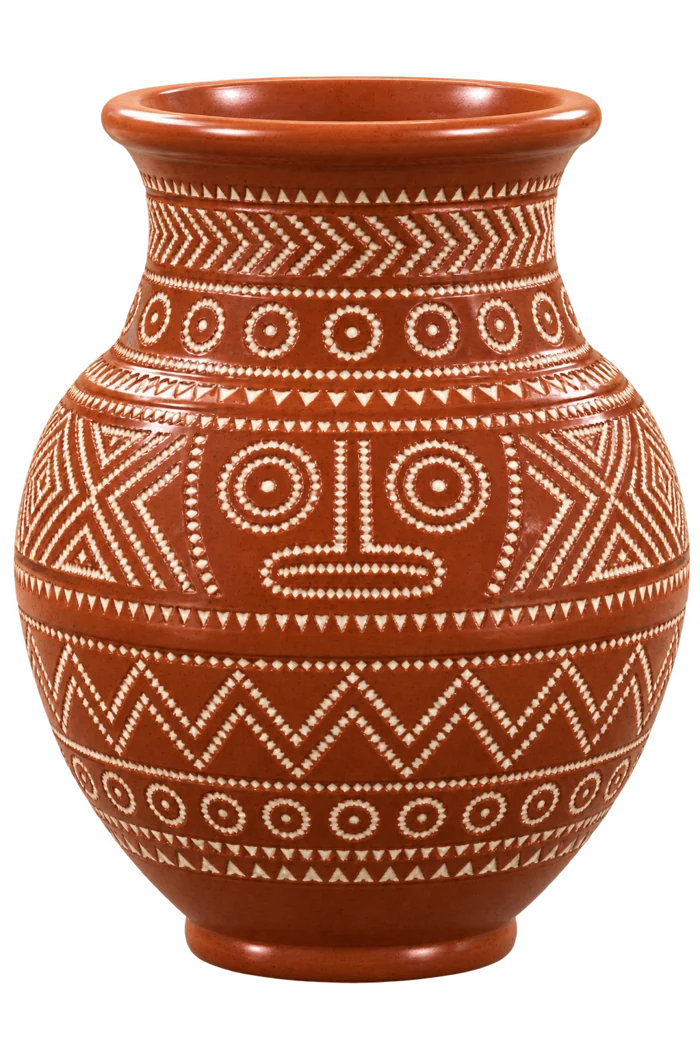
Around 3,500 years ago a new culture appeared suddenly in the Bismarck Archipelago, north-east of New Guinea, already fully formed. Its people were Austronesians whose ancestors had set out from Taiwan and, most likely, passed through the northern Philippines and perhaps the Mariana Islands. They brought outrigger canoes, pigs, dogs and chickens, taro, yams, breadfruit and bananas, and a distinctive pottery: low-fired earthenware decorated with tiny toothed stamps in intricate geometric patterns. Archaeologists call them Lapita.
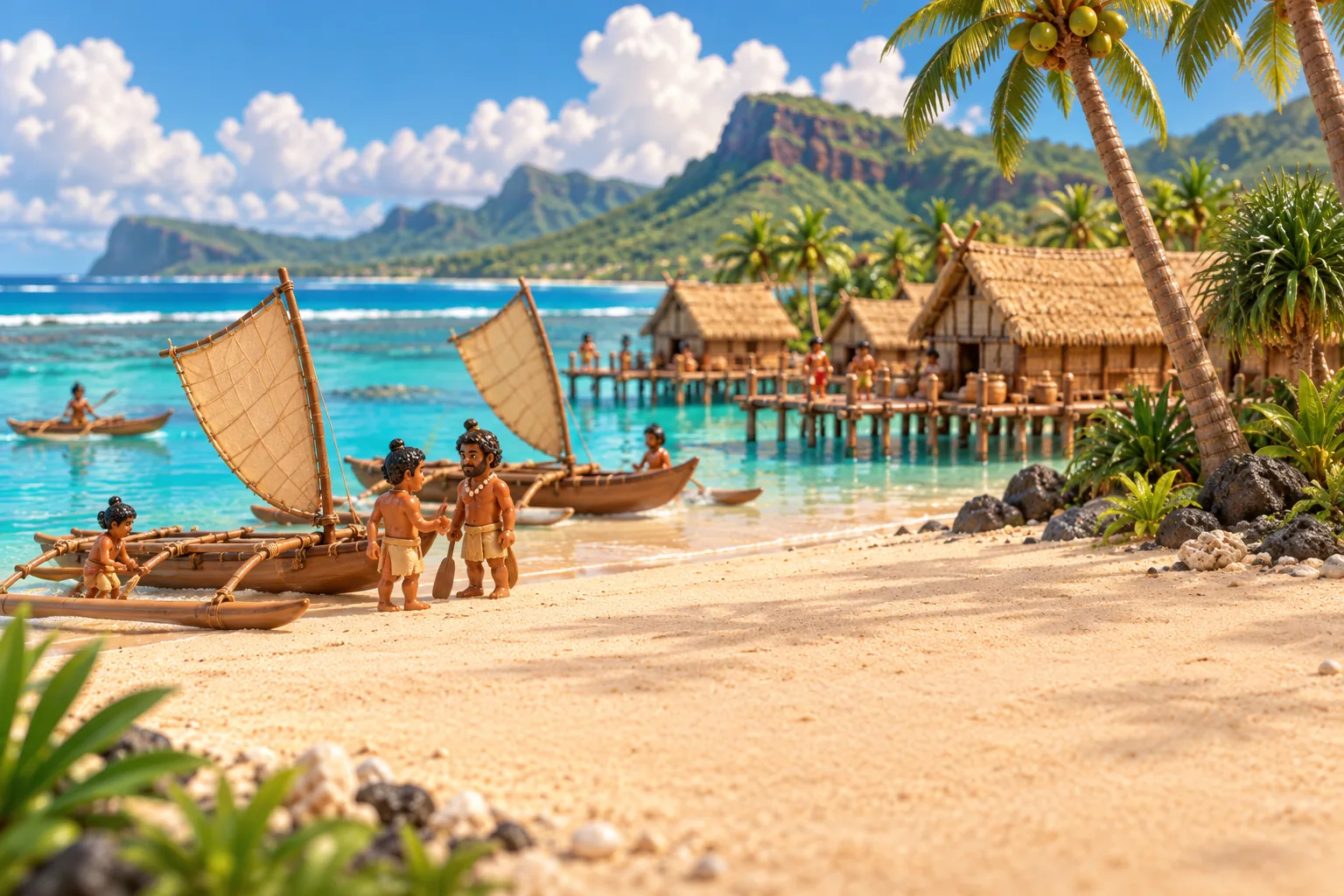
From the Bismarcks they sailed on into islands no human had ever reached. Lapita pottery from after 1200 BC turns up in the Solomon Islands, Vanuatu and New Caledonia, and from about 1000 BC in Fiji, Tonga and Samoa. More than 200 sites are known, spread over more than 4,000 kilometres. Their villages stood on beaches and small offshore islets, some on stilts over lagoons, and they traded obsidian, stone adzes and shells across the sea. Along the way they mixed with the Papuan peoples already living in western Melanesia.
In Tonga and Samoa the pottery grew simpler and was eventually abandoned, but the people stayed. The Lapita are the direct ancestors of the Polynesians and of many peoples of Melanesia and Micronesia, and probably spoke Proto-Oceanic, the root of hundreds of Pacific languages.
Read more on Wikipedia
Sources: en.wikipedia.org/wiki/Lapita culture